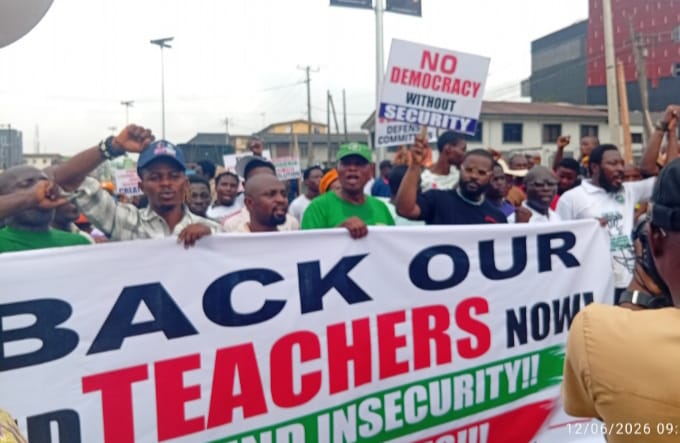
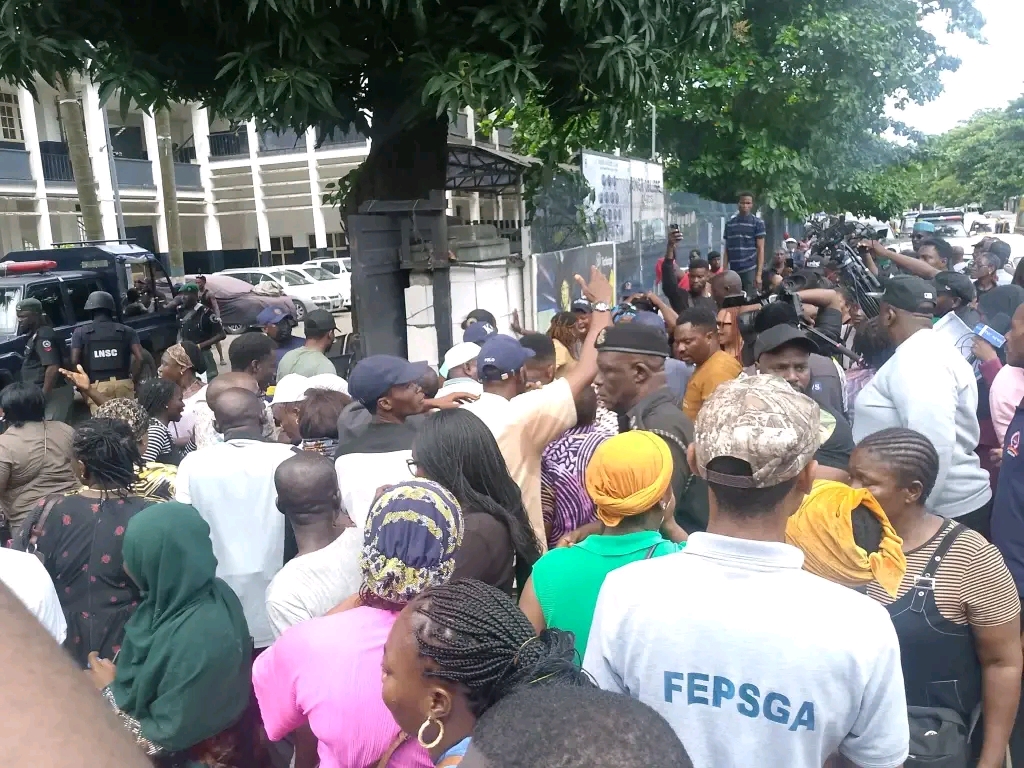
Tension increased during a June 12 protest on Friday under the Ikeja Bridge. Supporters of the protest and counter-protesters gathered at the same spot. Police had to step in to keep the peace during Democracy Day events.
The protest was part of a nationwide call by a group of civil society organisations, trade unions, youth groups, faith-based groups, and social movements. They declared June 12 a day of mass action to address insecurity and the worsening economic situation in Nigeria.
This coalition includes human rights lawyer Femi Falana, activist Hassan ‘Soweto’ Taiwo, labour representatives, and other civic leaders. They aimed to push the government to tackle insecurity, rising poverty, and what they called harsh economic policies that worsen hardship.
In a statement before the protest, the coalition said Nigerians “deserve a pro-people government that places the protection of lives and property at the core of governance.” They warned that insecurity disrupts farming, education, travel, and livelihoods across the country.
They also criticized major economic reforms like fuel subsidy removal, changes in exchange rates, electricity tariff hikes, and inflation. They argued that these policies have made living conditions worse, even as government revenues rise.
The planned protest clashed with official Democracy Day activities. President Bola Tinubu was set to address the nation to mark 27 years of civilian rule since 1999.
In 2018, Nigeria chose June 12 as Democracy Day to remember the annulled presidential election of June 12, 1993, won by the late Moshood Kashimawo Olawale (MKO) Abiola. This election is seen as the freest and most credible in Nigeria's history. The law making June 12 a public holiday was signed in June 2019.
In his Friday address, President Tinubu stated that Nigeria’s democracy was “not perfect, but ours.” He urged citizens to strengthen democratic institutions while defending his government's economic and security reforms.
He mentioned that insecurity is a national issue, pointing to abductions in Oyo, Borno, and other states. He added that the government has declared a security emergency, recruited over 50,000 police officers, and increased defense spending to tackle threats across the country.
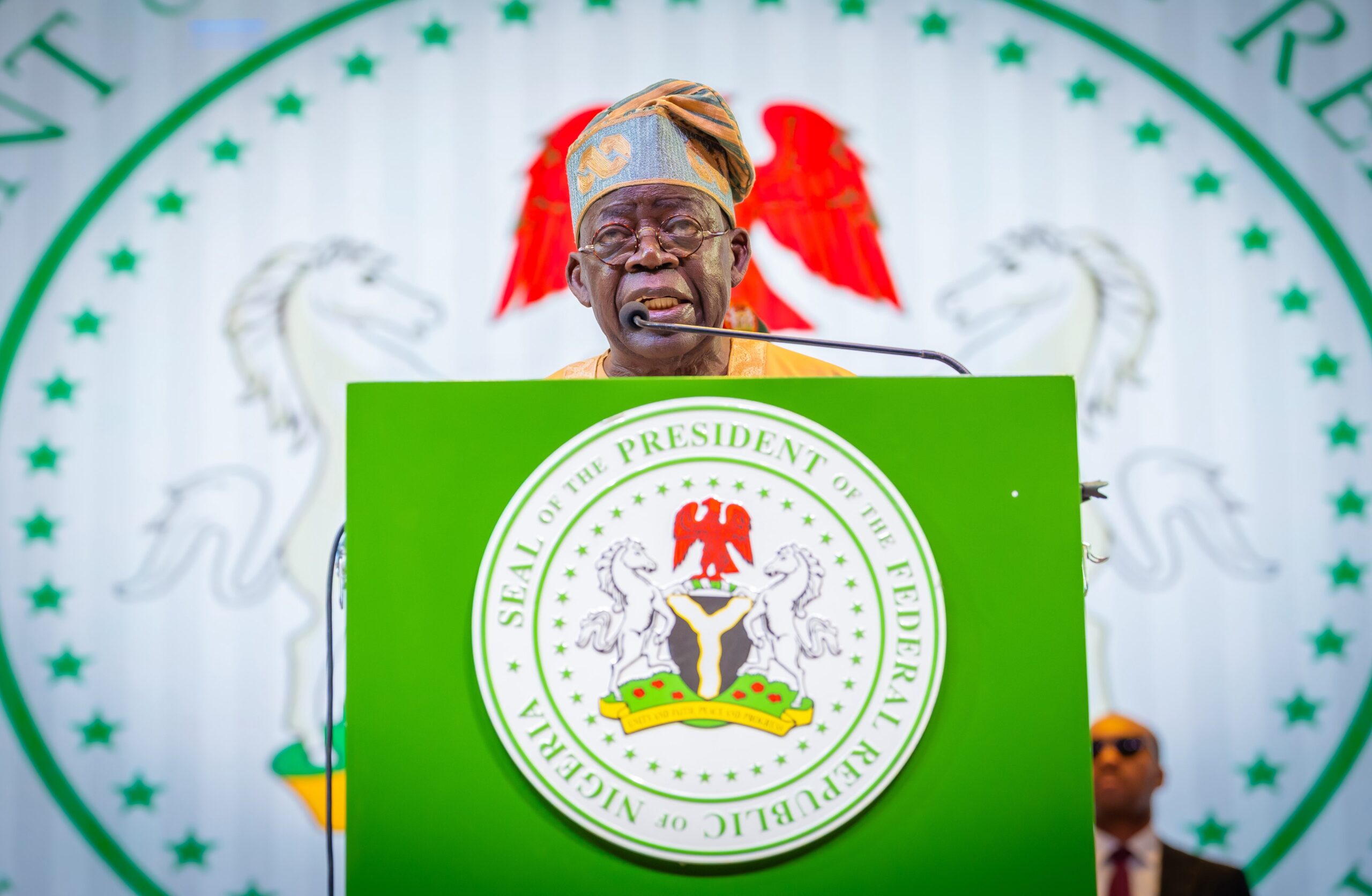
On the economy, the president backed ongoing reforms, including subsidy removal and foreign exchange changes. He said these steps have stabilized public finances, boosted revenue for federal and state governments, and improved investor confidence.
Meanwhile, in Lagos, the clash of views on Nigeria’s democracy unfolded at the Ikeja Bridge. As protesters gathered for Falana's demonstration, another group called “Team Nigeria” showed up to support President Tinubu. They held a counter-rally at the same location.
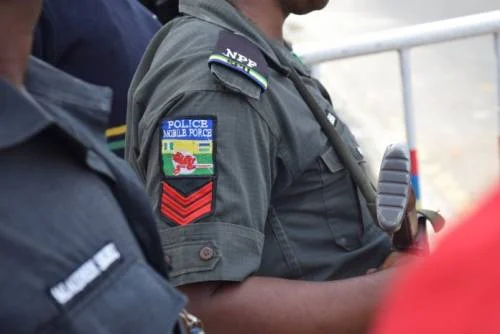
Both groups set up loudspeakers and music systems, trying to take control of the venue. This led to a tense stand-off as they vied for the space. A police team led by Superintendent Akinwumi Oke was sent to restore order and avoid a confrontation.
Things became more intense when Mr. Falana arrived at the venue with his wife, Funmi Falana, and their son, musician and activist Folarin Falana (Falz). His arrival energized the supporters already at the protest.
Mr. Falana explained that the protest aimed to highlight insecurity in states like Oyo, Zamfara, and Kebbi, as well as the frequent abductions happening in the country.
He also criticized increasing hardship and what he called shrinking civic space. “What we have in Nigeria is civil rule, not democracy,” he said. He urged police to ensure that the counter-mobilization did not disrupt lawful gatherings.
Despite the tension, the counter-rally continued with loud music and chants, making the situation more heated as both sides stayed apart, watched over by security. As of the latest update, police officers were still on-site, keeping order and preventing any escalation. No injuries or arrests were reported.
Drop your comment
No comments yet — be the first to drop the gist 👇