Every June 12, Nigeria faces a wound that doesn't heal. For older Nigerians, it brings back memories of a democratic mandate taken by military force. For younger people, it represents a legacy of pain, sacrifice, and unfinished stories.
More than thirty years after the annulment of the 1993 presidential election won by Chief MKO Abiola, June 12 is more than just a date. It serves as a reminder that democracy was not just given; it was fought for. Many paid the price with their freedom, exile, and even their lives.
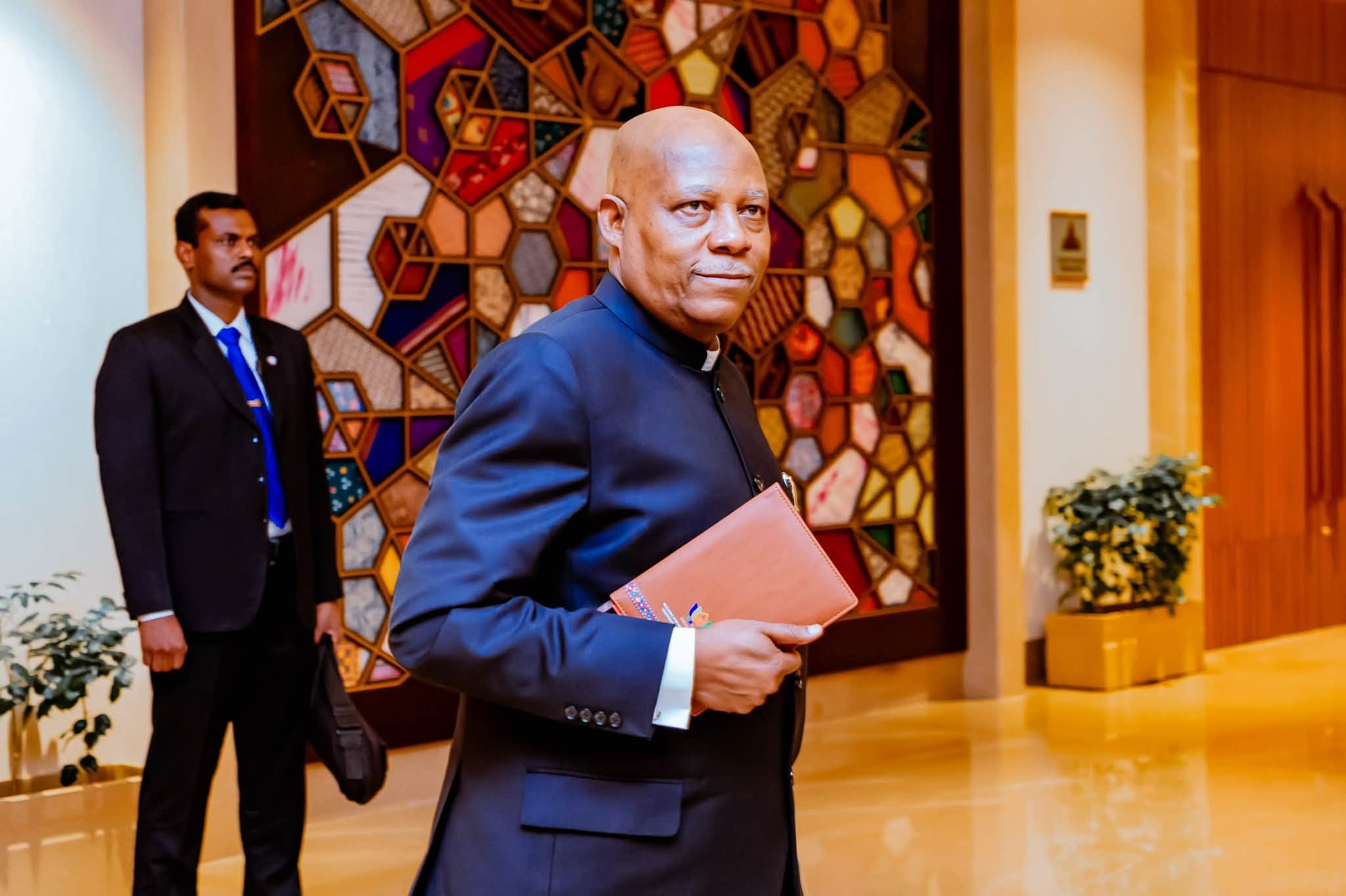
This year's Democracy Day was particularly ironic. President Bola Ahmed Tinubu awarded national honours to several pro-democracy activists, NADECO veterans, and soldier-democrats who fought against General Sani Abacha's dictatorship. Among them was Colonel Sambo Dasuki (rtd), former National Security Adviser, and a lesser-known figure in Nigeria's democratic fight.
On the surface, this recognition seemed fitting. But for those who know the twists of Dasuki’s political journey, the honour raised deeper questions. It brought to light issues of loyalty, sacrifice, betrayal, and the harsh nature of power. Both Tinubu and Dasuki played key roles in fighting against military rule.
Tinubu was a senator during the failed Third Republic. He became a leader and financier of the National Democratic Coalition (NADECO). After the Abacha regime targeted opposition figures, he went into exile and helped keep the international focus on restoring democracy.
Dasuki faced his own dangers. As a military officer, he opposed the annulment of the June 12 election and later joined efforts to challenge military rule. He was forced into exile by General Sani Abacha, who had also removed his father, Alhaji Ibrahim Dasuki, as the Sultan of Sokoto.
Sambo Dasuki worked behind the scenes with pro-democracy groups outside Nigeria. He was part of the network that kept international attention on Nigeria’s struggle for democracy. The shared experience of persecution helped build the foundation of Nigeria’s Fourth Republic. But Dasuki’s story goes beyond the June 12 struggle.
One irony in Nigerian politics is that the man imprisoned under President Muhammadu Buhari also helped Buhari to power as a military Head of State. In a revealing interview in 2018, Alhaji Mustapha Jokolo, former Emir of Gwandu and Buhari’s Aide-de-Camp after the 1983 coup, shared that Major Sambo Dasuki played a major role in the military takeover that ended Nigeria’s Second Republic.
Jokolo said it was Dasuki who gathered support, secured resources, and managed key parts of the operation that brought Buhari to power. "It was Sambo Dasuki who facilitated it," Jokolo said. "He did a lot honestly speaking. Sambo was the one getting money from Aliyu Gusau and Chief of Army Staff votes to support the coup."
Dasuki also used his family’s influence and resources to support the operation. Historical records suggest he was in Jos, where Buhari was GOC, to brief him and helped him fly to Lagos after the coup.
In short, Dasuki was not just a bystander. He was among the planners.
Years later, his loyalty to Buhari’s political goals stayed strong. In his book, An Encounter with the Spymaster, PR expert and author Yushau A Shuaib described Dasuki’s efforts to convince opposition leaders to back Buhari’s presidential bid ahead of the 2011 election.
Dasuki personally asked then Action Congress of Nigeria (ACN) leaders, including Chief Bisi Akande and Bola Tinubu, to support Buhari as the joint presidential candidate of the ACN and CPC in 2011. According to Shuaib, Dasuki “knelt down begging Baba Bisi Akande,” insisting that “Buhari is a man to be trusted.”
Believing that the South-West was less inclined toward religious politics, Dasuki and his team suggested Bola Tinubu as Buhari’s running mate. When that idea faced opposition, Tinubu’s camp proposed a Buhari-Osinbajo ticket. Shuaib noted that this did not happen, as Tunde Bakare became Buhari’s running mate for the 2011 election instead of Tinubu.
Chief Bisi Akande confirmed this in his 2021 book, My Participations. He said, “The efforts of Sambo Dasuki is worth mentioning in this political bridge-building attempt between ACN and CPC.” Akande mentioned that Dasuki was pushing for Buhari to be the presidential candidate of the alliance.

“Dasuki was coming around, begging us, to support Buhari’s presidential aspiration. Nuhu Ribadu, whom we had earlier chosen as our presidential candidate in the ACN, said he was ready to step down for Buhari,” Akande wrote in his book.
But history took a different turn. When Buhari became Nigeria’s democratically elected president in 2015, Dasuki was one of the first victims of the administration’s anti-corruption drive.
Accused of misusing funds meant for arms while he was the National Security Adviser to President Goodluck Jonathan, Dasuki was arrested and locked up. What followed was one of the most controversial legal battles in Nigeria’s democratic history.
Multiple courts granted him bail, but these orders were ignored. Even with several judicial rulings, he stayed in detention for years. His imprisonment became a symbol of a troubling contradiction. Democracy struggled to balance its anti-corruption agenda with respect for constitutional rights and judicial independence.
Dasuki consistently claimed he was innocent and challenged the legality of his long detention.
Contrary to popular belief, Dasuki did not lead the team that arrested Muhammadu Buhari during the 1985 coup. Former Borno State military governor, Colonel Abdulmumini Aminu (Rtd), clarified in a 2015 Daily Trust interview that he led the three-man team that arrested the then Head of State.
Aminu stated: “I must confess that I led that operation. I went to Dodan Barracks in the company of two other officers, then Major John Madaki and Lawan Gwadabe. Three of us went, but specifically I was the one that went upstairs to bring Buhari. It was a military assignment from our superior.”
Dasuki’s suffering under the Buhari government took a personal toll. His sick father was reportedly stopped from seeing him while he was in detention. Dasuki could not attend his father’s burial when the body was taken to Sokoto.
He was finally released in December 2019, after Buhari had won re-election and passed the most politically risky part of his presidency.
How does a political ally turn into a political prisoner? Only Buhari could explain that. The man who many helped to rise turned against one of his strongest supporters.
This irony is now part of Nigeria’s democratic history. President Tinubu’s decision to honour Sambo Dasuki on Democracy Day is significant beyond a mere ceremony. It is not just about recognizing one person; it highlights that Nigeria’s democratic journey is not straightforward.
Heroes can become villains. Friends can turn into enemies. Victims can rise again. And power changes relationships in ways that make no sense.
As Nigeria remembers another June 12, Dasuki’s story serves as a warning about the fragility of political loyalty and the complex nature of democratic struggles. Democracy may have triumphed over military rule, but the human stories behind that struggle remain unresolved.
None is perhaps more touching than that of a man who helped bring a leader to power twice, only to spend years wondering why that same leader chose to imprison him.


Drop your comment
No comments yet — be the first to drop the gist 👇