As if he had Kano State Governor Abba Kabir Yusuf and his estranged wife, Zainab, in mind, retired American Air Force officer and poet, Stanley Victor Paskavich, once said: "Always remember when it comes to family arguments and disputes: blood is thicker than anger."
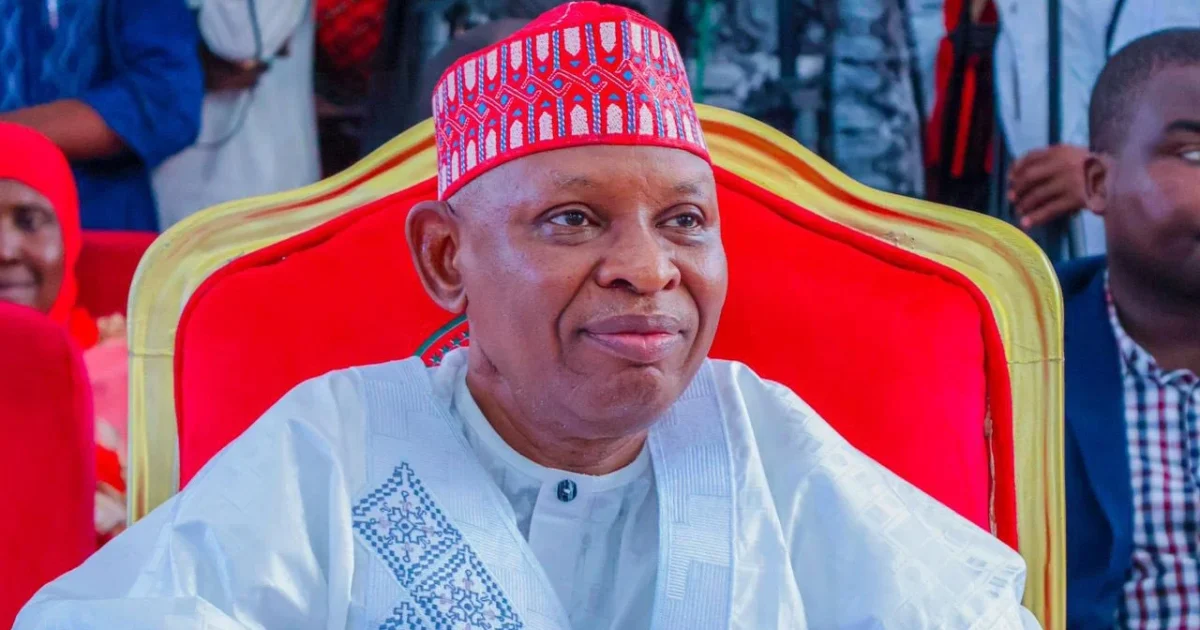
Neither Governor Yusuf nor Zainab listened to that advice. Paskavich, who once said that poetry was where he hid his demons, could not have expected his words to become so clear in Kano last week. Upset that his wife had brought shame to his office by filing for divorce, Governor Yusuf stood before a crowd at the Government House to announce the end of his 20-year marriage. He then said: "If what our opponents want is a divorce letter, then we have provided it. Let everyone rest. We have also directed the Commissioner for Information to issue an announcement so that we can find decent and respectable women to remarry."
With this statement, it was clear that the upcoming 2027 elections were the main issue behind their marital problems. Their marriage, which produced six children and celebrated its 20th anniversary a few months ago, had changed from a loving bond into a political agreement.
Zainab's secret filing for Khul’i at an Upper Area Court in Abuja was the first sign of trouble. This type of divorce, based on northern Islamic family law, allows a wife to seek a divorce in exchange for financial compensation, usually returning her mahr, or dowry, to her husband.
Yusuf’s public confirmation sealed their fates. In what looked like political revenge, the governor shattered their long-standing marriage with a public divorce called talaq. During a Government House event, Yusuf joked that he had been reduced from a “corporal” to a “constable”, from two wives to one, before inviting new applicants to compete for his heart. This was a clear example of how Nigerian politicians use humor to cover personal shame and project strength.
At the center of this drama was Zainab, the niece and adopted daughter of Yusuf’s estranged political mentor, Rabiu Musa Kwankwaso. Kwankwaso had raised his late brother’s daughter, giving her to Yusuf, his longtime assistant and chosen successor, as a sign of their political alliance and trust.
In this public separation, the Kano political scene witnessed more than just a private issue. Yusuf’s announcement showed the breakdown of auren siyasa, a traditional Northern Nigerian practice where a political leader gives his daughter to a protégé as a bond of loyalty. Those who know the tense environment at Government House say the breakdown was caused by Yusuf’s bold decision to switch to the rival All Progressives Congress (APC), along with the political fights that followed.
The fallout highlights a well-known truth: where power and marriage mix, they can create tension. The Yorùbá say it well with the proverb about a hen on a tight rope. Both are uncomfortable, the rope strains under the hen’s weight while the hen struggles to keep balance. This is how the Yusuf family feels. In a marriage shaped by politics, the couple is like that hen, and politics is the rope. Once Yusuf changed parties, the political shock could not stay outside their home.
In Kano and the wider North, giving a daughter to a key aide or chosen successor is a common way to ensure loyalty. But when that aide defects, the marriage becomes risky. Zainab was caught between her husband and her father. Viewed with suspicion in her husband’s new party, while her father’s political family expected her to remain loyal to him, Zainab’s later years must have been difficult.
For two decades, Zainab was the link between Kwankwaso’s political empire and Yusuf. Yusuf’s rise as Kwankwaso’s successor depended on that marriage. Without it, Kwankwaso would not have trusted his political future to Yusuf. But when Yusuf changed parties, their marriage turned from loyalty to conflict.
To outsiders, the end of the Yusuf marriage might seem like just a personal issue. In reality, marriage in African politics has often served a greater purpose. From the diplomatic marriages of the 19th-century Sokoto Caliphate to the alliances in pre-colonial Igboland, marriage has long been a tool of statecraft.
In Northern Nigeria, auren siyasa has acted as political glue through various eras: pre-colonial, colonial, military, and the four Republics. After the 1804 Jihad, Usman dan Fodio and his successor, Sultan Muhammad Bello, married their daughters to newly appointed leaders in Kano, Katsina, Zazzau, Bauchi, and Adamawa. These marriages created a strong political network that made rebellion against Sokoto a violation of family ties.

Centuries earlier, the Mais of the Kanem-Borno Empire used marriages with the daughters of local chiefs to ensure peace and trade. Later, during British rule and the First Republic, Northern leaders used marriage to include the rising educated middle class into their ranks, blending government skills with traditional power.
While the Sardauna of Sokoto, Sir Ahmadu Bello, came from a royal family, non-royals like Prime Minister Sir Abubakar Tafawa Balewa were brought into the elite fold. Early Northern leaders built ties between senior civil servants, ministers, and traditional leaders through marriage. They had an unspoken rule: "I trust you with my bloodline, so I can trust you with my political legacy."
This Malam-protégé relationship comes from traditional Qur’anic schools where a respected scholar rewards his best student with his daughter's hand. This trend continued into the military era, with many political and business families intermarrying over generations.
What makes the breakup of Yusuf and Zainab concerning is that it goes against this historical norm. In traditional Northern political culture, marriages were meant to withstand political challenges, not break apart. Even during tough times in the First and Second Republics, families rarely split because marriage connected both sides. The collapse of the Yusuf marriage shows a decline in that old political code. It suggests that modern politics has become so harsh that even a marriage based on loyalty cannot survive political betrayal.
Looking at history outside Nigeria provides more examples. In South Africa, while personal issues existed, the 1996 divorce of Nelson and Winnie Madikizela-Mandela was sped up by political differences: Nelson's focus on reconciliation clashed with Winnie’s militant approach, making their marriage unsustainable.
In politics, "till death do us part" often includes an unspoken addition: "unless party changes come first." A similar situation occurred in Zimbabwe during ZANU-PF’s power struggles, where spouses within the party took opposing sides, leading to public conflicts and breakups.
Even in the United States, Arnold Schwarzenegger and Maria Shriver faced challenges balancing a Republican governor and a Kennedy Democrat, showing how political identity can strain a marriage. The main difference is that while political marriages in the West tend to break over ideology, in Africa, political divorces are often driven by loyalty to a leader or party over personal vows.
As Nigeria approaches the 2027 elections, the breakup of Yusuf and Zainab is just one example of a larger trend. Across the country, many prominent political families are publicly splitting along party lines, echoing Shakespeare’s "Et tu, Brute?" In November, Auwal Lawal Daura, an APC leader, publicly backed President Bola Tinubu’s re-election, while his father, former DSS Director-General Lawal Daura, is running as a vice-presidential candidate on a different ticket.
Similarly, former President Olusegun Obasanjo is a critic of the APC government, but his son Olujonwo joined pro-Tinubu campaigns as Special Adviser on Political Affairs. In Benue, House of Representatives member Blessing Onuh is with a different party than her father, former Senate President David Mark, who is now in ADC, while she aligns with APC and pro-Tinubu efforts for 2027.
Many commentators also face backlash from friends whose parties they criticize or whose leaders fall under scrutiny. Friendships formed during ambitious times, which seemed secure, suddenly turned into hostility, like the split between Yusuf and Zainab.
Ultimately, the end of the Yusuf-Zainab marriage serves as a warning for Nigeria’s political class as 2027 approaches. When marriage becomes a tool in political battles, home loses its peace. It becomes part of the campaign ground and is affected by every political change. If the age-old bond of auren siyasa cannot protect families from the harsh realities of election defections, then Nigerian politics has reached a point where no institution, not even family, is safe. Paskavich was right that blood should be thicker than anger. Yet in Kano’s political scene, ambition proved thicker than blood and the family bond.



Drop your comment
No comments yet — be the first to drop the gist 👇