When Aisha Bashir, a pregnant woman from Juma village in Warawa Local Government Area of Kano State, got to Nuhu Bamalli Hospital in Kofar Nassarawa, she had already spent ₦1,100 on transport.
She paid ₦300 to get from Juma to Kwanar Dawaki and another ₦800 to reach the hospital.
For Ms Bashir, this cost was not just a hassle. It was a price she sometimes could not afford, especially when seeking healthcare during her pregnancy.
"Whenever I cannot get money for transport, I have to forgo visiting the hospital. I have already missed two antenatal appointments before this latest visit," she said.
Her story highlights a bigger problem in Kano regarding transport costs. Rising fares are forcing people to make tough choices about healthcare, school, work, and other basic needs.
While residents face daily transport struggles, a government plan aimed at easing this burden is still missing in Kano’s public transport system.
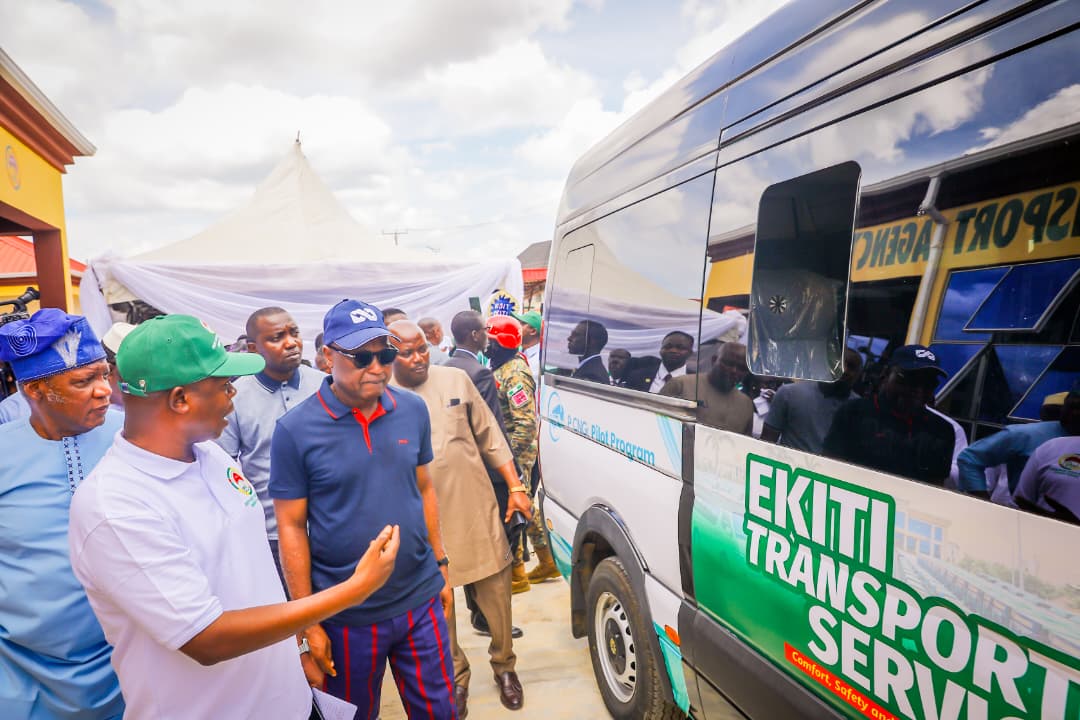
On 14 May, the federal government launched 222 vehicles under its compressed natural gas (CNG) and electric mobility project in Kano. This fleet included 10 CNG buses, five dual-fuel buses that can use CNG and petrol, seven electric vehicles, and 200 CNG tricycles.
The initiative was meant to lower transport costs, encourage cleaner energy, and create jobs. The federal government provided these CNG vehicles to help ease the impact of petrol subsidy removal, which caused petrol prices to rise by over 500 percent and led to Nigeria’s worst cost-of-living crisis in a generation.
But an investigation by PREMIUM TIMES HAUSA found that by early November, none of the CNG vehicles launched were in service in Kano metropolis.
In an interview with PREMIUM TIMES HAUSA in October, Kano State Commissioner for Transportation Haruna Dederi confirmed that the vehicles had not started operations seven months after their unveiling. He said the 222 vehicles were delivered to the state but did not say where they were stored.
On 14 May, at the Indoor Sports Hall of Sani Abacha Stadium, the government showcased 222 vehicles as part of this initiative.
The transport ministry’s spokesperson, Zahraddeen Ibrahim, told PREMIUM TIMES HAUSA that the commissioner was looking at proposals from investors who want to supply electric tricycles in large numbers and set up charging stations.
"There are some Chinese investors whom the Honourable Commissioner, Haruna Isa Dederi, is discussing their proposals for supplying electric tricycles in large numbers and providing charging stations for them," he said.
According to the spokesperson, a proposal has been sent to the commissioner, who is expected to pass it to the governor for approval.
He mentioned that the investors were ready to build one charging station if the state government buys 500 electric tricycles.
"The government will provide the land for the charging station, while the investors will supply all the needed equipment for charging," he added.
Mr Zahraddeen said the commissioner had received and signed this proposal.
But this plan is still just a proposal and does not mean that any purchases have been approved or any services are operational.
The ministry did not share details about the vehicles’ prices, financing plans, delivery schedules, maintenance responsibilities, expected fares, or how many charging stations would be needed.
This proposal raises concerns about whether one charging station can support 500 electric tricycles in a large city like Kano.
The government still needs to clarify the routes for the vehicles, how charging will work, who will maintain them, how operators will access them, and how they will ensure lower costs for passengers.
This situation makes the unresolved status of the federal initiative even more urgent.
Commissioner Confirms Buses Have Not Started Operations
In an interview with PREMIUM TIMES HAUSA in October, Mr Dederi confirmed that the 222 vehicles from the federal government had not yet begun operations, seven months after the launch.
Mr Dederi also said that all 222 vehicles had been delivered to Kano but did not say where they were stored.
"The vehicles were indeed brought on the day the programme was launched. However, the launch was more of a preparatory step," he said.
He explained that after getting the vehicles, the Kano State Government realized that the number was not enough to meet transportation needs.
"This made the government decide to procure additional vehicles. As of now, 500 vehicles have been purchased," he said.
However, the commissioner did not say when the extra vehicles were bought, where they are stored, or when they will be used alongside the federal ones.
He also did not explain how the government would manage and operate the vehicles during the interview.
The commissioner’s statement shows that the federal intervention has not turned into a working passenger transport service by the time of the interview.
It also raises important questions about how the federal government's 222 vehicles relate to the 500 vehicles the commissioner mentioned.
PREMIUM TIMES HAUSA could not confirm where the buses are, who owns them, their condition, or when they will be used.
The newspaper also checked Kano Line’s transport facilities but did not find the buses there.
This lack of information raises concerns about how the federal intervention is being tracked, which institutions are in charge, and how the public can see the program's progress.
FG Expands CNG Infrastructure in Kano
While the buses are still out of service, the federal government has been working on expanding alternative-fuel infrastructure in Kano.
On 18 October, the Presidential Initiative on Compressed Natural Gas and Electric Vehicles supported the launch of facilities created by NU Synergy under the Northern Corridor project.
The projects included two CNG refueling stations and a vehicle conversion center, located along Zaria Road and at Mariri, along Wudil Road.
According to the initiative, these new facilities increased the number of CNG refueling stations in Kano to 12, from almost none a year earlier.
Separately, the federal government on 11 November opened three liquefied natural gas (LNG)-to-CNG facilities in the state, developed by Rolling Energy Limited with help from the Gas Infrastructure Fund.
These projects aim to improve gas distribution and expand access to alternative fuel.
This expansion could make it easier to access CNG refueling and vehicle conversion services, possibly attracting more commercial operators to use alternative fuels.
But just because there is more refueling infrastructure does not mean transport fares will drop or commuting costs will be lower.
Conversion costs, fuel availability, vehicle purchase prices, and whether operators will pass savings to passengers are still major factors.
It is a big difference: Kano is building the infrastructure needed for alternative-fuel transport, while the buses announced in an earlier plan have yet to start serving passengers.
Kano Needs More Than Alternative-Fuel Vehicles
Muhd Hashim, a transport expert at Bayero University, Kano, said the state’s transport issues show long-standing problems that have become clearer since the petrol subsidy was removed.
He pointed out the heavy reliance on commercial tricycles, lack of mass transit, poor roads, rising operating costs, and weak regulatory oversight as major challenges.
"Daily transportation has become increasingly dominated by tricycles, leaving commuters with very few viable alternatives," he said.
Mr Hashim added that the limited options for transport services weaken commuters' ability to negotiate and put them at risk of fare hikes whenever costs go up.
"Since the removal of fuel subsidy, pump prices have risen to market-reflective levels, significantly increasing the cost of logistics and distribution nationwide. This has directly translated into higher fares for commuters," he said.
He called the federal government’s CNG and electric vehicle initiative a potentially important move but warned that its success will depend on how many vehicles are deployed, the availability of refueling stations, and how operators ensure that savings reach passengers.
He also recognized the Kano government’s readiness to partner with investors and provide land for gas and electric vehicle infrastructure.
However, he mentioned that the 222 vehicles launched in May are just a small step compared to Kano’s population and transportation needs.
"Two hundred and twenty-two vehicles are a modest number relative to Kano’s population. The real test will be scaling this deployment and ensuring refueling infrastructure keeps pace," he said.
Mr Hashim noted that CNG usually costs between 40 and 50 percent less than petrol in terms of energy, although actual savings depend on prices, vehicle efficiency, and how they are used.
"For commercial transport operators working on thin margins, this cost advantage is substantial," he said.
But cheaper fuel alone cannot guarantee lower fares.
"If drivers face long queues or travel long distances to refuel, operational savings erode," he added.
His view highlights the need for a coordinated transport policy rather than just buying vehicles in isolation.
What Kano Needs to Do
Mr Hashim proposed several actions to make alternative-fuel transport easier to access and improve the public transport system.
In the short term, he called for more affordable CNG conversion, low-interest loans for tricycle and minibus operators, more refueling stations, and a clearer plan for regulating fares.
He recommended creating refueling corridors along major routes and encouraging private investment in gas infrastructure.
He also suggested digital platforms that show transport fares, allowing passengers to compare prices and make things clearer.
In the medium term, he urged the government to set up the proposed Kano Mass Transit Authority and deploy larger CNG buses along busy routes.
Other suggestions included dedicated lanes for buses and tricycles, better pedestrian and cycling paths, targeted transport subsidies for students, elderly residents, and low-income workers, and changes to parking and land-use rules.
For the long term, he proposed a unified Kano transport app that combines tricycle services, bus schedules, and locations of CNG refueling stations.
He also suggested creating a Kano Transport Affordability Index to track how much household income is spent on transport across the state.
This measure could help the government identify communities and groups facing the most financial strain and see if transport efforts are leading to real improvements.
However, putting these ideas into action will need clear responsibilities, reliable data, ongoing funding, and public reporting on results.
For now, the main focus should be getting the over 200 vehicles the state government received in May on the roads.
Beyond Launch Events: The Accountability Challenge
Kano’s transport issues cannot be fixed just by changing the fuel for a few vehicles.
The state needs a public transport system that offers reliable services, keeps fares affordable for ordinary people, and provides options when commercial operators raise prices.
The federal government’s CNG and electric mobility plan gave a chance to move closer to those goals. Unveiling 222 vehicles and expanding alternative-fuel infrastructure was just the start, not the end.
Yet, seven months after the launch, the vehicles presented in Kano have still not begun passenger service. So far, Kano residents have not enjoyed the lower transport costs that the federal government aimed for.
Meanwhile, residents interviewed for this investigation continue to face the financial burden of expensive and unpredictable transport.
The state government’s proposed electric tricycle program may provide another chance. But without clear procurement processes, proper charging infrastructure, realistic operating plans, and ways to ensure affordable fares, it remains just a proposal waiting to be put into action.
For Ms Bashir, the effects are already clear. She has missed antenatal appointments because she could not afford the trip to the hospital.
For students, transport costs can mean getting to class late or missing it entirely. For workers, transport can take a big chunk out of their monthly pay. For traders, it raises the cost of moving goods and doing business.
In the end, the success of a public transport initiative should not be judged by the number of vehicles launched at a ceremony, but by how many people can actually use them, the routes they cover, the fares paid, and how much access to essential services improves.
Until the Kano government gives a clear account of the vehicles, explains how they will be managed, and provides a solid timetable for when they will be on the roads, the main promise of the intervention will remain unfulfilled for commuters in the metropolis.
For those already bearing the burden of high transport costs, another announcement won’t be enough. They need working buses, accessible services, and a government ready to explain what happened to the initiative it helped launch.
Drop your comment
No comments yet — be the first to drop the gist 👇