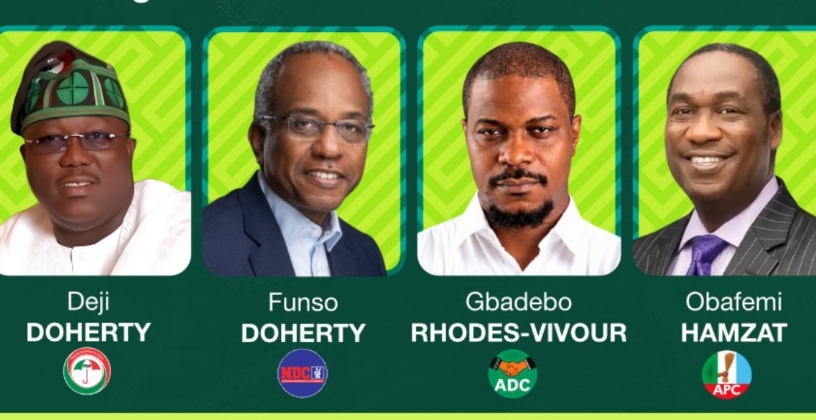
The African Democratic Congress (ADC) governorship candidate, Gbadebo Rhodes-Vivour, has stated that Lagos is Yoruba land. He promised to work hard to keep the Yoruba language, culture, and history alive in the state.
Mr Rhodes-Vivour made these comments at a town hall meeting with young voters in Lagos on Thursday. The event, organized by The Platform Nigeria, featured various governorship candidates who answered questions from young people in Lagos.
Other candidates present included the All Progressives Congress (APC) candidate, Obafemi Hamzat; the Peoples Democratic Party (PDP) candidate, Funso Doherty; and the National Democratic Congress (NDC) candidate, Deji Doherty.
An audience member asked Mr Rhodes-Vivour how he planned to protect the Yoruba language and culture in Lagos. He began responding in English, but the crowd urged him to speak in Yoruba.
He explained that he came to discuss politics but emphasized that Lagos is Yoruba land. He criticized how the Yoruba language is treated in schools. He said, "Today, we have about twenty-something years of the APC government, but till now, if you speak Yoruba in primary school and secondary school, they say it’s vernacular, and they beat and punish you."
He urged that this issue also be directed to representatives of the Lagos State government who were at the meeting. Mr Rhodes-Vivour connected cultural preservation to bigger issues like education, healthcare, and living costs, saying families would worry less if they had good public services.
“The fact of the matter is this: we must ensure that our culture is preserved,” he said. He promised to set up a ministry to focus on culture in his government. He said his administration would dive deeper into Lagos' culture and history.
“We have an entire ministry that’s going to be in charge of that, and we’re going to look at our culture and our history, even deeper than the surface level at which we are doing it,” he said.
During the 2023 Lagos governorship election, Mr Rhodes-Vivour faced backlash over his Yoruba identity and language skills. His mixed Yoruba and Igbo background became a topic of discussion. His statement during a Channels Television interview that he did not “think in Yoruba” drew criticism and became a part of the debate on whether he could lead Lagos.
Mr Hamzat promised to eliminate unauthorized and hidden fees on businesses. He said business owners should know what they need to pay. He stated that the state would work with federal and local governments to simplify taxes and avoid double payments.
“The role of government is to ensure that businesses start, survive and are able to grow,” he said. He added that any fee that is unknown and untraceable would be removed. He also noted that the government would ensure no one collects fees at junctions.
On waste management, Mr Hamzat mentioned that the state would improve its waste collection and processing instead of depending mainly on landfills. He said Lagos plans to bring in about 160 new waste trucks and build transfer loading stations that can manage about 2,500 tonnes of waste.
He also shared plans for two material recovery facilities and a waste-to-energy plant at Agbara, which will process about 3,000 metric tonnes of waste. He said the stations in Solous and Agbara would be completed before his administration ends, with more facilities planned for Badagry and Ikorodu.
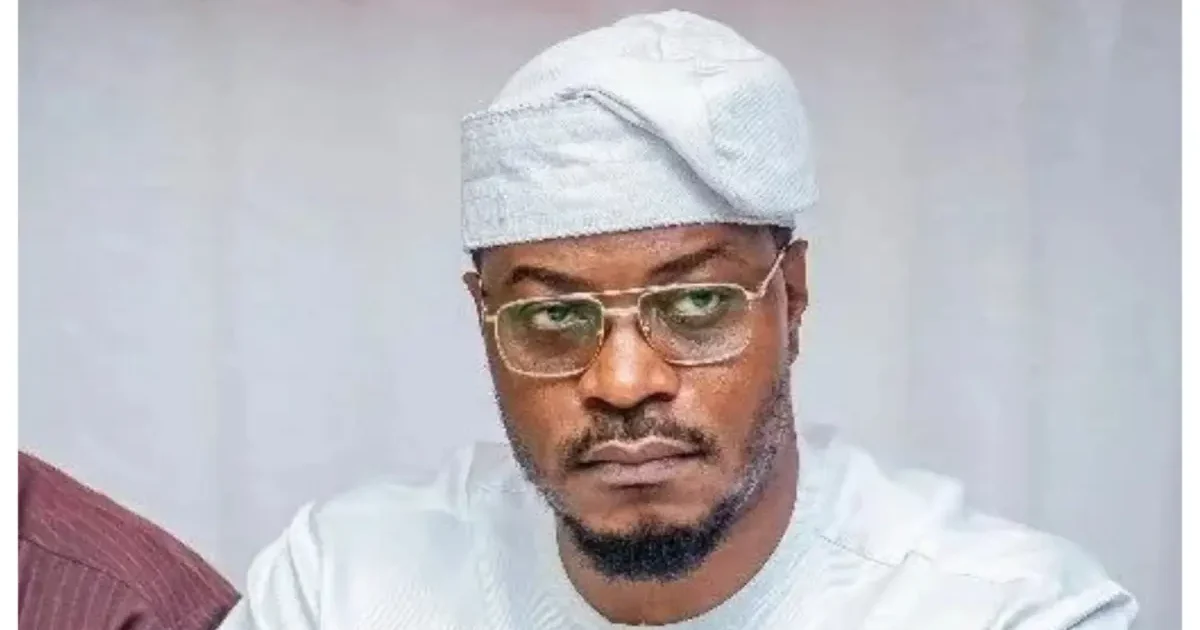
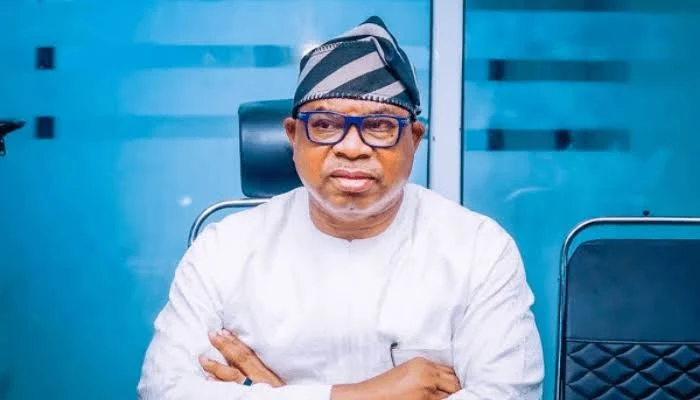
“The two we finish before the end of this administration: the one in Agbara and the one in Solous. So those ones should finish before April, by the grace of God,” he said.
When asked about his top priorities for the first 100 days in office, Mr Hamzat said he would focus on child welfare. He plans to create a new agency to take care of children's needs in Lagos. He wants this agency to be separate from the Ministry of Youth and Social Development.
“Our children in Lagos cannot be roaming the streets. Everybody under 18 must either be in school, in some trade,” Mr Hamzat said. He recognized that monitoring children in Lagos is tough due to many people moving in from other parts of the country, especially those fleeing violence.
Deji Doherty from the PDP suggested building affordable, high-rise homes outside Lagos city, with good transport links for commuters. He pointed to places like Epe, Badagry, and Kosofe as potential sites for better transport and housing.
He said if elected, his administration would look into buying family-owned properties for housing development, but only after discussing with the owners. “We are going to buy up family houses,” he said, stressing the need for negotiations rather than forcing sales.
He added that the goal is to create affordable housing in less crowded areas while ensuring reliable transport to city centers. He pointed out that previous governments failed to use land-related revenue to build enough housing and infrastructure.
He argued that the Lagos government should use money from land use charges to build roads and homes, becoming a major landlord in the state. “Government regulates housing rent by having more houses. You are the landlord of land. You charge land use charge. You charge all the charges that is chargeable. But what are you doing with the charge?” he asked.
The NDC Lagos governorship candidate, Funsho Doherty, promised to create a Lagos where every child can access education and healthcare, regardless of their parents' financial situation. He said his vision is based on a social contract where citizens pay taxes and the government provides essential services.
He mentioned that Lagos has a strong duty to deliver good public services because of its resources. Citing data from the National Bureau of Statistics, Mr Doherty noted that Lagos generates more internal revenue than 31 other states combined, excluding Delta, Rivers, Ogun, Enugu, and the Federal Capital Territory.
He emphasized that his administration would work to ensure that poverty does not stop children from getting education or healthcare. “For me, my vision of Lagos is a Lagos where no child, no child, is left out of an education because their parents can’t afford it. No child dies because their parent cannot afford drugs,” he said.
He also promised to improve transportation and how residents interact with the government. “No one has to commute in transportation that is unsafe, rickety, and where they have a high probability of getting robbed. Nobody has to interact with government in a way in which they feel that they are abused,” he said.
Mr Doherty assured that his plans are not just dreams but backed by specific actions. He said his campaign would release its manifesto the next week, detailing 34 commitments for the first term if elected.

Drop your comment
No comments yet — be the first to drop the gist 👇