
A team from Luminate Group, led by CEO Melanie Hui, visited the Centre for Journalism Innovation and Development (CJID) at its new office in Abuja on Friday. They came to strengthen the partnership between both organizations.
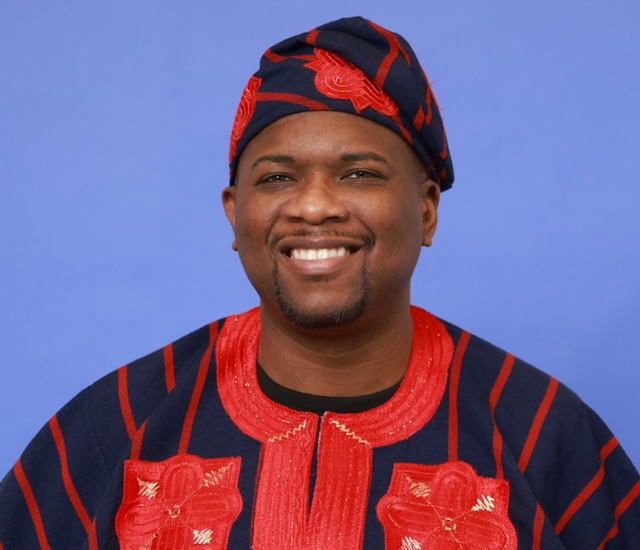
During the visit, CJID CEO Dapo Olorunyomi urged for more scrutiny of technology companies. He said these companies control digital communication platforms, creating new challenges for journalists and civil society.
He shared the story of Mohammed Yusuf, a trader in Ilorin, Kwara State, who lost about ₦150,000 after responding to a TikTok ad offering a grant from OPay, a payment company.
Mr Olorunyomi explained that the trader lost nearly all his business capital after following the ad's instructions. “The advertisement Mohammed saw was not hidden in some dark corner of the internet. It was placed, paid for and approved inside the systems of one of the most powerful companies in the world,” he said.
“Had a newspaper run that advertisement, we would know whom to hold responsible, from the editor and the publisher to the regulator who licenses them. With a platform, those lines are much harder to draw, and the citizen who has been wronged is often left with nowhere to turn.”
He pointed out that CJID’s accountability work now focuses more on technology platforms. These platforms decide what users see, remove content, and enforce rules about public speech. They often use systems that are hard for citizens to check.
Mr Olorunyomi noted that Luminate’s support has helped CJID grow investigative reporting across West Africa. The partnership has also boosted their work on digital technology, artificial intelligence, and information disorder.
He mentioned that applications for the Centre’s Platform Accountability Reporting Fellowship increased from about 800 in 2025, when only 15 fellows could be chosen, to over 1,000 this year. The program trained 35 fellows and commissioned 18 investigations.
The investigations were put together in a report titled “Digital Harms in Nigeria.” This report shows cases of online fraud, abusive digital lending, and harmful content on social media platforms.
He added that a fake electoral commission portal was suspended, and Citizens’ Gavel started legal action against Telegram based on findings about exploitation networks. But he warned that these actions do not mean the underlying issues have been fixed.
“A deleted account or a lawsuit tells us that evidence produced a response. It does not yet tell us that the harm has stopped, that Mohammed has his money back, or that the system that failed him has changed,” he said.

Mr Olorunyomi said CJID plans to revisit cases in the report. They will send specific requests to Meta, TikTok, X, and Telegram, and publish the responses.
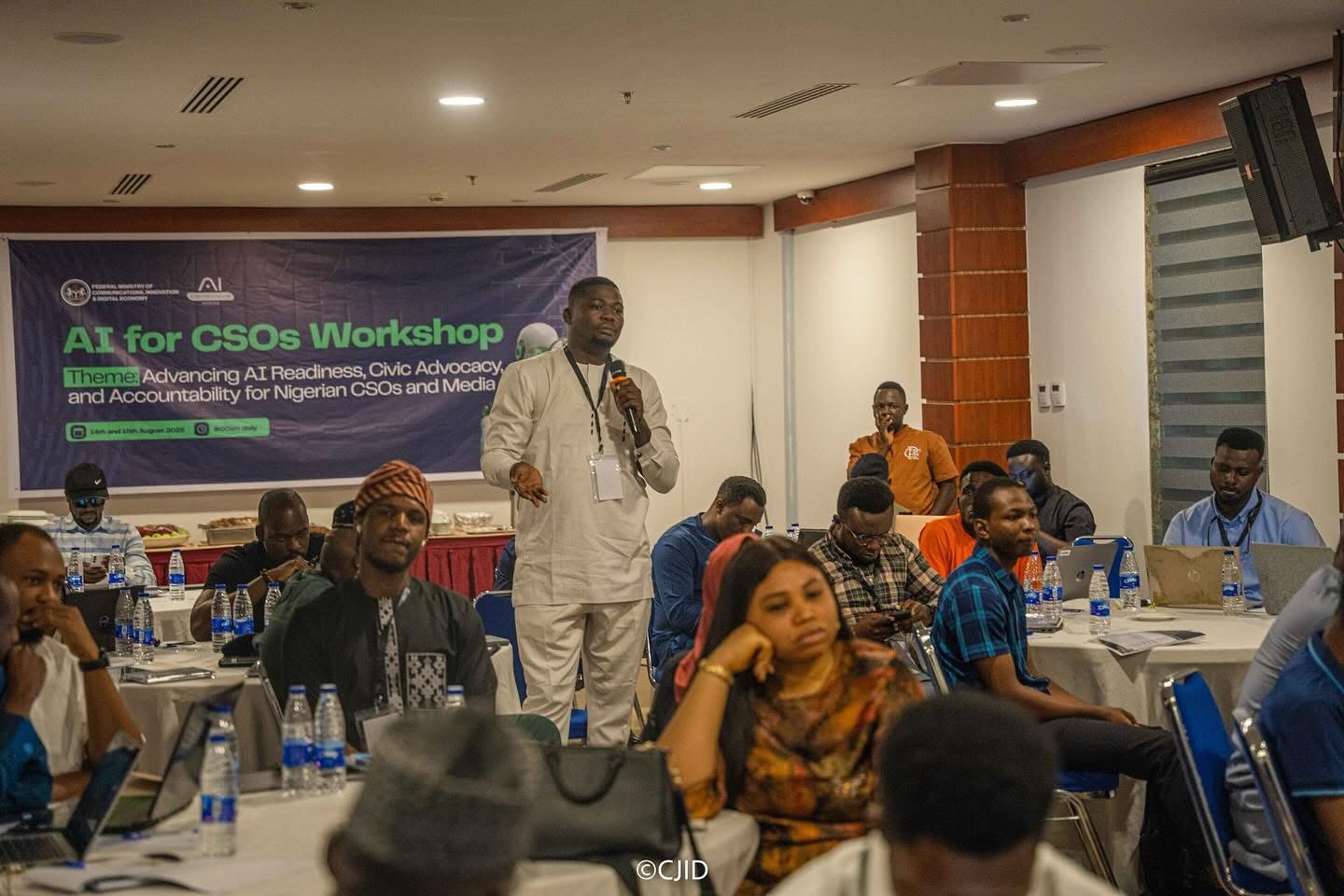
He also highlighted the centre’s work on artificial intelligence. This includes DUBAWA’s audio verification tool, a WhatsApp fact-checking chatbot, and the Nigeria AI Collective. This collective brings together civil society groups, journalists, academics, and tech professionals.
He mentioned that over 600 people from media, civil society, universities, and the tech sector are involved in the collective. Seven civil society organizations have received grants for advocacy, and 70 communication lecturers have been supported to include AI in their teaching.
CJID is also working with partners across West Africa to digitize newspaper archives. They want to create models that understand Nigerian Pidgin and Ghanaian English.
“The systems now being built will increasingly shape how the world understands Nigeria, Ghana and the Sahel. They will draw on someone’s archive and learn someone’s language, and we would like at least some of those archives and languages to be ours,” he said.
In her remarks, Melanie Hui praised CJID’s work on AI innovation, research, and governance. She pointed out that transparency, accountability, and misinformation are still challenges.
She confirmed Luminate's commitment to supporting the Nigeria AI Collective and efforts to grow Nigeria’s AI ecosystem.
Ms Hui said African countries must be able to shape the global AI economy instead of just consuming technologies made elsewhere. She emphasized the role of regulators, workers, and innovators in shaping the continent’s digital future.
She called for fair ownership of digital infrastructure and institutions. She said that meaningful participation in the tech sector must go beyond just access. It must include influence over decisions that shape Africa’s future.
Ms Hui stated that equity means moving beyond participation alone. It means having real influence over the infrastructure, institutions, partnerships, and choices that will shape Africa’s digital future. CJID collaborates with Luminate on AI research, innovation, and governance through the Nigeria AI Collective. The centre leads the collective’s AI governance efforts, working with civil society organizations and the media to study the impact of AI on the information ecosystem and society.




Drop your comment
No comments yet — be the first to drop the gist 👇