
The World Health Organisation (WHO) has announced a new trial for an Ebola vaccine in the Democratic Republic of the Congo (DRC). Health authorities are trying to find out if current and new vaccines can protect against the Bundibugyo strain of the virus.
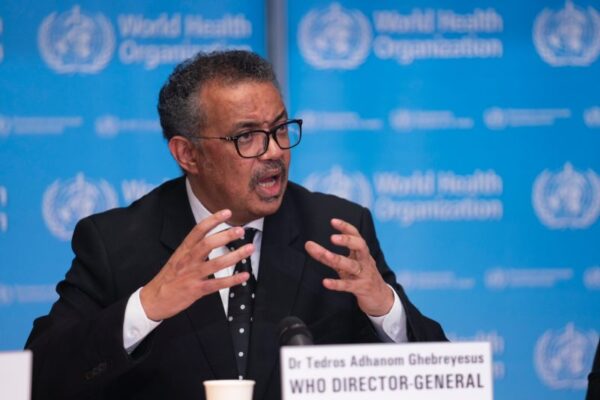
WHO Director-General, Tedros Ghebreyesus, shared this news in a statement on his official X account on Friday. He said the first participants were vaccinated in Bunia, which is in eastern DRC.
The trial is called Tumaini, meaning "hope" in Swahili. It will test vaccine candidates that aim to protect against the Bundibugyo virus, which currently has no approved vaccine.
"Science gives us hope," Mr Ghebreyesus said. He described the trial as a DRC-led effort that is supported by WHO to see if the vaccine candidates can help protect people at risk of infection.
The first vaccination took place on 23 October. This marks the start of a Phase II/III clinical trial aimed at gathering evidence on the safety, immune response, and effectiveness of potential vaccines against the virus.
According to the Coalition for Epidemic Preparedness Innovations (CEPI), the trial started as DRC faced its biggest recorded Bundibugyo virus outbreak. As of 21 October, there were 9,552 cases and 4,602 deaths confirmed in the country, based on information released by the organisations supporting the trial.
Why This Trial Matters
The Bundibugyo virus is part of the group of viruses that cause Ebola virus disease. But it is different from the Zaire ebolavirus, which the existing Ervebo vaccine protects against.
While Ervebo is approved for preventing Ebola virus disease caused by the Zaire strain, its effectiveness against Bundibugyo virus in humans is still unknown. The Tumaini trial will check if Ervebo can offer protection against the strain causing the current outbreak.
Two other vaccine candidates specifically developed for Bundibugyo virus are also set to join the study. One is being created by Moderna, and the other is from the University of Oxford in partnership with the Serum Institute of India.
These candidates will be tested to see if they can produce an immune response and protect people from infection. Their inclusion in the trial should help researchers find out which vaccines could effectively respond to the outbreak.
The study will use a flexible design, allowing several vaccine candidates to be tested within a single clinical trial instead of needing completely separate studies. It will also use a ring vaccination approach, focusing on people who have been in contact with confirmed cases and others who are at high risk.

The trial is being co-led by the Institut National de Recherche Biomédicale in the DRC and the University of Antwerp’s Global Health Institute. The Congolese Ministry of Health is providing national leadership and oversight.
WHO is giving technical and scientific advice, while CEPI is helping with funding and operational expertise.
Previous Vaccine Efforts
The start of the Tumaini trial follows earlier attempts by WHO and its partners to see if existing Ebola vaccines could protect against the Bundibugyo strain. PREMIUM TIMES reported in August that WHO recommended a Phase III clinical trial of Ervebo to find out if it could protect against the virus. This recommendation came after emerging evidence from laboratory and animal studies hinted at possible cross-protection.
According to PREMIUM TIMES, the DRC received 70,000 doses of Ervebo, with 20,000 for clinical trials and 50,000 for health workers. In August, PREMIUM TIMES also reported that CEPI committed $4.17 million to research on whether existing Ebola vaccines could produce immune responses against the Bundibugyo virus. This research involved analysing blood samples from people previously vaccinated against the Zaire strain.
Additionally, PREMIUM TIMES reported that a Phase I human trial started in July at the University of Oxford for an experimental vaccine specifically for the Bundibugyo virus. This candidate, known as ChAdOx1 BDBV, was developed by the Oxford Vaccine Group and Pandemic Sciences Institute in collaboration with the Serum Institute of India and CEPI.
While the earlier Phase I study looked at safety and immune response in healthy adults, the Tumaini trial aims to evaluate multiple candidates during the ongoing outbreak response.
A Wider Public Health Emergency
This vaccine trial comes at a time when there is rising concern over the outbreak's scale and the lack of an approved vaccine specifically for the Bundibugyo virus. The outbreak was declared in the DRC on 15 May, leading WHO to label it a Public Health Emergency of International Concern. The Africa Centres for Disease Control and Prevention also declared a Public Health Emergency of Continental Security.
The outbreak has raised worries about global investment in vaccine research, especially for diseases that mainly affect African countries. The Tumaini trial aims to provide evidence that could guide decisions on using candidate vaccines during the current outbreak and help improve readiness for future epidemics.
But starting this study does not mean a vaccine has already been proven effective against the Bundibugyo virus.


Drop your comment
No comments yet — be the first to drop the gist 👇