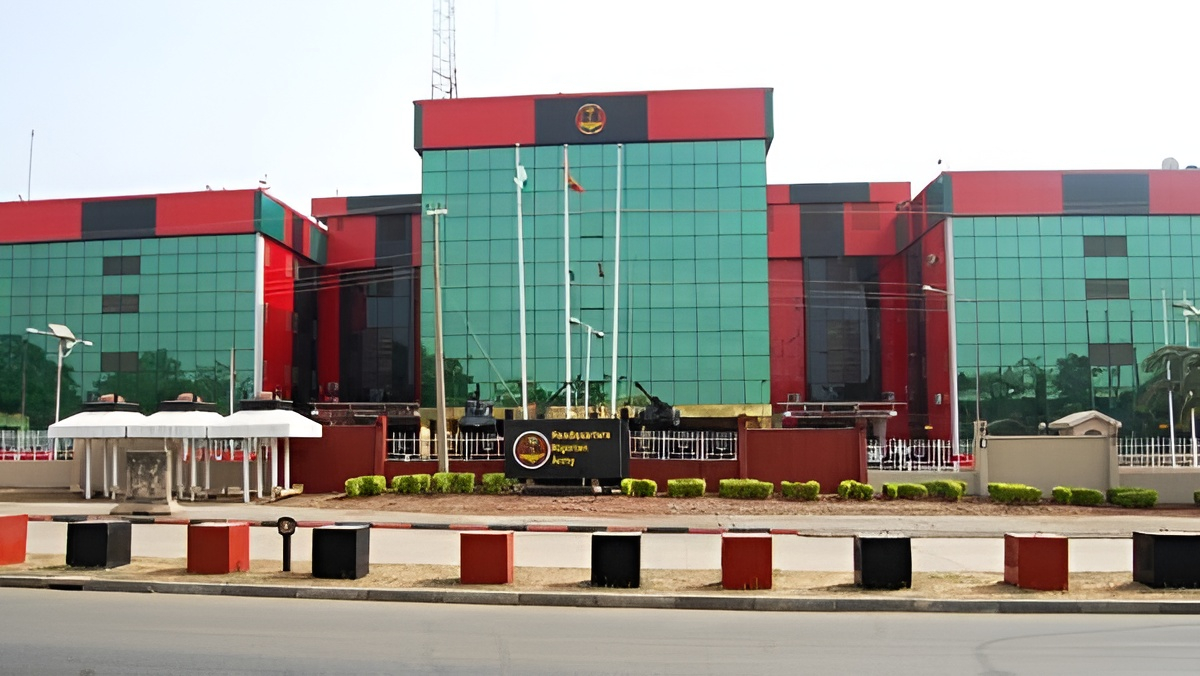
The Defence Headquarters (DHQ) has urged schools in Nigeria to improve security following recent kidnappings of students in Oyo and Borno states. They stated that “no child should have to learn in fear.”
In an advisory released on Friday, the DHQ called the Oyo incident a “call to take better actions to enhance school security.” They provided six steps “we can take together to help ensure school security.”
The advisory highlighted the need for schools to improve physical and digital security systems. This includes building strong perimeter fences, installing closed-circuit television (CCTV) cameras, and using other monitoring technologies that can spot and stop potential threats.
It also encouraged schools to involve trusted youths from local communities to help protect students and school facilities.
Schools were urged to create emergency response plans, carry out regular security drills, and set clear procedures for dealing with emergencies and security issues.
According to the advisory, school leaders, teachers, and staff should be trained to notice, report, and react to suspicious activities and new security problems.
The DHQ stressed the need for strong partnerships between schools, parents, local communities, security agencies, and law enforcement. This will help detect threats early and ensure quick responses when issues arise.
The advisory also called for promoting a culture of vigilance in schools. It asked students, staff, parents, and community members to report suspicious movements, unknown people, and possible threats without delay.



“When you see something, say something,” the advisory pointed out. It noted that quick reporting can help security agencies act early and prevent attacks.
The DHQ’s advisory is in line with Nigeria’s Safe Schools Initiative. This government-led programme started in 2014 after the kidnapping of 276 schoolgirls from Chibok, Borno State.
The initiative aims to protect schools from attacks and other security risks. It includes risk assessments, better security facilities, early warning systems, emergency planning, community involvement, and working with security agencies.
Under this plan, schools are encouraged to conduct vulnerability assessments, create safety plans, set emergency response procedures, and build strong ties with parents, local communities, and law enforcement. The programme also aims to keep learning going in areas affected by conflict.
Recently, the federal government has expanded the initiative with a national financing plan and set up coordination methods to improve school safety across the country.
But even with this initiative, kidnappings of students from their dorms and classrooms are still happening. A recent PREMIUM TIMES report shows that 2,310 students were kidnapped in 30 school attacks since 2014.
Data from this report indicates that the situation is worsening under President Bola Tinubu. His three-year-old government has already seen 13 mass school abductions involving 674 students.



Drop your comment
No comments yet — be the first to drop the gist 👇