At a primary healthcare centre in Kaduna State, Zainab Garba recalls how health workers used to handle heavy bleeding after childbirth. They would give initial care, tell the family how serious it was, and prepare the woman for transfer to a better health facility.
For Ms Garba, who works at PHC Abdukwari in Sabon Gari LGA and assists with deliveries, there was only so much she could do. But she said things began to change when she got trained to use the E-MOTIVE method to detect and manage postpartum haemorrhage (PPH).
“With the presence of E-MOTIVE and the training given to us, we now do better,” she said. “The majority stop bleeding without even being referred.”
Ms Garba is one of the health workers PREMIUM TIMES spoke to during visits to primary healthcare centres in Kaduna. An intervention is trying to solve a major issue in maternal healthcare: the lack of skilled health workers to manage serious complications at the primary healthcare level.
The Task Shifting Task Sharing Project
The intervention, called the Task Shifting Task Sharing (TSTS) project, is led by Pathfinder International in partnership with Impact Catalysts, with support from the Gates Foundation. It aims to strengthen the Community Health Extension Workers (CHEWs) so they can take on more maternal healthcare tasks.So far, 77 CHEWs have been trained across 77 primary healthcare centres in nine LGAs: Kaduna North, Kaduna South, Igabi, Soba, Sabon Gari, Makarfi, Kaura, Jema’a, and Zangon Kataf. They work with nine clinical mentors, one in each LGA, and nine Reproductive Health Coordinators.
Documents reviewed by PREMIUM TIMES show that the CHEWs received training focused on PPH prevention and management, basic emergency obstetric and newborn care, and other maternal and newborn health services. A key part of the training is about preventing, detecting, and managing PPH using the E-MOTIVE approach.
Understanding PPH
PPH is excessive bleeding after childbirth and a leading cause of maternal deaths worldwide. It can happen within the first 24 hours after childbirth, known as primary PPH, or between 24 hours and six weeks after delivery, called secondary PPH.A 2026 Lancet report highlighted by the World Health Organisation shows that PPH affects around 27 million women and kills nearly 43,000 women globally each year. The report also states that PPH costs countries, health systems, and families over $10 billion each year.
The problem is worse in poorer areas. The WHO estimates that more than 85 percent of deaths from PPH occur in sub-Saharan Africa and South Asia. In Nigeria, PPH is a major cause of maternal deaths, accounting for about 23 to 30 percent of maternal deaths, according to the WHO.
Recent data from Kaduna shows the ongoing impact of PPH. A review by the Kaduna State Primary Health Care Board for the first quarter of 2026 identified PPH as the leading cause of reported maternal deaths, with cases in Kudan, Birnin Gwari, and Lere LGAs. This pattern was seen again in the last quarter of 2025, linking maternal deaths in several LGAs to PPH, often after deliveries outside health facilities.
Early Detection is Key
According to the WHO, early recognition of excessive blood loss and starting treatment fast is vital to prevent severe complications. The WHO's latest guidelines recommend measuring blood loss after childbirth. They suggest intervention when blood loss reaches 300 millilitres, especially if a woman shows abnormal vital signs.A tool for this is a calibrated drape placed under the woman after delivery. It collects and measures blood, reducing the guesswork. The WHO also recommends immediate use of the MOTIVE treatment bundle: uterine massage, oxytocic medicines, tranexamic acid, intravenous fluids, and examination of the vaginal and genital tract.
This approach, along with early detection, is known as E-MOTIVE. Evidence shows it can make a big difference. A large trial involving over 200,000 women in hospitals in Nigeria, Kenya, South Africa, and Tanzania found that early detection and bundled treatment cut the risk of severe PPH, surgery for bleeding, or death from bleeding by about 60 percent compared to regular care.
But in Kaduna, having a good method is not enough. There must also be someone skilled to use it when a woman starts bleeding.
Addressing the Workforce Shortage
Tanimu Argungu, the Pathfinder International team lead in Kaduna State, said many PHCs depend on community health workers due to a shortage of nurses, midwives, and other skilled personnel. Data shows that CHEWs make up 28 percent of Kaduna's PHC workforce, while Junior CHEWs account for another 14 percent. Together, they form over 40 percent of that workforce.Before the intervention, task shifting was already common. At baseline, over 84 percent of supported PHCs assigned some responsibilities to CHEWs and other staff, but only 40 percent had been trained for those tasks. Mr Argungu said the TSTS project aims to fill this gap by training health workers to safely take on specific responsibilities.
“We first supported the state to adopt the policy and see how to implement it properly. We realised that many PHCs in Kaduna State were manned by CHEWs and JCHEWs,” he said. Facilities were chosen based on previous reports of maternal deaths, and the CHEWs in those facilities were then selected for training.
Under the TSTS project, 77 CHEWs underwent an initial nine-day training before returning to their facilities, where clinical mentors continued to guide them. The mentorship ran from October 2025 to August 2026, with nine mentors conducting monthly coaching alongside Reproductive Health coordinators.
After training, the CHEWs shared their knowledge with colleagues who didn’t attend the initial sessions. Mr Argungu said continued mentorship is essential. “The mentorship session is key to any capacity building,” he said.
He explained that experience from past training showed that knowledge can fade after workers return to their facilities without proper follow-up. Some workers who did not attend the initial training but took part in the cascade sessions and mentorship also showed improvement.
Adetoun Akor Aliu, Safe Motherhood coordinator at the Kaduna State Primary Health Care Board (KSPHCB), said the shortage of nurses and midwives forced PHCs to rely on CHEWs for some services. She noted that many health workers leave for federal institutions and opportunities abroad, contributing to the workforce shortage. “So task shifting, task sharing was already happening in Kaduna State,” she said.
New Ways to Spot PPH
At PHC Abdukwari in Sabon Gari LGA, Aisha Labaran, a CHEW, showed how the training changed their response to bleeding after delivery. “Before, when we had a PPH case, we used to refer,” she said. “But now, if we have, we treat them through the E-MOTIVE procedure.”One important change is how workers measure blood loss. Before the intervention, they relied on visual estimation. Now, Ms Labaran said they use a calibrated drape to collect and measure blood after childbirth. She said health workers keep an eye on women after delivery and start the PPH response as soon as the diagnosis is made.
She estimated that the facility had handled about 10 PPH cases since her training. The knowledge has also spread, with other staff benefiting from training and mentorship.
Rabiu Abdullahi, the officer-in-charge of PHC Abdukwari, said they used to refer women with PPH due to a lack of skills. Mrs Abdullahi noted that the facility recorded five PPH cases in the two years before the intervention, all referred for higher-level care. Three were sent to TundunWada Teaching Hospital, while two went to Major Ibrahim Abdullahi Memorial General Hospital.
Now, she said they start managing PPH cases themselves instead of automatically referring every case. “We usually referred patients with PPH to a secondary facility because we did not have the competence and skills to handle it,” she said.
Mrs Abdullahi added that the training improved their ability to monitor women in labour, recognise danger signs, and manage PPH when it happens. The knowledge has also been shared with five other CHEWs at the facility.



Aisha Sambo, Reproductive Health coordinator for Sabon Gari LGA, said nine health workers have been trained under the programme in the LGA. She monitors maternal health services across facilities in the area. She noted that facilities that used to rely heavily on referrals for PPH are now managing cases at the PHC level thanks to the training and mentorship from the TSTS project.
Changes at Mando PHC
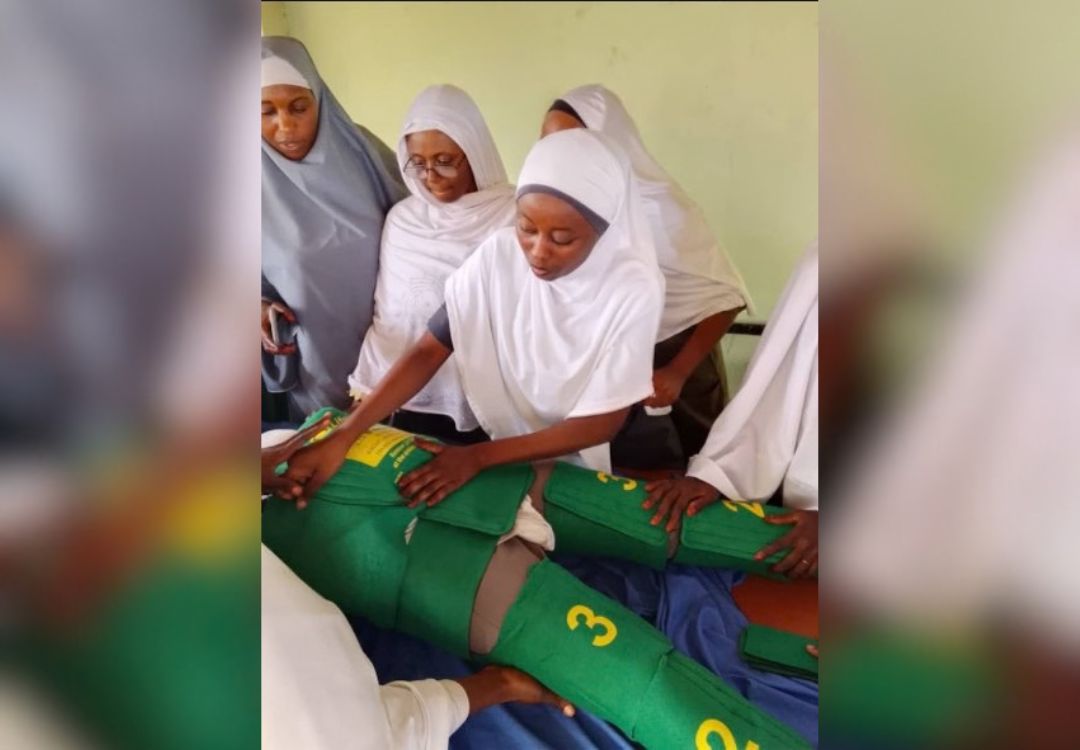
At Mando PHC in Afaka Ward, Igabi LGA, Hadiza Abdullahi spoke about changes in practice. The community health worker said some equipment and medicines used for obstetric emergencies were new to her before her training.For example, she said she used to rely on visual estimation to judge blood loss and had never used a calibrated drape. She also learned how to use tranexamic acid for PPH and apply a non-pneumatic anti-shock garment, which can help stabilise a woman with severe blood loss while treatment or referral is arranged.
“Before, if the woman is bleeding, we can only give her misoprostol and oxytocin and refer her,” Ms Abdullahi said. The facility handled many PPH cases before the intervention and sent them for higher-level care, though she could not provide exact numbers.
Now, she explained, workers follow a more structured response, allowing them to manage bleeding while deciding if the woman needs higher-level care. Ms Abdullahi said they have handled about 20 PPH cases since the intervention started.
Preparation has improved too. Instead of waiting for complications, Ms Abdullahi said they now prepare emergency materials before delivery for faster response if things go wrong. She was the only worker from her facility at the initial training but has since shared her knowledge with about 20 colleagues.
One of those colleagues, Hajara Yunusa, a CHEW at Mando PHC, said she learned the E-MOTIVE method from Ms Abdullahi after the training. Ms Yunusa said the sessions enhanced her ability to recognise and manage PPH and improved her delivery skills. “I learnt E-MOTIVE from Hadiza Abdullahi. I now know how to manage a woman with PPH at the PHC,” she said. “There were many things I didn’t know about conducting deliveries before, which I now know after the training.”
Kyauta Isiaka, a public health midwife and TSTS clinical mentor for Mando PHC and eight other facilities in Igabi LGA, said mentorship helps those who missed the initial training participate in practical sessions at the facility. During her visits, she observes workers, identifies gaps, and reinforces skills.
She mentioned that health workers reach out when they face challenges outside scheduled mentorship visits. Mrs Isiaka believes more health workers need full training instead of just depending on knowledge passed down by colleagues. “There is a need for some of the health workers to still have the complete training if possible,” she said.
Monitoring the Impact
Beyond individual health workers' stories, monitoring records reviewed by PREMIUM TIMES show what has happened across the supported facilities. From October 2025 to June 2026, mentored CHEWs attended 4,337 deliveries at the supported PHCs.During this time, the programme recorded 192 PPH cases managed at the PHC level, 3,323 postpartum family planning insertions, and 9,085 postnatal care services across the facilities. The records state that some PHCs now manage PPH cases that would have been referred, and workers have been trained to stabilise complications before referral.
Fatima Ma’azu, a programme officer for the TSTS project, said the training has improved CHEWs’ ability to respond to PPH at the facility level and lowered the need for referrals. “So far, so good, we have recorded zero maternal mortality as a result of PPH, and we have reduced referrals because the CHEWs can prevent and manage PPH where it happens,” she said.
Encouraging Women to Visit Health Centres
The intervention also relies on more than just training; women need to reach health facilities to get help. The importance of visiting a health centre is clear in the state’s mortality surveillance. Kaduna’s Q1 2026 review found that all detailed maternal deaths followed home deliveries by unskilled providers.Mrs Isiaka, the public health midwife, said community volunteers and Ward Development Committees are working to encourage pregnant women to attend antenatal care and deliver at health facilities. They refer women and promote facility delivery during community meetings and household engagements.
Abdu Zaria, chairman of the Ward Development Committee in Afaka Ward, Igabi LGA, said the committee collaborates with community and religious leaders to encourage pregnant women to seek care at the PHC instead of staying home during pregnancy and childbirth. He noted that more women coming to the facility has resulted in fewer reports of women dying during pregnancy in the community.
Mr Argungu, the Pathfinder International team lead in Kaduna State, noted that one challenge was the distrust of facilities due to a lack of skilled personnel. He said community engagement alongside health worker training helped rebuild faith in the facilities.
Planning for the Future
The TSTS intervention was initially a two-year project. Mr Argungu said it got a no-cost extension into early 2027, with a focus now on state ownership. Documents reviewed by PREMIUM TIMES reveal that Kaduna has a N619.675 million Costed Implementation Plan for 2025 to 2027.This plan, adopted by the Kaduna State Ministry of Health and the State Primary Health Care Board, addresses regulatory support, quality of care, sustainability, clinical care organisation, and monitoring and evaluation.
The state says its plans for task shifting go beyond the Pathfinder-supported project. Mrs Akor Aliu explained that training and mentorship for CHEWs will not stop when Pathfinder’s support ends. “CHEWs remain more widely available across many PHCs than nurses and midwives,” she said.
The state government is still training frontline health workers in maternal and newborn healthcare, with more training planned. Over 527 CHEWs have been trained on PPH and the E-MOTIVE approach across the state, and about 283 CHEWs have received training in essential newborn care.
“And presently, we have a training coming up soon strictly for 50 CHEWs,” she said. Mentorship is continuing, with supervisors returning to facilities to see how health workers are applying their skills and giving hands-on support where needed.
“Continuous mentorship continues,” Mrs Akor Aliu said. “We go back, we see how they are doing, and then facility champions are being selected to continue that process.”
Records reviewed by PREMIUM TIMES show that the State Primary Health Care Board has extended the TSTS mentorship model to 14 LGAs in May and June 2026 without partner funding. The plan also includes reproductive health coordinators providing monthly mentoring and incorporating TSTS quality-of-care tools into the state’s existing supervision system.
There is also a proposed budget line in the state’s 2027 Annual Operational Plan for mentorship and related activities. But funding is a potential challenge. Mrs Akor Aliu acknowledged that the state’s health funding is not always released on time due to cash-flow issues.
She mentioned that support from other organisations in maternal and newborn health has helped the state maintain training and mentorship activities. Mr Argungu also pointed out that financing is a challenge for expanding the intervention, stating the state might need to grow gradually if it cannot fund all LGAs at once.
For Mrs Isiaka, keeping the approach going needs continued investment in both training and follow-up. “We want the training to continue, and we also want the mentoring to continue,” she said.




Drop your comment
No comments yet — be the first to drop the gist 👇