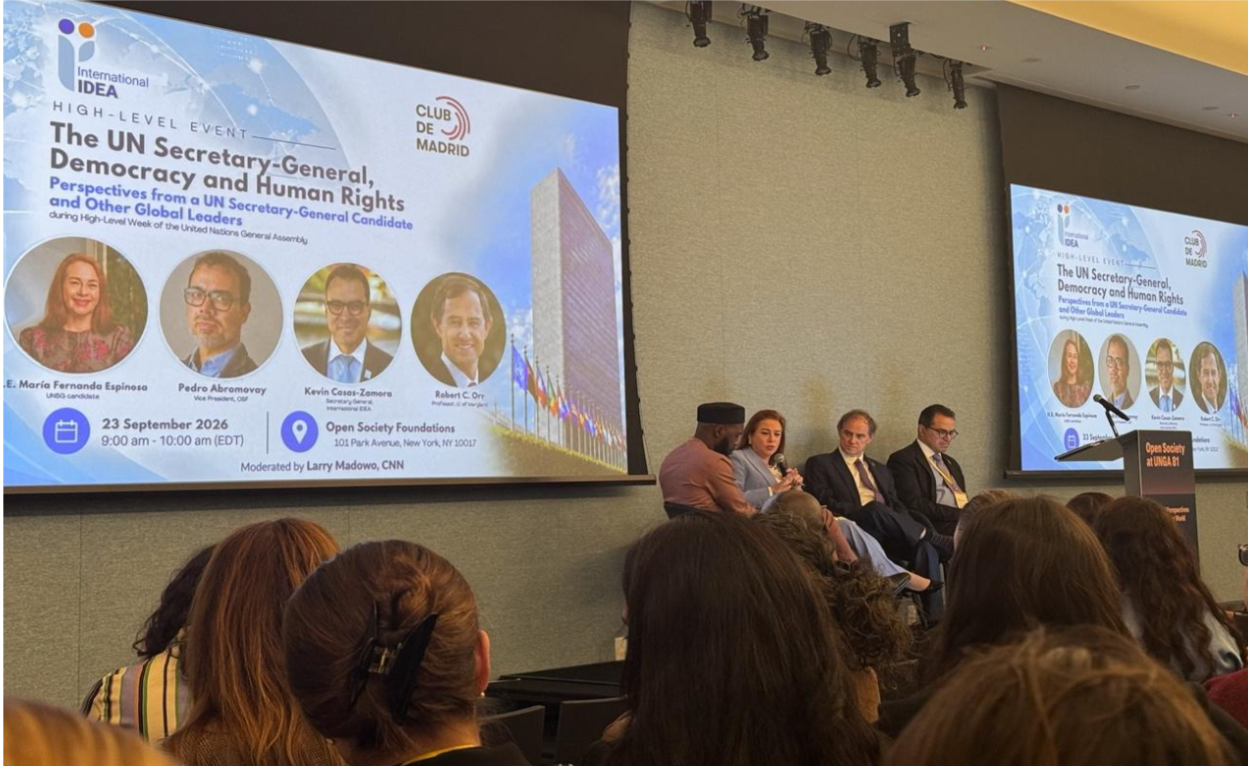
The 81st session of the UN General Assembly wrapped up on 28 September 2026. This year’s theme was “Restoring Trust, Managing Transformation: A United Nations That Delivers for All.” This theme was especially significant for African civil society organizations (CSOs) as the search for a new Secretary-General was underway. Although African governments and business representatives were present in large numbers, African CSOs were not well represented. On 7 September, the CSO umbrella group CIVICUS criticized the UN’s system for CSO accreditation, highlighting “barriers and suspension of badges for ECOSOC-accredited NGOs.”
For CSOs that did not secure accreditation for the General Assembly, there were still chances to learn, influence, and make their voices heard at many side events open to African NGOs. These events were organized by international NGOs, family foundations, and even CIVICUS at the Ford Foundation Office. The dRPC (development Research and Projects Center) was one of the few Nigerian CSOs to attend UNGA 81. They participated in several side events, including GCE-US gatherings, GPE meetings, and the high-level exchange on 23 September led by Maria Espinosa, a key candidate for the next UN Secretary-General. Kevin Casas-Zamora, the Secretary-General of International IDEA, opened Maria Espinosa’s session by stating that “democracy is the single most powerful instrument to promote development.” In a letter to International IDEA regarding session attendance, the dRPC praised International IDEA Nigeria’s strategies to include local NGOs in development efforts.
But for most Nigerian NGOs, attending these side events was tough. This was due to limited funding and philanthropic support for Nigerian civic groups along with cuts in USAID funding. Not surprisingly, of the Nigerian NGOs that came together for the pre-Global Partnership for Education (GPE) replenishment meeting in Abuja on 15 September, very few made it to the replenishment meeting in New York on 23 September. This was a missed chance: the $3.5 billion global replenishment meeting for education financing was led by Nigeria for the first time in GPE’s history.
Another missed chance for Nigerian CSOs was their absence from a gathering of seven North-west governors who agreed to push a common regional agenda for peace, resilience, and economic opportunity during UNGA 81. Still, participation in the International IDEA side event helped address broad issues of conflict relevant to Nigeria. At this event, academic Robert Orr, the Secretary-General of International IDEA, noted that 65 countries are currently facing active conflicts of various kinds. This is the highest number since the end of the Second World War. He added that the real danger lies not at the top but in countries with mid-to-low levels of democratic performance, which often lack checks and balances to prevent abuse of power and have insufficient systems to manage conflicts peacefully.
As African NGOs continue to be sidelined in development decisions, UNGA has become an important space for discussions and commitments on development and humanitarian issues. Making sure resources are available to support African CSOs at UNGA is a key step. This will ensure that civic groups, which understand local needs, have a voice at global discussions where national policies are formed.

Drop your comment
No comments yet — be the first to drop the gist 👇