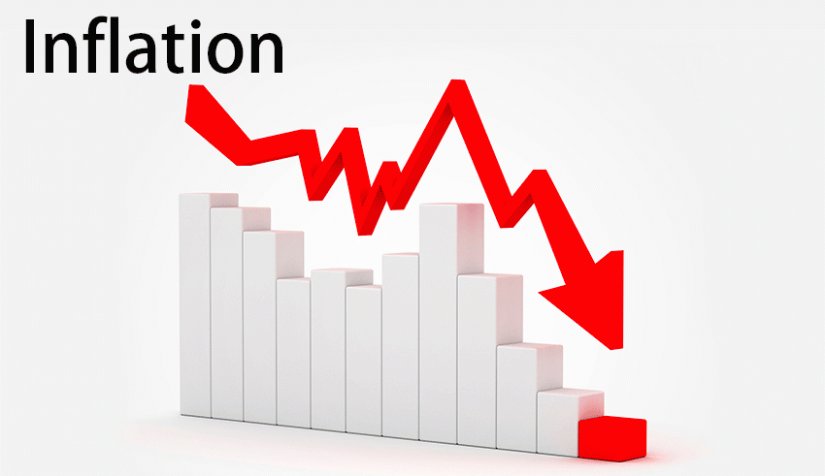
The National Bureau of Statistics (NBS) reports that Nigeria’s inflation rate fell slightly to 15.39 percent in August. This drop happened as food prices increased at a slower pace during the month.
This new figure is a decline of 0.04 percentage points from the 15.43 percent recorded in July. It is also a big drop from the 23.14 percent seen in August 2025.
The statistics agency released this information in its Consumer Price Index (CPI) report for August 2026 on Tuesday.
The CPI measures the changes in prices for goods and services that households consume. It increased to 146.3 points in August from 145.3 points in July. This means prices are still rising, but the rate of increase has slowed down.
On a month-to-month basis, inflation dropped significantly to 0.71 percent in August from 1.57 percent in July.
“This means that in August 2026, the rate of increase in the average price level was lower than the rate of increase in the average price level in July 2026,” the NBS stated.
Food Prices Slow Down
The biggest change in the August figures was the slowdown in food inflation.
Food inflation fell to 19.57 percent year-on-year in August, down from 20.31 percent in July and 25.30 percent in August 2025.
More importantly, the monthly food inflation rate sharply decreased to 1.02 percent in August from 5.56 percent in July.
In July, food inflation had painted a tougher picture for families. PREMIUM TIMES reported that while overall inflation was decreasing, food inflation had increased sharply.
Food inflation rose from 17.52 percent in June to 20.31 percent in July. Monthly food inflation increased from 3.75 percent to 5.56 percent.
The August data shows a change in that trend, with the pace of monthly food price increases slowing by over four percentage points.
The NBS noted that this slowdown was seen in the average prices of items like palm oil, carrots, pepper, onions, cassava flour, beef, yam flour, water yam, melon, fresh ginger, fresh fish, Irish potatoes, wheat grain, frozen chicken, and turkey meat.
The bureau said, “the average prices of food items are increasing at a decreasing rate in August 2026.”
Food and non-alcoholic beverages were the biggest contributors to annual headline inflation, making up 6.16 percentage points. Restaurants and accommodation services added 1.99 percentage points, followed by transport at 1.64 percentage points and housing, water, electricity, gas and other fuels at 1.30 percentage points.
Core inflation, which does not include fluctuating agricultural and energy prices, also decreased in August.
It fell to 13.29 percent year-on-year, down from 14.97 percent in July and 22.93 percent in August 2025.
On a month-to-month basis, core inflation turned negative at -0.06 percent, compared to 0.15 percent in July.
This means that price pressures outside more volatile areas of the consumer basket also eased during the month.
Inflation in Urban and Rural Areas
The NBS data showed that inflation rates varied between urban and rural areas.
Urban inflation was at 15.88 percent year-on-year in August, compared to 16.12 percent in July.
Rural inflation rose to 14.23 percent, up from 13.77 percent in July.
Monthly figures showed a sharper difference.
Urban month-on-month inflation slowed to 0.28 percent in August from 1.90 percent in July. On the other hand, rural month-on-month inflation increased to 1.79 percent from 0.78 percent.
This means that while annual inflation is still higher in urban areas, rural prices saw a faster monthly increase in August.
State-by-State Inflation Rates
The NBS data also revealed big differences in inflation rates across states.
Lagos had the highest headline inflation at 23.68 percent. Zamfara followed with 22.56 percent, and Enugu with 22.06 percent.
Sokoto had the lowest headline inflation rate at 2.11 percent.
For food inflation, Adamawa had the highest rate at 38.85 percent, followed by Zamfara at 37.96 percent and Bayelsa at 36.20 percent.
The NBS warned that differences in what people buy and the importance of items in the Consumer Price Index can make direct comparisons of inflation rates between states misleading.
Understanding the Figures
The figures for August show that the pace of price increases is slowing. Inflation had gradually risen from March to May.
Headline inflation rose from 15.38 percent in March to 15.69 percent in April and 15.93 percent in May. It eased to 15.91 percent in June and 15.43 percent in July.
The small drop continues in August.
The change in food inflation is especially important for families since food is a major part of spending. Unlike July, when monthly food inflation spiked, the August figure shows that food prices rose at a much slower rate.
But the lower inflation rate does not mean prices of goods and services have dropped. It means prices are still rising, just at a slower pace than before.


Drop your comment
No comments yet — be the first to drop the gist 👇