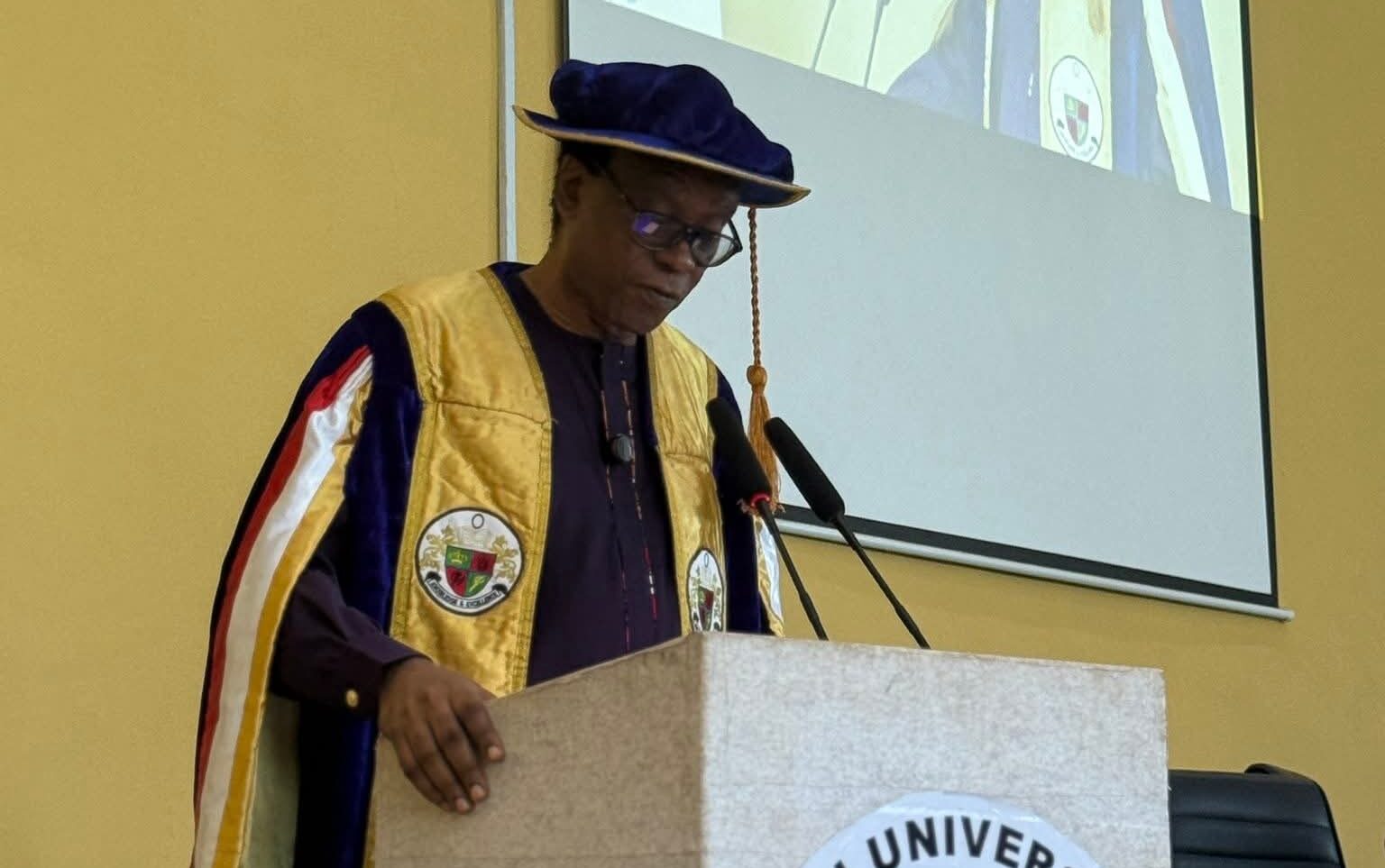
Environmental activist and director of the Health of Mother Earth Foundation, Nnimmo Bassey, has urged the Edo State government and its people to safeguard their forests. He wants them to stop environmental damage and invest more in renewable energy.
He believes these steps will help tackle the growing effects of climate change in the state.
Mr Bassey made this appeal on Friday during his keynote speech at the 2026 World Environment Day event at Igbinedion University in Okada, Edo State.
Speaking on the theme, "Now for Climate: Nigeria’s Moment, Edo’s Opportunity, Universities at the Vanguard of the Climate Transition," he said action on climate change cannot wait. He warned that any delay will worsen the environmental, economic, and social problems already affecting communities in Edo State and Nigeria as a whole.
Mr Bassey highlighted that Edo State has important ecological resources, including forests, diverse species, and fertile land. He said these should be protected and restored to strengthen the state's ability to face climate change.
"Edo has an opportunity to build a future based on ecological sustainability, renewable energy, food sovereignty, environmental justice, and community wellbeing," he stated.
He warned that ongoing deforestation, oil pollution, and gas flaring are endangering the state’s environmental resources and hindering climate change efforts.
According to him, oil-producing communities in Edo deal with environmental issues similar to those in the Niger Delta. This includes oil spills, gas flaring, and damage to ecosystems.
He pointed out that while many focus on carbon emissions from fuel use, environmental harm starts when fossil fuels are extracted.
He urged governments and organizations to quickly shift away from reliance on oil and gas.
Mr Bassey mentioned that Africa only contributes a small part of global greenhouse gas emissions but suffers greatly from climate issues like floods, droughts, desertification, and food shortages.
He argued that climate change must be looked at through a justice lens, saying that countries and companies responsible for most historical emissions should take more responsibility for solving the crisis.
"The communities most exposed to climate impacts are often those with the fewest resources to adapt," he said.
The activist also criticized what he called an extractive development model that favors profits over protecting the environment and the wellbeing of communities.

He warned against replacing oil dependence with a form of “green colonialism,” where communities pay the environmental price of renewable energy projects without reaping the benefits.
Mr Bassey challenged Nigerian universities to take a leading role in tackling climate change through research, innovation, and community involvement.
He said climate education should cover all fields, not just environmental science.
"Every student graduating today will enter a world shaped by climate realities," he noted.
He urged universities to focus research on local needs like renewable energy, agroecology, water management, biodiversity conservation, and community resilience.
He added that universities should also act as examples of sustainable practices through investments in renewable energy, reducing waste, conserving water, and restoring ecosystems.
Mr Bassey said higher education institutions must connect scientific knowledge with local environmental practices by engaging with communities.
He emphasized that universities need to examine climate-related policies and projects to ensure they truly benefit the environment and society.
The environmentalist said this year’s World Environment Day theme shows the urgent need to respond to a global crisis marked by climate disruption, loss of biodiversity, pollution, food insecurity, and growing inequality.
He warned that not acting decisively could lead to deeper instability in societies.
"The future will not simply happen to us. It is something we collectively create," he said.
"The urgency captured by the theme ‘Now for Climate’ reminds us that delay is not an option."
He called on governments, academic institutions, communities, and citizens to act quickly to protect ecosystems, cut down reliance on fossil fuels, and create sustainable economies for future generations.


Drop your comment
No comments yet — be the first to drop the gist 👇