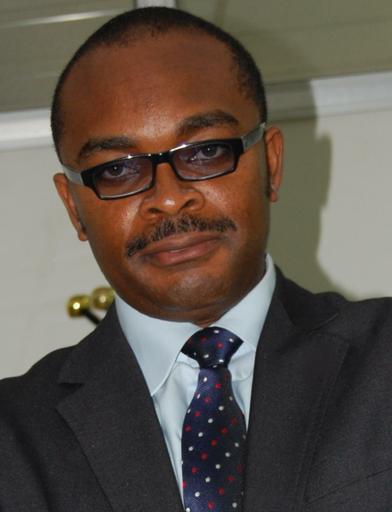
When Nuhu Ribadu spoke at the Ladi Kwali Hall in January 2006, he was still a popular chairman of the Economic and Financial Crimes Commission. His message had the urgency of someone who believed Nigeria could still be saved through strict law enforcement.
“Let us speak the truth,” he kept saying. “Let us call a spade a spade.”
The crowd at the Third Annual Trust Dialogue cheered him on. Here was a public figure who seemed to know that corruption was more than just a moral failing. It was a deep-rooted problem. A serious issue. Something that could destroy a nation while the powerful debated trivial matters.
“For your information,” he said, “nothing will ever happen to this country.”
I interviewed Ribadu several times during those EFCC years, alongside my colleague, Hajiya Zainab Suleiman, who was the Editor of Weekly Trust. What struck me was not just his knowledge.
Nigeria sometimes sees smart public figures. Occasionally, we have energetic ones too. But it is rare to meet someone who clearly cares deeply about Nigeria's future.
Ribadu spoke about corruption like it was a personal attack.
That passion was real.
Yet, being sincere does not exempt a public official from criticism. Ribadu insisted that powerful people should be judged by their results, not their feelings.
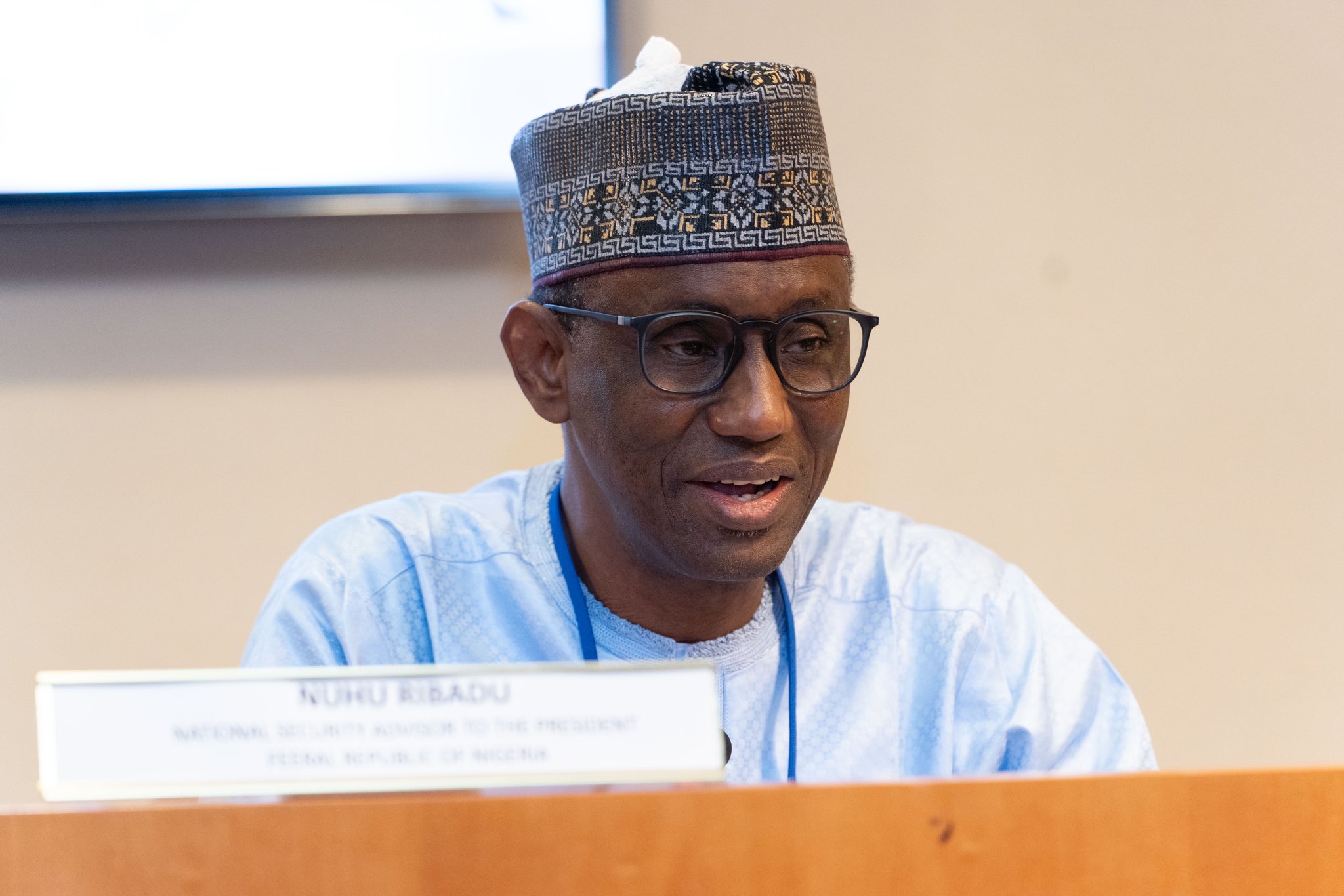
He taught many journalists, including me, the importance of speaking plainly. Now, nearly twenty years later, Ribadu is the National Security Adviser to President Bola Tinubu. The big question in northern media and among the political elite is whether the energy he had at the EFCC has turned into a clear security plan.
Or has he, who once took on the powerful, been limited by the politics he once opposed?
Let me clarify a point made in some discussions about Nigerian media: the idea that the Trust newspaper group has a bias against Ribadu.
Having worked on its Editorial Board, I can say that the group does not have a fixed stance on public figures. Its approach, though not perfect, is to allow strong opinions regardless of whether they support or challenge the establishment. I do not think there is one clear view on Ribadu. Instead, there is a lively discussion in the North about what he represents.
In the North, issues of security are personal. They affect lives directly.
The debate is not about Ribadu's skills. No one doubts his ability in a general sense. The real question is whether a northern Muslim working under a southern president can fix a security system that has failed northern areas for years.
And if the results are mixed, is that due to his personal skills, politics, or the system itself?
Early in Ribadu’s time as NSA, starting in mid-2023, some Trust publications embraced a narrative that could be called the technocratic savior story. A popular Daily Trust article by Yakubu Dati, titled “NSA Nuhu Ribadu: Silently Eclipsing Insecurity” (April 2024), praised his smart coordination style, management skills, and non-military outlook.
The main argument was simple. Modern security issues like banditry, kidnapping, and arms trafficking cannot be solved by force alone. They need smart systems. Good administration. Intelligence sharing. And financial disruption.
This angle served a political purpose. It shielded Ribadu from critics who doubted his military background. It drew on the respect he earned during his anti-corruption days. It gave the North a hopeful story: one of their own was now at the heart of national security, even under a southern president.
But keeping hope alive is tough when people cannot even safely go to their farms.
By early 2025, the tone of comments had shifted. Ongoing killings and kidnappings in Benue, Oyo, and the North-West made claims of progress hard to believe. Columnists began asking for clearer evidence. What had actually improved? Where were the specific reforms? How can one explain success to a villager still sleeping with one eye open?
These were fair questions.
The appointment in May 2026 of retired Major General Adeyinka Famadewa as Special Adviser on Homeland Security added to the discussion. Some northern voices saw this move as a sign that Ribadu had lost favor.
In a Daily Trust opinion piece in early June 2026, Iliyasu Gadu called it “poetic irony”: a former anti-corruption fighter now facing what looked like a demotion.
That view is tempting but not very strong.
A better interpretation is that the Tinubu administration is gradually expanding security coordination. Ribadu remains NSA with significant strategic power. Famadewa’s role seems more focused on operations.
In complex systems, dividing tasks does not mean failure. It often means the job is too big for one person.
Trust publications have also shared different views. In his “Line of Sight” column for Daily Trust, published also in early June 2026, Abubakar Adam Ibrahim argued that claims of Ribadu's decline are “greatly exaggerated” and that he is still key to Tinubu’s plans.
The tendency to see every bureaucratic change as palace politics reflects Nigeria’s overly political culture more than Ribadu’s actual position. Much of Nigerian political analysis sounds like gossip dressed in a flowing babanriga.
Ribadu’s public messages have not always helped. His controversial comment referring to bandits and terrorists in the North-West as “our brothers” became a public relations nightmare. He meant it in the context of dialogue and deradicalization. But the reaction was one of understandable anger.
For families who have buried loved ones or sold property to pay ransoms, that phrase felt careless.
The truth is likely less dramatic than either supporters or critics want. Ribadu was speaking in the casual style common among Nigerian officials who do not realize how sensitive audiences can be.
In a more careful communication setting, that phrase would not have passed. The issue is bigger than Ribadu. Nigerian officials often speak as if every audience is private and forgiving. The modern media landscape is neither.
This is why I always stress the need for proper media training for public figures in both the public and private sectors. What you say and how you say it matter just as much as your intentions.
For the record, I have written about Ribadu before. It is only fair to recognize both the good and bad. In my coverage of the 2006 Trust Dialogue published in Weekly Trust, I admired his passion and saw him as part of the pan-Nigerian reform movement I believe in.
But I also pointed out the flaws in his speech. He complained about family pressures but did not offer real solutions.
Also, I criticized the event organizers for not providing basic refreshments for attendees.
The principle is simple: no one is beyond scrutiny. Not the reformer you admire. Not the organization that pays your salary.
Ironically, Trust helped develop that mindset in many of us.
Ribadu’s EFCC record was genuinely transformative. We can debate specific cases, but his excellent record is hard to challenge. His early efforts as NSA showed promise in intelligence sharing and diplomacy. Yet ongoing mass kidnappings and a lack of clear performance measures give valid reasons for continued questioning.
Holding both truths is not inconsistency. It is the minimum for serious analysis.
For the northern political class and the media around it, Ribadu carries a weight beyond normal expectations. He must provide security for a region battered by years of banditry and kidnapping. He has to do this within a federal system that complicates policing and military coordination. He must earn the trust of a southern president while staying connected to northern concerns.
That is a heavy weight. It is also what he signed up for. He knew the stakes from Day One.
The bigger question for Nigeria is whether our security discussions can move beyond regional biases. Insecurity hits the South-East through separatist violence. The South-South faces oil theft and militancy. The South-West is also dealing with rising kidnappings.
A national perspective means seeing Ribadu not just as a northern figure in a southern government, but as a Nigerian official trying to manage a very damaged system.
By that standard, the verdict is still out.
The system is still changing. The results are still debated. The political noise is overwhelming. To declare clear success or failure by mid-2026 is to confuse speculation with settled judgment.
To me, the coverage of Ribadu by Trust reflects, sometimes unevenly, the wider northern discussion about legitimacy, security, reform limits, and disappointment. It is neither fully supportive nor fully critical. It shows a region that has endured too much to accept easy answers and has seen too many false hopes to blindly trust any single figure.
I still recall the man who spoke in Ladi Kwali Hall two decades ago and confidently said that nothing would ever happen to this country.
That sincerity was real.
But sincerity alone does not make a plan. Passion is not a measure. Hope alone does not secure roads or bring back kidnapped children.
Nuhu Ribadu once urged us to speak the truth. He needs to be judged, as he insisted others should be judged, by clear results, not just words.
Until those results are clearer and more consistent, the northern view and the national conversation will stay alert, doubtful, and rightly demanding.
The nation is watching. And it should be.
Drop your comment
No comments yet — be the first to drop the gist 👇