In May 1897, American writer Mark Twain was on a speaking tour in the UK when news broke in the US that he was ill and even dead. One newspaper published his obituary. When a reporter finally reached Twain and asked for his thoughts on the news, he replied, “Reports of my death were an exaggeration.”
National Security Adviser, Nuhu Ribadu, is no Mark Twain, but for the past few weeks, many have been talking about his supposed political downfall. This chatter grew after President Bola Tinubu appointed Adeyinka Famadewa, a retired Major General, as Special Adviser on Homeland Security. Since this role did not exist before May 11 when it was announced, people have been speculating. Like Twain, could these rumors about Ribadu’s political decline be greatly exaggerated?
The claims about Ribadu’s supposed “political fall” seem based on personal interpretations, not hard facts. The assumption is that Famadewa’s appointment means Ribadu has lost his closeness to the president, which is where he gets his political power. Our system often revolves around individuals rather than institutions. These narratives often overlook two key facts. First, Ribadu is still the National Security Adviser. Second, the presidency has explained that Famadewa’s appointment adds another advisory role but does not remove Ribadu or change his duties. The presence of another security adviser does not mean a loss of trust but broadens Nigeria’s strategy in dealing with serious security issues.
Claims that Ribadu has lost his closeness to the president also ignore their long-standing relationship. Tinubu supported Ribadu's presidential run in 2011 under the Action Congress of Nigeria (ACN) even when the PDP-led government targeted both men. This bond has been built on loyalty, visible and costly. Ribadu’s remarks about “Tinubu Gains” show loyalty at a time when other appointees chose silence. It was a risky move for the NSA, but it showed he is willing to stand by the president.
While many comments focus on Ribadu’s northern roots and political influence, it is important to note he is still one of the most prominent northerners in the government. This makes him a target for criticism, especially given the many challenges facing the country and the north.
People may not agree with Ribadu’s conclusions, but discussing security issues and defending the government’s record is part of his job. While he shows loyalty to the president, it is crucial for him to remember that his main job is to act as a technocrat. The best way he can show loyalty to the president and the nation is by effectively doing his job and minimizing insecurity. That is what really matters.
Tinubu’s decision to create the new office of Special Adviser on Homeland Security has been seen in two ways. Some view it as a political move, mixing political commentary with actual institutional changes. Others see it as a necessary operational adjustment in national security to tackle Nigeria’s insecurity. Any analysis of Ribadu’s ongoing role should recognize that functioning in public office relies on constitutional authority, not perceptions of political influence.
None of the analysis claiming Ribadu’s political decline provides evidence that the president has lost confidence in him, limited his responsibilities, or left him out of key security decisions. Ribadu’s statutory authority is still intact.
Looking at his scorecard, Ribadu’s performance will not be judged by how well he plays politics or how close he is to Tinubu. It will be based on security metrics. Have we reduced terrorist networks? Are kidnappings decreasing? Are we collecting the right intelligence, and are security agencies working together better? This should be the main focus for Ribadu’s critics and for him.
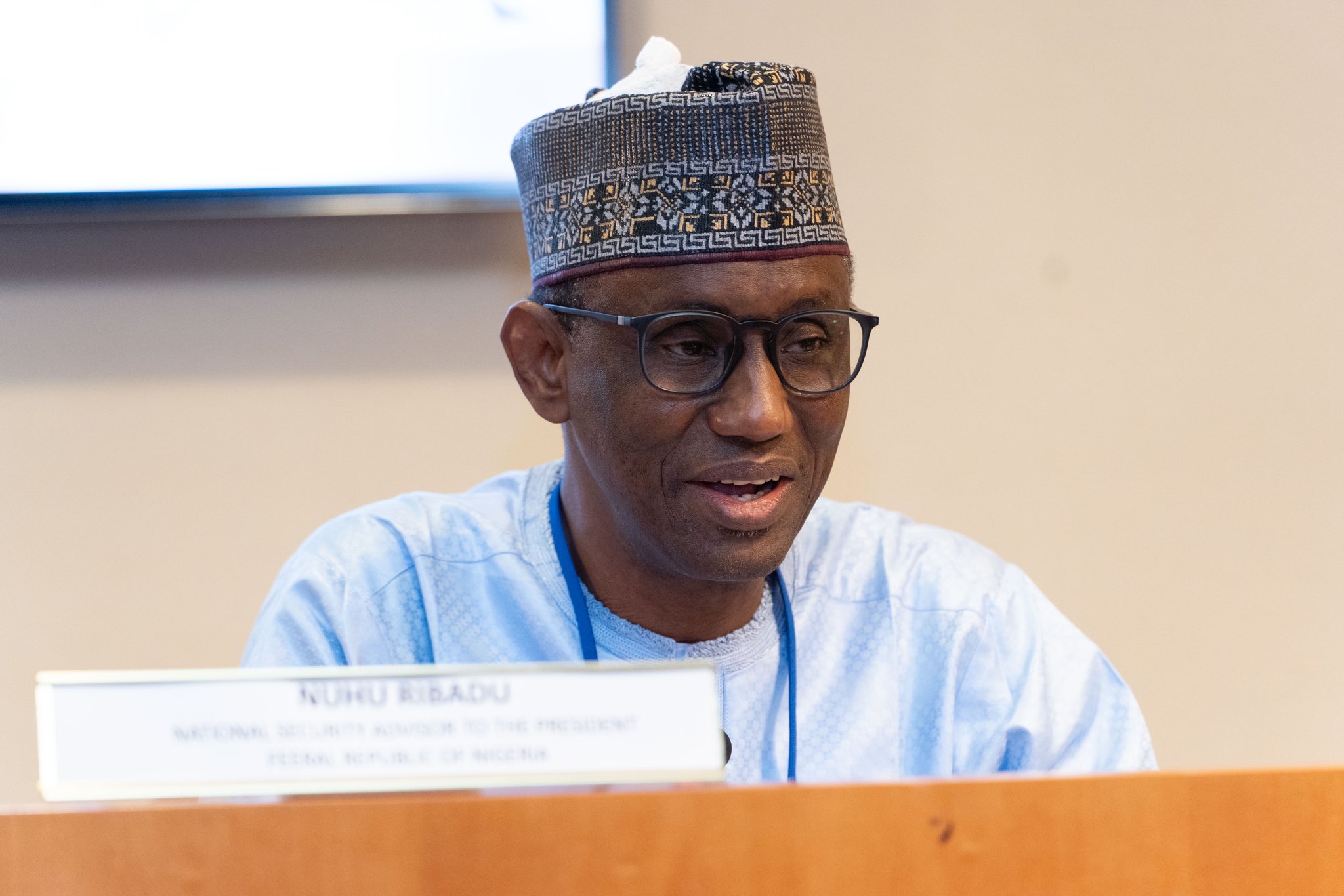
One of Ribadu’s significant moments was the US threats to Nigeria late last year. The Nigerian government responded by reframing that narrative instead of arguing with the US.
In November 2025, Ribadu led Nigeria’s team to engage key US institutions, including Congress, The White House, and the State Department. He made another visit in January 2026 for a joint US-Nigeria Working Group session. These important meetings changed the US attitude towards Nigeria from hostility to a partnership that helps with our security challenges. It is easy to overlook the NSA’s role in this partnership, but it was possible mainly because of Ribadu’s integrity and strong relationships built over time during his anti-corruption efforts.
As NSA, Ribadu holds a high-profile position and will naturally face public scrutiny. This is even more so since he is seen as influential. He has been a controversial figure since his days as head of the Economic and Financial Crimes Commission and continues to be as NSA. Both roles attract a lot of public and political attention. Yet, framing the discussion around him through ethnic or religious lenses undermines the importance of his role.
National security is a federal responsibility, and appointments in this area should be judged on competence and results. While Ribadu could improve, the jury is still out on his performance. We must hold him accountable to ensure he meets his main responsibilities and criticize him constructively when he falls short. Criticism is normal and should be encouraged but should not be seen as proof of failure.
Despite ongoing rumors of a political decline, Ribadu continues to perform his official duties. Between May 4 and 11, he took another important trip to the US, representing President Tinubu in high-level meetings with US Vice President JD Vance, Secretary of State Marco Rubio, and senior American national security officials. These talks focused on counterterrorism and intelligence cooperation. He has also received public reassurance from presidency sources confirming he remains the NSA. All these signs do not suggest a sidelined official.
Having ventured into politics in 2011, Ribadu might have engaged too much in political matters for his current role. The ongoing discussion about his political relevance serves a purpose. It helps him refocus on his primary duties. The rising security issues in Nigeria, like the recent Oyo school abductions and the fight against bandits and terrorists, should be at the top of his agenda. Solving these problems and securing the country from various threats should be his main focus, not worrying about political relevance.
In every government, political dynamics change. But claims of a sudden fall from power, like Twain’s supposed death, are exaggerated and perhaps too quick. Time will assess his performance and standing, but current evidence does not support the premature obituaries some commentators have written.
Drop your comment
No comments yet — be the first to drop the gist 👇