
If you wake him up at midnight or just before dawn, and ask him for solutions to the Niger Delta’s problems, he will respond clearly and insightfully. His grasp of the region's challenges is unmatched.
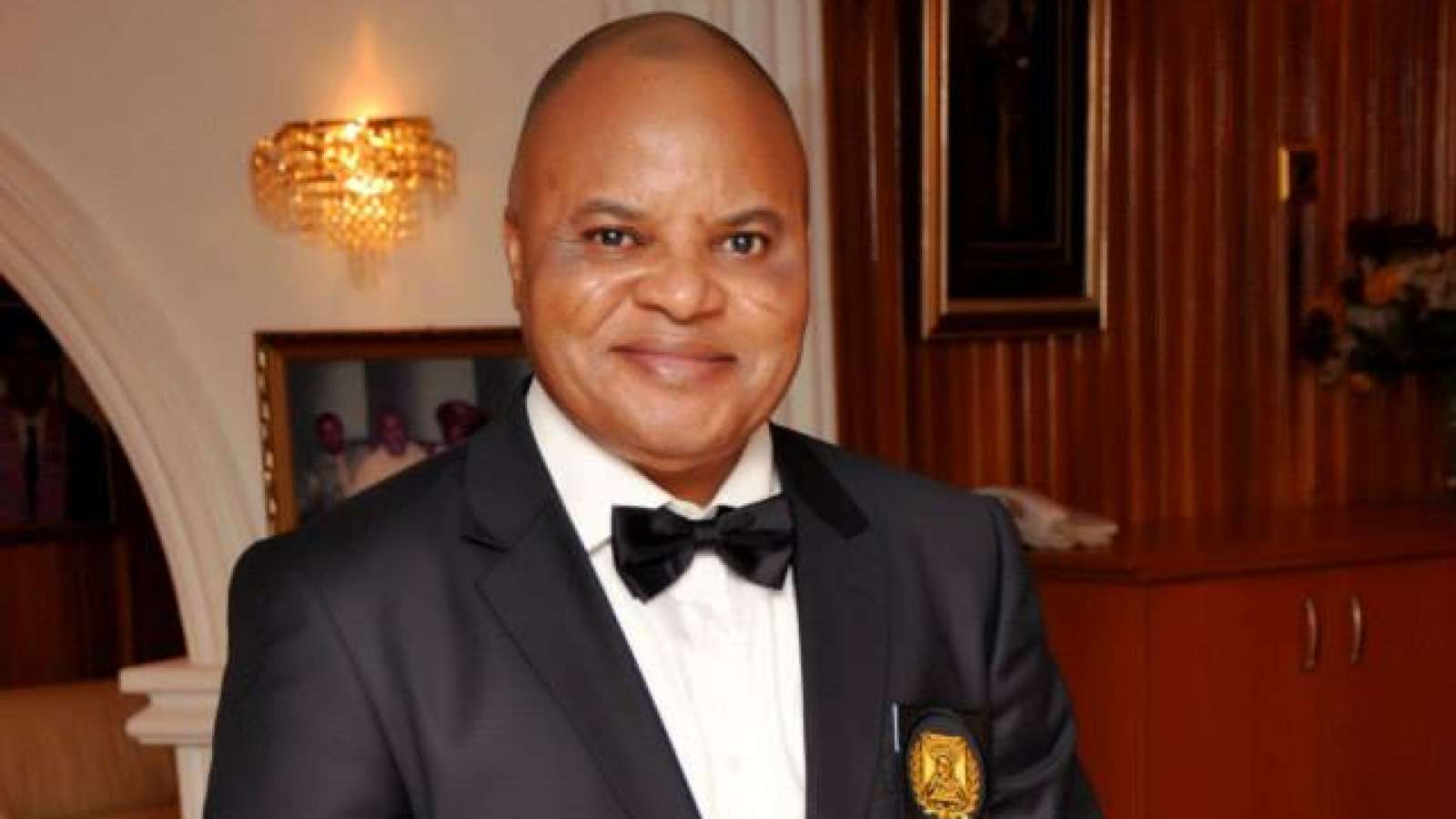
His name is Chief Ndutimi Alaibe, or simply ‘Timi. In recent years, he has been involved in various peace efforts and development strategies led by the federal government in the Niger Delta.
Just a few days ago, in Yenogoa, Bayelsa State, ‘Timi made some strong statements that should keep our policymakers awake. If Nigeria had leaders focused on development, his words would be taken seriously.
He presented bold facts supported by undeniable statistics that should spark more discussions and prompt action. His ideas were not political; they were aimed at prompting a fresh look at the Niger Delta issue beyond just talk.
‘Timi, a development strategist, shared his thoughts at a Summit hosted by the Nigeria Institute of Management. He started the conversation by describing the Niger Delta as a resource-rich area that is underperforming. The region fuels Nigeria but remains in the dark.
While discussing: Strengthening the Niger Delta Economy Through Strategic Innovation in Local Content and Management, ‘Timi highlighted several challenges. These include limited industrial growth, high unemployment, weak participation in value chains, lack of infrastructure, oil theft, and vandalism.
What made his talk valuable was that ‘Timi didn’t just mention the problems, anyone can do that. He also provided practical solutions to address these issues.
The audience listened closely as he explained what he called the four pillars for transforming the Niger Delta economy. The first pillar focused on enhancing the value chain in petrochemicals, which includes refining, marine logistics, and gas commercialization instead of gas flaring. He noted that revenue lost from gas flaring in 2024 alone was about $1.1 billion.
He discussed the key actions needed to deepen the value chain. These include fully implementing the Petroleum Industry Act, enhancing domestic crude oil supply to refineries, enforcing the gas flare commercialization program, building Nigeria’s petrochemical infrastructure, and investing in ports and maritime facilities.
‘Timi specifically called for higher penalties for gas flaring to discourage routine flaring. This means that government agencies must improve monitoring at flare sites to ensure transparency and enforcement.
Regarding domestic crude supply for refineries, he pointed out that while the PIA includes obligations for domestic supply, the real issue is making it happen. For example, Dangote Refinery has struggled with insufficient domestic crude oil supply, even though Nigeria is a major exporter of oil.
The second pillar is human capital innovation, which includes technical skills, digital skills training, and partnerships between industries and universities. ‘Timi suggested creating a Niger Delta human capital investment zone by designating skills and innovation corridors in selected universities in the region.
To make this happen, he proposed fast-tracking the accreditation of programs at those universities, offering tax incentives to industry partners, and creating a regional talent registry.
The third pillar focuses on infrastructure and industrial clusters, which include free zones, energy parks, and modernized ports and logistics. Citing credible sources, ‘Timi stated that Nigeria has invested 300 billion dollars in free zones since their inception, calling it a national economic asset.
He reminded everyone that the construction of a 612-meter bridge connecting Ikpokiri Island to the Onne Free Zone and a 3.5-kilometer dual carriage highway into Notore industrial city, both approved by the government, are yet to be built.
He explained that while building a short bridge and a few kilometers of road may seem simple, in business terms, they can be the difference between potential and real investment.
Citing trusted documents, ‘Timi revealed that the Onne Oil and Gas Free Zone shows what can happen when infrastructure, policy, regulation, and investment align for positive outcomes.
He said the Free Zone is the largest oil and gas free zone in the world and one of Africa’s most successful areas for foreign investment, stating, “over 200 companies from various countries operate within the zone, with billions of dollars in investment and tens of thousands of jobs created.”
Turning to Warri Free Zone, ‘Timi said it should be developed as a major agro-industrial and manufacturing center, creating incentives for food processors, cold chain operators, packaging manufacturers, and logistics providers.
He noted that this would position Warri as the industrial hub of the Western Niger Delta, complementing the role of Onne in the Eastern Delta. This can be done without major sacrifices, just the right infrastructure, incentives, and coordination.
He pointed out that delays in discussions between NNPC and investors have stalled the Brass Oil and Gas City project. He stated, “Brass Gas City must become a real platform for LNG, methanol, gas processing, petrochemicals, and export-led manufacturing.”
Taken together, ‘Timi explained that Onne, Warri, and Brass indicate a larger possibility. This is a connected industrial system built around ports, gas, free zones, manufacturing, logistics, agriculture, and export markets.
He said, “Countries like Saudi Arabia, the UAE, and Malaysia understand that natural resources create wealth only when they connect with infrastructure, processing, industrial clusters, and export value chains.”
He declared, “The Niger Delta has not lacked assets. It has lacked the infrastructure to connect those assets into a system, not islands of excellence, but a continent of impact.”
As a former managing director of the Niger Delta Development Commission, ‘Timi recalls the lack of enthusiasm from the government to approve and implement Nigeria’s equivalent of the post-war Marshall Plan, the Niger Delta Development Master Plan.
His analysis shows that the Niger Delta does not lack vision documents, but it needs a funded and practical master plan that connects free zones, ports, cities, waterways, gas pipelines, power systems, and digital infrastructure into one economic system.
These need to align with the Africa Continental Free Trade Area (AfCFTA), powered by cleaner energy and designed for industrial scale. He added, “the future of the Niger Delta cannot rely on extraction alone. It must focus on infrastructure, processing, logistics, manufacturing, and value addition.”
The last pillar, ‘Timi stated, is viewing security as an economic enabler. He said this can be achieved through technical surveillance, community frameworks, and institutional coordination. His belief is that if these four pillars are treated as assets, they will lead to significant economic growth in the region.
He reminded his audience that many years after the enactment of the PIA, most upstream license holders have not set up their Host Community Development Trusts.
He urged relevant agencies to move from just talking to enforcing their legal obligations, as every host community deserves the benefits outlined in the law.
He shared some figures: by October 2025, the Trust is expected to reach about ₦373 billion, with 536 community projects ongoing, while prior reports showed over 100 Host Community Development Trusts incorporated.
In his words, “these are early signs that peace and development can be strengthened when host communities see direct, structured benefits from oil and gas operations. But we must not celebrate too soon.
“Sabotage is still a major cause of oil spills, accounting for about 59 to 66 percent of reported incidents in 2024, depending on the data. This is not petty vandalism. It is organized economic sabotage.”
To make real progress, he said gains must be institutionalized and not depend on any single contract, company, or person. He added that Nigeria needs a solid framework that combines technology, community involvement, enforcement of regulations, intelligence coordination, and real economic inclusion.
‘Timi believes that simply putting money into a trust is not development. He said, “the government should demand independent project audits, community oversight, and transparent public reporting.” When communities can see what is being built and who is responsible, trust will grow, and conflict will reduce.
He called for technology-driven surveillance, stating that AI-enabled monitoring, fiber-optic monitoring, satellite images, and drone inspections should be standard for protecting Nigeria’s energy infrastructure. He emphasized that technology should support, not replace, community involvement.
He noted that in 2022, the federal government gave a pipeline surveillance contract to a private security company, and the results have been significant. Citing a NEITI report, he shared that crude oil theft and losses fell by 79% between 2022 and 2023, and this model has become a reference for community-based pipeline protection.
He mentioned local knowledge, community relationships, and understanding of the creeks as key factors that outsiders cannot easily replicate.
Thus, “the lesson is clear: the most effective security setup for the Niger Delta must include the Niger Delta itself.”
Discussing the need for a Niger Delta Economic Security Coordination Centre, he revealed that Nigeria currently lacks an agency responsible for maintaining a shared understanding among oil sector regulators, security agencies, operators, and host communities.
His suggestion, which received applause, is that this Centre would integrate intelligence, coordinate responses, and publish regular reports on crude losses and infrastructure security for better awareness.
While addressing the blue economy opportunity, a concept he promoted during his political campaigns, Timi told the management experts that development is a management issue, not just a policy one.
He pointed out that Nigeria has over 850 kilometers of coastline, and the Niger Delta’s waterways and coastal areas are among the richest environments in Africa.
Highlighting areas like maritime logistics, sustainable fisheries, and offshore renewable energy, he concluded: “We have only just begun to explore these sectors.”
He added: “As the world moves away from fossil fuels, the Blue Economy gives the Niger Delta a way to remain economically relevant without depending on oil prices or crude output. It is a path we must start now.”
He identified four key players for the Niger Delta’s economic revival: the government should enable policy, fund infrastructure, and enforce transparency; the private sector should invest in innovation and grow local businesses; communities should engage as active participants, not bystanders; and the NIM should drive execution, high standards, and accountability.
He stated: “We have had policies, commissions, vision documents, and master plans. What has often been missing is disciplined execution, the ethical and accountable translation of strategy into real results.
“That is the role of NIM. Governance standards, performance accountability frameworks, and strategic execution at all levels. These are essential for real transformation.”
In conclusion, ‘Timi reviewed the Niger Delta crisis and possible solutions. He spoke practically about how Nigeria’s economic powerhouse, which generates most of the oil and gas revenue, could develop into a hub for oil and gas-related industries.
He questioned why, after over sixty years of oil production, the region still suffers from limited industrial growth, high youth unemployment, weak participation in its value chains, failing infrastructure, and ongoing oil theft and vandalism.
Referring to a 2022 report by the Nigeria Multidimensional Poverty Index, created by the National Bureau of Statistics with UNDP, ‘Timi stated that multidimensional poverty is still widespread in many Niger Delta states.
He noted poverty rates of 88.5 percent in Bayelsa, 75.4 percent in Cross River, 71.3 percent in Akwa Ibom, 56.0 percent in Delta, and 41.6 percent in Rivers State in 2022, and that the situation has worsened.
With this alarming news, he left the Summit participants stunned as he took a deep breath and pulled up his chair.
Drop your comment
No comments yet — be the first to drop the gist 👇