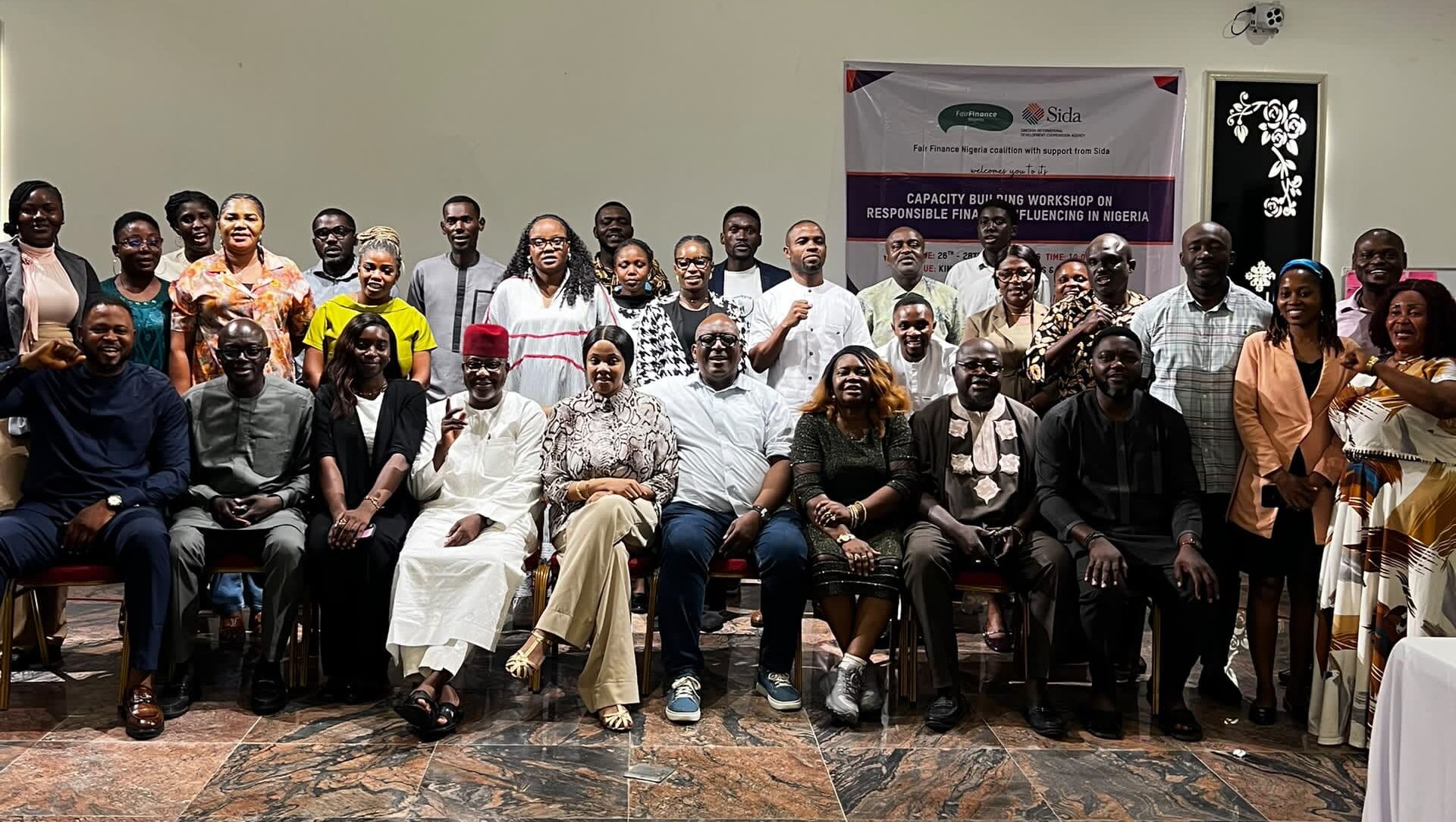
Financial institutions must take more responsibility for the environmental and human rights effects of the businesses they support. Civil society groups made this statement as communities in Nigeria’s Niger Delta continue to suffer from extractive activities.
This call came during a three-day workshop on responsible finance in Uyo, Akwa Ibom State. The Fair Finance Nigeria Coalition organized the workshop.
The coalition includes BudgIT Foundation, Oxfam, Connected Development, Civil Society Legislative Advocacy Centre (CISLAC), Policy Alert, and Support and Training Entrepreneurship Programme. CISLAC is the secretariat for this project.
From August 26 to 28, the workshop brought together civil society organizations, community groups, and media professionals. They discussed how financial choices can impact environmental protection, human rights, and sustainable livelihoods.
Henry Ushie, the Accountable Governance Programme Manager at Oxfam Nigeria, stated that finance should not be seen as neutral. He pointed out that the lending and investment choices of financial institutions determine which businesses receive support.
Mr Ushie explained that the Fair Finance Nigeria initiative was created to look into the social and environmental impacts of financial institutions’ policies and investments. He mentioned that the initiative covered issues like climate change, biodiversity, corruption, human rights, gender equality, labor rights, taxation, transparency, and accountability.
He noted that the exercise revealed where Nigerian financial institutions need to improve, especially in ensuring their financing does not harm communities and the environment. “Finance is not neutral,” Mr Ushie said.
“Some of us even have shares in the banks and all of that. And so we wanted to check the impacts of banks as they relate to our environment and the kind of investments and facilities that they have.”
Who funds environmental damage?
Mr Ushie said that the duty of environmental protection should not fall only on companies involved in extractive activities. He argued that financial institutions providing money for these activities must also consider the environmental and social effects of their financing.
He urged the Central Bank of Nigeria to strengthen rules around sustainable finance. He also asked the National Assembly to monitor financial institutions and their regulators more closely. “Banks should first of all have a policy on ground and then carry through in the implementation of those policies,” he said.
He called for greater involvement of affected communities in enforcing the banks’ sustainability policies. “Inclusion is really important to us,” Mr Ushie said. “And that’s why we are having this workshop with community members for them to understand why we are doing this, how they are involved, and how they are impacted.”
Niger Delta communities affected



A member of the Coalition, Harry Udoh, said the initiative aims to amplify the voices of communities affected by extractive activities. He mentioned that these communities often bear the environmental and livelihood burdens of projects financed by financial institutions.
Mr Udoh cited a survey in Ibeno and Eastern Obolo, Akwa Ibom State, that showed how oil-related activities harmed farmlands and fishing. These are crucial sources of income for residents. “The enablers are the banks, where they get the funding to do so,” he said.
He emphasized that the responsibility should not only be on banks but also on all financiers backing activities that cause environmental and social harm. Mr Udoh noted that the training aimed to equip communities, civil society groups, and journalists with tools to question financing decisions and demand accountability from financial institutions and regulators.
Overcoming bureaucratic hurdles
Mr Ushie said affected communities and advocates should not be discouraged when financial institutions send complaints from local branches to their headquarters. He described these procedures as bureaucratic hurdles that could delay or frustrate genuine advocacy.
He suggested that advocates pursue complaints through multiple channels at once, including writing to headquarters, using official emails, engaging local branches, and using social media. Sustained local engagement, backed by public-interest communication, could increase pressure on financial institutions to respond to community concerns.
Journalists seek deeper engagement
Participants at the workshop called for ongoing collaboration between the Coalition and journalists to improve reporting on the links between finance, environmental damage, and community rights. Ekemini Simon from PREMIUM TIMES expressed that the training opened a new area of reporting for them.
He requested access to research and data from the initiative to support further reporting. Mr Simon also asked the Coalition to organize special training programs for journalists on responsible finance.
Idongesit Ashameri from Daily Independent described the workshop as different from regular training programs due to its practical approach. She said the simulations helped participants understand how to apply what they learned in real-life advocacy.
Ms Ashameri urged the organizers to keep in touch with participants and provide a platform for ongoing idea exchange and support. Caroline Gordian from the Clement Isong Foundation noted that the initiative matches campaigns by the Akwa Ibom Extractive Justice Alliance against environmental pollution. She shared that the group recently protested in Eket and handed a petition to the Nigerian Upstream Petroleum Regulatory Commission over environmental issues.
Ms Gordian added that the alliance will keep fighting against pollution and use the responsible finance initiative to strengthen efforts to hold financiers and polluters accountable.



Drop your comment
No comments yet — be the first to drop the gist 👇