Residents of Unyenge, an oil-producing community in Mbo Local Government Area of Akwa Ibom State, are calling for access to ₦126.85 billion in gas flare penalties. They argue that years of pollution have ruined their way of life. They want the money used to repair their damaged environment, as stated in the Petroleum Industry Act (PIA).
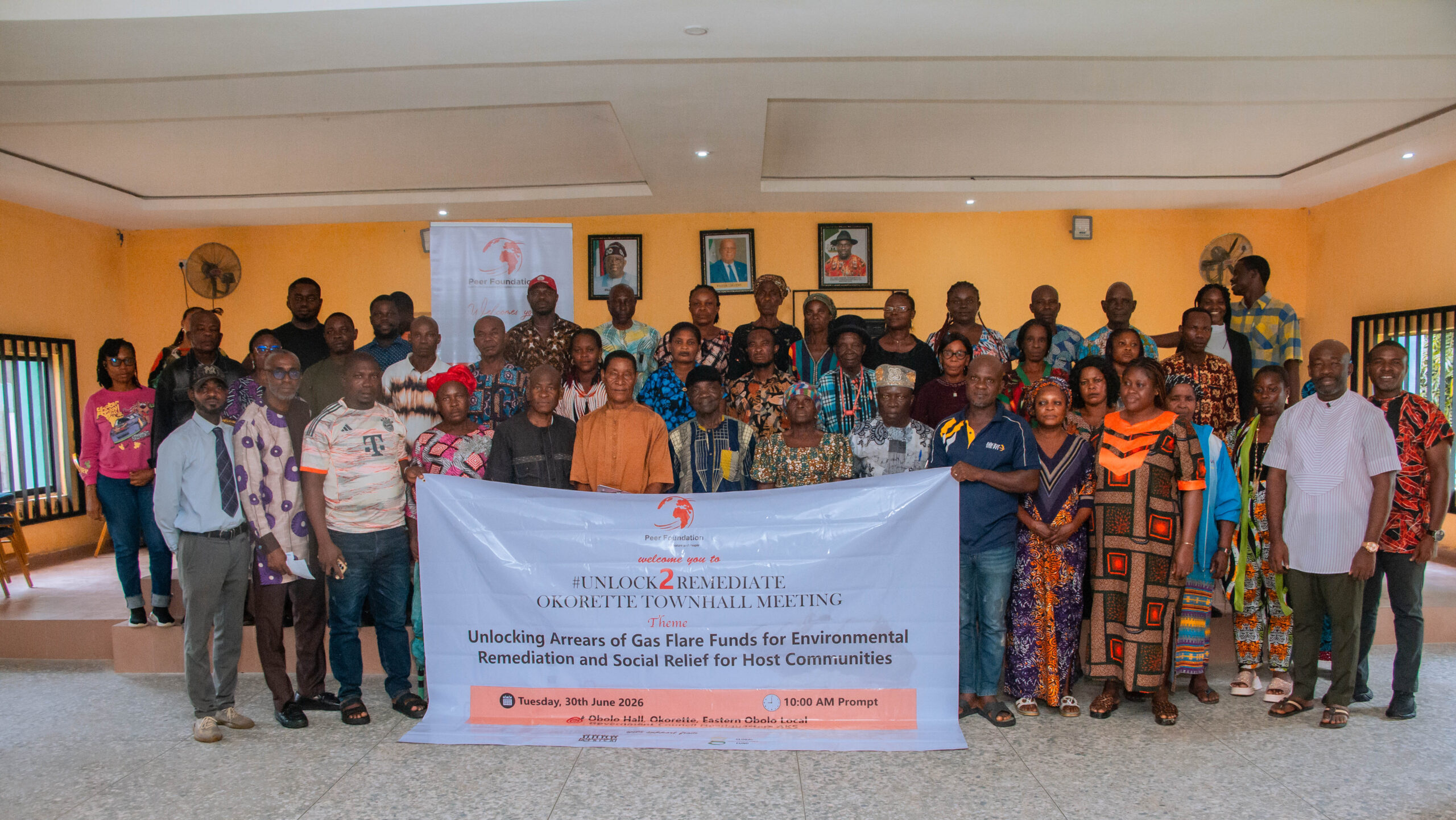
This demand was made on 14 July during a town hall meeting by the Policy, Environment and Economic Rights (PEER) Foundation. This event was part of their #Unlock2remediate campaign.
The meeting took place in Unyenge. It brought together traditional rulers, youth and women leaders, local government officials, civil society groups, and environmental experts. They discussed how to implement the Petroleum Industry Act 2021, focusing on environmental cleanup and the rights of host communities.
This meeting follows another organized by the PEER Foundation in Eastern Obolo Local Government Area. There, host communities also asked for transparency in how gas flare penalties are managed and requested that the funds be used to clean up oil-polluted areas, as previously reported by PREMIUM TIMES.
Environmental Justice
Mfon Gabriel, Executive Director of the PEER Foundation, spoke at the meeting. He said that gas flare penalties are meant to be used for environmental restoration in affected communities and should not be treated as normal government revenue.
He pointed to Sections 103(1) and 104(4) of the Petroleum Industry Act. He emphasized that these penalties are meant to fight pollution caused by oil and gas activities.
"Gas flare penalties are environmental restoration funds belonging to host communities according to Sections 103(1) and 104(4) of the PIA 2021, not general revenue for the Federal Government or the Federation of Nigeria," Mr Gabriel stated.
He mentioned that government documents show that ₦1.67 trillion was collected from oil and gas companies across Nigeria as gas flare penalties from 2021 to 2025. He claimed that these funds have been redirected to the Federation Account through Executive Order 9. He urged host communities to appeal to the federal government and members of the National Assembly to make sure gas flare penalties are not included in the revenue framework created under that order.
Environmental Damage
During the discussion on ecological restoration, Ebong Ekanem, Head of Operations at Policy Alert, explained that years of gas flaring, acid rain, and oil spills have harmed mangrove forests in Mbo. This situation threatens fishing and farming, which many people rely on for their income.
He called for community-led mangrove restoration, cleanup of toxic waste, more involvement of women and youth in environmental governance, and support for alternative jobs like aquaculture and fish processing.
Ekemini Simon, a senior reporter with PREMIUM TIMES, also spoke at the meeting. He explained the legal rules about the Environmental Remediation Fund under the PIA.
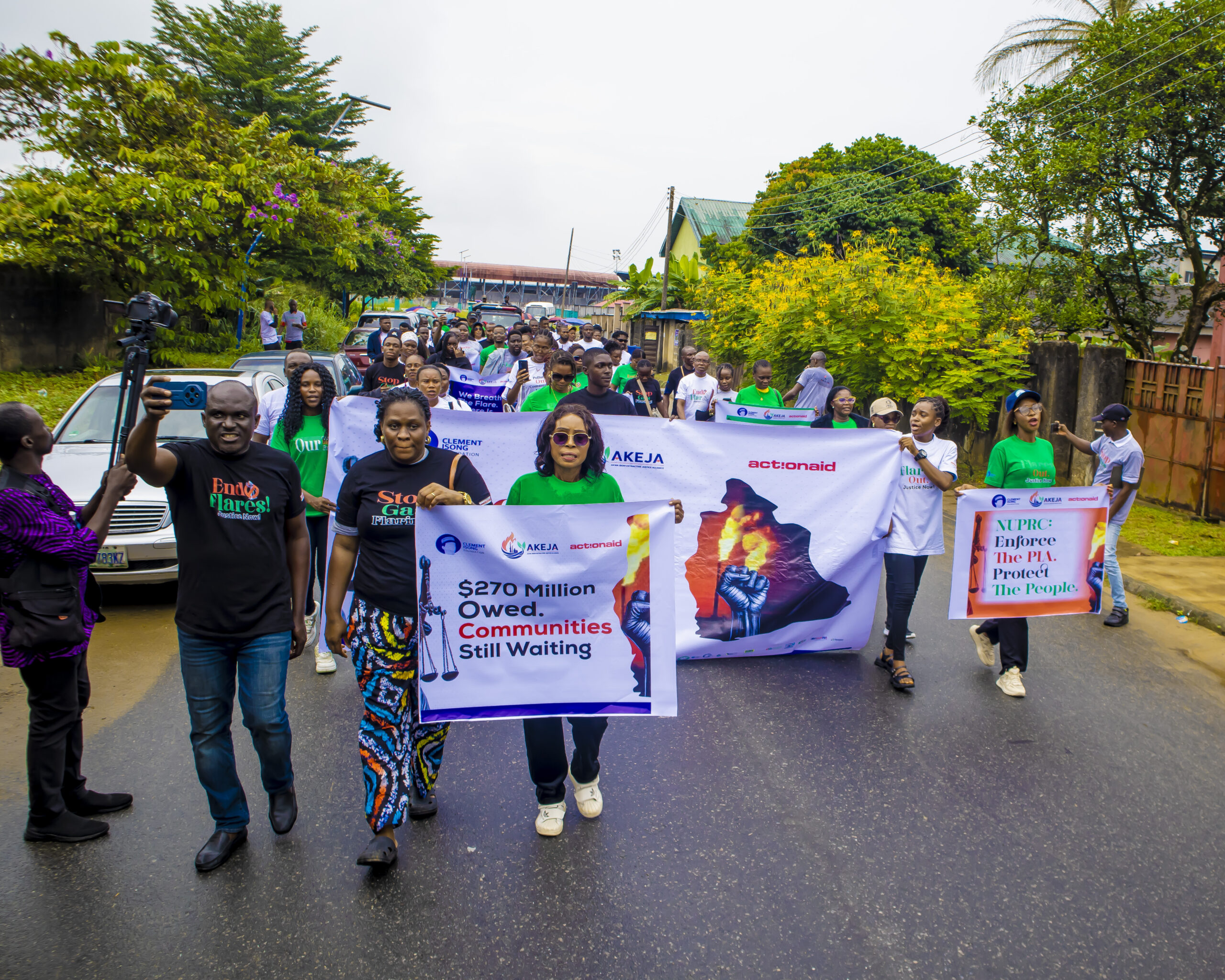
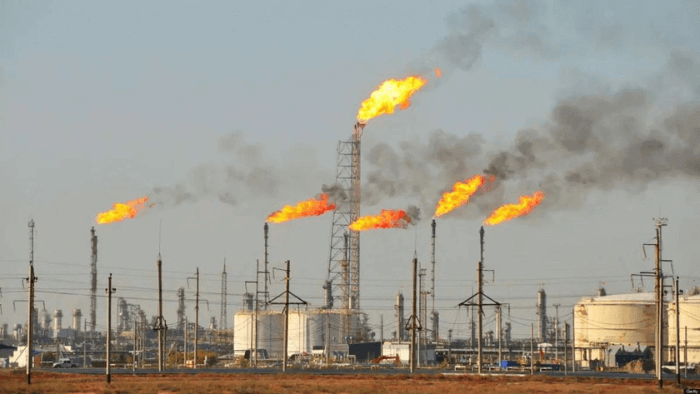
Mr Simon said that documents from the Nigeria Extractive Industries Transparency Initiative, along with data from the National Oil Spill Detection and Response Agency’s gas flare tracker, show that penalties from companies operating in Mbo, including Mobil, Universal Energy, Oriental Energy, Moni Pulo, Esso Exploration and Production Nigeria, and Addax Petroleum, totalled ₦126.85 billion from 2021 to 2025.
He added that this amount does not include debts owed by Esso E&P and Oriental Energy, which are ₦13.92 billion as of the last update in August 2024. He stressed that these funds should not be spread across the country but used specifically for environmental cleanup and support for host communities affected by oil and gas pollution.
Community Voices
Community leaders and residents shared their struggles related to environmental and economic issues in Unyenge.
Traditional leader Jesus Inwang criticized the government and oil companies for not addressing environmental problems in the area.
Damian Essongo, representing the youth in the community, said that even with constant gas flaring, residents have not had electricity for three years. They also face poor school facilities, lack of clean water, and health issues due to ongoing flaring.
Akpan Abel, a Community Liaison Officer for a local company, mentioned that many residents did not know about gas flare penalties until this recent campaign.
Women leaders also spoke about serious problems like unexplained illnesses, acid rain damaging roofs, and the ongoing lack of clean drinking water.
Community Action
At the end of the meeting, participants agreed on a five-point resolution to push for access to the remediation funds.
The resolutions include:
- Increasing community awareness efforts.
- Writing petitions to elected officials and relevant authorities.
- Getting legal help to enforce the relevant parts of the PIA.
- Working closely with the PEER Foundation and Policy Alert.
- Continuing peaceful advocacy for environmental justice.


Drop your comment
No comments yet — be the first to drop the gist 👇