The group of opposition parties looking to challenge President Bola Tinubu in the 2027 presidential election has changed the date for signing their agreement on democratic renewal to November 30.
This change comes as there is still doubt about whether the parties can agree on a common presidential candidate.
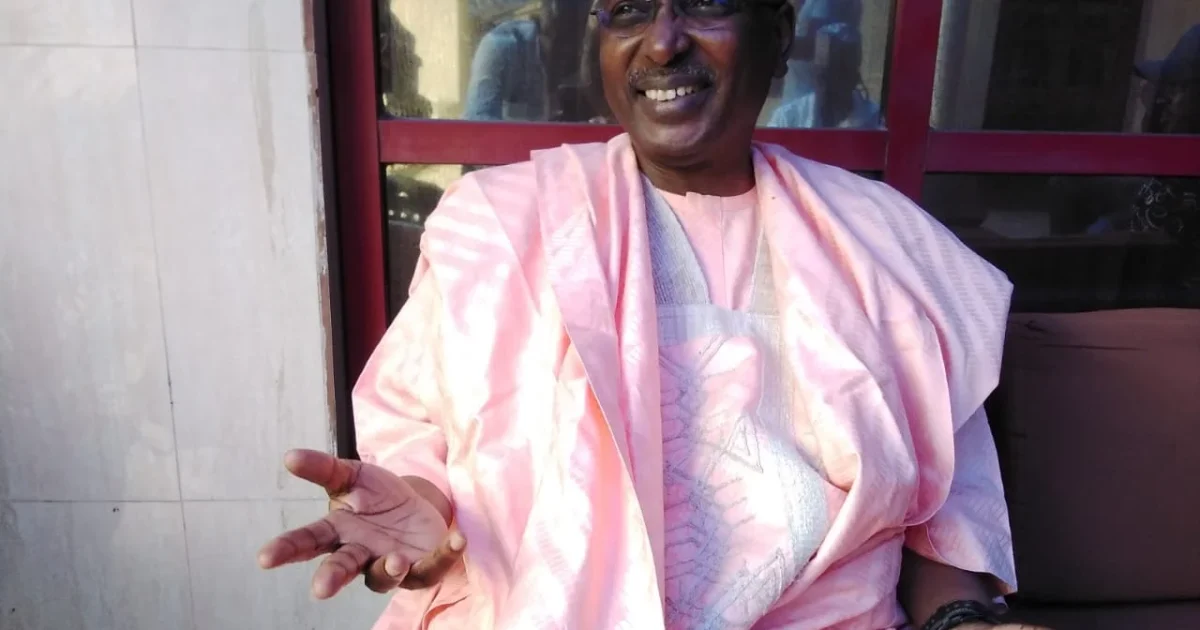
Salihu Lukman, the former Director General of the Progressives Governors Forum, shared this news during an interview on Arise TV.
Lukman mentioned that the date was postponed by one week after discussions with political party leaders and presidential candidates who needed more time to adjust their campaign plans.
He said the coalition aims to have party chairmen, presidential candidates, and their running mates present at the Abuja meeting to officially endorse the agreement.
He called the planned signing a big step toward uniting the opposition parties, saying that the process has moved beyond just talking and is now being pushed by the involved parties.
"One of the things we want to be sure on that day is that all the party leadership and all the presidential candidates and the running will be in that hall. That is the first thing and while majority of them are ready."
"Others said they needed to adjust their campaign schedule. So we discuss and reach some compromise. So, it’s likely that some of them may not be there. We agree to shift it by one week to 30th November. We shift it to 30th November," he explained.
The coalition includes six political parties and factions, such as the African Democratic Congress (ADC), Allied Peoples Movement (APM), National Democratic Congress (NDC), a faction of the Peoples Democratic Party (PDP) linked to Tanimu Turaki, the People’s Redemption Party (PRP), and the Social Democratic Party (SDP).
According to Lukman, the parties will sign a formal agreement to commit to working together, with details of possible joint campaigns and other forms of cooperation to be figured out.
Yet, the biggest issue facing the coalition is still unresolved: whether they can agree on a single presidential candidate to run against Tinubu.
Lukman shared that the coalition has created three key documents to lay the groundwork for their political cooperation.
These are a National Covenant for Democratic Renewal, a Framework for Opposition Unity, and a National Reform Programme.
He said, "So we spend the better part of the time from August to now trying to put the table and convince all of them to sit on the table."
"I think we have reached that agreement right and on the basis of that on that 30th November all of them will be there and the party chairman will sign a formal agreement committing to working together and what working together will entail will include a number of things that will be announced that very day which may include some joint campaigns. The detail will be worked out and will be announced on that very day."
He explained that the covenant will set the principles for the coalition, while the framework will help manage any disagreements.
The National Reform Programme will outline the minimum policy commitments expected from any government formed by the coalition.
Lukman described it as a collective manifesto, noting it was developed by looking at the policy ideas of the different parties and finding common ground.
"The National Reform Programme is basically like the minimum undertaking that a government produced by the coalition will commit to," he said.
He added that the documents will be shared with the media and the Nigerian public on November 30 for review.
Lukman insisted that the coalition is not asking the participating parties to dissolve or lose their identities.
Instead, the goal is to create a platform for cooperation while keeping their structures and candidates.
Despite the progress claimed, Lukman admitted that there is no agreed way to choose a common presidential candidate yet.
He noted that the organizers need the direct involvement and agreement of the presidential candidates before this can be fully discussed.
"We are not asking any party to dissolve itself and stop existing. They will continue to exist," he clarified.
He also recognized that some parties are only ready to cooperate on issues like electoral credibility and protecting votes, without agreeing to back another party’s presidential candidate.
This issue is sensitive due to the ambitions of opposition figures, including former Vice-President Atiku Abubakar and former Anambra State governor Peter Obi.
Lukman mentioned that the NDC has said any talks about a common presidential candidate must consider its preference for the Obi-Wan ticket.
Lukman said these differences need to be worked out through more negotiations, calling the process a confidence-building effort.
He expressed worry that supporters of opposition parties are attacking each other instead of focusing on the ruling APC.
"One of the things that is so disturbing to us is a situation where people in opposition are fighting themselves and dissipating energy against themselves instead of facing a common enemy," he said.
He warned that the APC would gain if the opposition allows their internal issues to weaken the coalition.
According to him, party leaders and candidates must manage their supporters to avoid further divisions.
Lukman believes that the opposition's failure to unite was a key reason for the outcome of the 2023 presidential election.
He recalled that opposition candidates got more votes than the winner but could not turn that support into victory because they ran separately.
"Two opposition candidates, or even three combined, got more than 40 million votes. The winner of the election got eight million votes," he said.
He argued that these numbers show the opposition has enough strength to challenge the APC if their supporters can be coordinated.
"It was not even the APC that defeated the opposition; the opposition defeated itself," he declared.
Lukman challenged opposition politicians to decide if they want to win the presidency or just participate in elections for their personal ambitions.
"Are they working to get their candidate to win the election and become president of the Federal Republic of Nigeria, or are they just going to the election to satisfy themselves and their candidates?" he asked.
He urged opposition leaders to show statesmanship and prioritize the national interest over personal political goals.
Beyond agreeing on a common presidential candidate, Lukman highlighted electoral credibility as a key area for cooperation.
He said the coalition's first national goal will be to protect the integrity of votes at every polling unit.
This could mean joint deployment of polling agents by the parties, especially in areas where some parties cannot cover all polling units.
Lukman pointed out that some opposition parties do not have the means to deploy agents across Nigeria’s roughly 176,000 polling units.
He said the coalition plans to map the country, find areas of strength, and combine resources to ensure proper coverage.
"All the parties must come together and deploy their resources and get their agents together to protect the vote," he said.
He believes this cooperation will help restore public trust in the electoral process and encourage more people to vote.
According to him, voter apathy is a big problem because many Nigerians feel their votes do not matter.
"When citizens now see parties coming together in the way we are trying to do, that will give them confidence to come out," he said.
The coalition convener also suggested that Nigeria's political system needs deep changes beyond just replacing the ruling party.
He questioned the current methods of zoning and power rotation, saying they should not lead to leaders who are not accountable to the people.
"The way this country is today, the democracy and the politics have been so bastardised that everything needs to be renegotiated," he said.
He added that zoning arrangements that do not ensure accountable leadership have become more of a problem than a solution.
Lukman called for stronger political parties, stating that many political organizations do not operate according to their own rules.
He cautioned against creating another president who would dominate the legislature and impose leadership on the National Assembly.
"We don’t want to have another president produced by the coalition that will now come and bulldoze his way to impose leadership of the National Assembly and reduce the National Assembly to basically people singing choir for the president," he said.
For him, the coalition must be about more than just defeating Tinubu.
Although Lukman is happy with the progress made, the timing of the agreement is a major challenge.
With the election coming up, the coalition still needs to resolve differences over presidential ambitions, sharing power, joint campaign plans, and practical details of cooperation.
The meeting on November 30 is expected to test if the opposition can turn their promise of unity into a working political plan.
Lukman admitted there is still a lot to do, but he said the fact that party leaders are now meeting is already a sign of progress.
He insisted that the process has moved beyond the early doubts about the initiative, saying the involved parties have taken charge of the talks.

Drop your comment
No comments yet — be the first to drop the gist 👇