At least 10,613 children in Lagos State suffered emotional abuse after seeing domestic violence at home in the last five years, according to the state government.
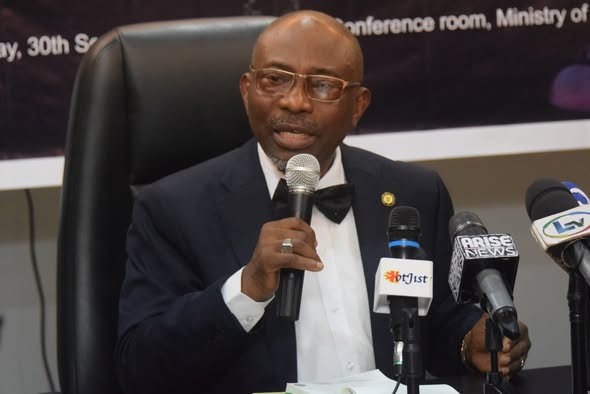
On Monday, the Lagos State Attorney-General and Commissioner for Justice, Lawal Pedro, shared this information at a press conference to kick off the 2026 Domestic and Sexual Violence Awareness Month.
Mr Pedro, a Senior Advocate of Nigeria, explained that these children were not always the direct victims of the violence. But what they saw at home affected them deeply.
“These children may not have been direct targets of the violence, but exposure to violence can leave deep emotional scars,” he said.
He highlighted the need to look at how domestic violence impacts children who witness abuse between family members.
Data from the Lagos State Domestic and Sexual Violence Agency showed that 33,009 cases of domestic and sexual violence were reported from September 2021 to July 2026.
Domestic violence made up the majority of these reports, with 13,515 cases. The agency also noted 1,171 cases of defilement, 797 cases of child abuse and physical assault, 420 rape cases, 428 cases of sexual harassment, and 100 cases of sexual assault by penetration.
Other reports included 323 threats to life, 79 attempted rape cases, and 95 cases of technology-facilitated sexual and gender-based violence involving adults and children.
The agency also recorded 1,861 family-related disputes involving custody, neglect, abduction, and child labour. Reported cases increased from 1,075 between September and December 2021 to 5,929 in 2022, 6,389 in 2023, and 7,882 in 2024.
The number dropped to 7,721 in 2025 and reached 4,013 by July 2026. Mr Pedro warned that fewer reported cases should not be seen as a sign that violence is less common.
He noted that factors like survivors’ willingness to report, public awareness, and access to support services could impact these numbers.
“A reduction in reported cases does not automatically mean that Sexual and Gender Based Violence has reduced by exactly the same proportion across Lagos State,” he said.
The commissioner also dismissed the idea that domestic and sexual violence mainly comes from unemployment or financial struggles. According to the data, 38 percent of survivors were unemployed, 47 percent were employed, and seven percent were self-employed.
Among the alleged perpetrators, 31 percent were employed, 45 percent self-employed, and 12 percent unemployed. “This proves that Domestic and Sexual Violence cannot be reduced to unemployment or economic hardship. Violence cuts across social and economic categories,” Mr Pedro stressed.
Domestic violence made up 75.5 percent of reported assaults involving adults. For children, emotional abuse accounted for 82.3 percent of reported cases, with defilement at 8.2 percent and physical assault and child abuse at 6.6 percent.
The psychological effects were also significant. Mr Pedro said 90 percent of survivors reported issues like low self-esteem, post-traumatic stress disorder, extreme fear, and anxiety. About five percent felt depressed enough to need medical help.
He added that 30 percent of women who reported abuse were pregnant when the violence occurred. Also, 35 percent of domestic violence survivors said the abuse happened within the first five years of their marriage.
Survivors often delay reporting due to financial dependence, worries about their children, and societal pressures.
The Lagos State Domestic and Sexual Violence Agency offers survivors legal, medical, and psychosocial support. This includes referrals, investigations, prosecutions, and emergency shelter.
Mr Pedro mentioned that 175 survivors received free legal help through the agency’s lawyers, the Bureau of the Public Defender, private law firms, and the Lagos Public Interest Law Partnership. Another 40 survivors found shelter at Eko Haven and other safe places.
The agency’s Clinical Psychology Department provided psychotherapy and counseling to 953 survivors, 267 perpetrators, and 304 children. They also carried out 501 rescue missions and assisted 46 persons with disabilities who faced gender-based violence.
More than 711 cases went to court, and the Directorate of Public Prosecutions secured over 160 convictions, Mr Pedro said.
Residents can report cases or seek help through the state’s Virtual Referral and Response Service, the *6820# USSD platform, and the ASK INU WhatsApp chatbot.
The government is also working on prevention efforts in communities, schools, markets, and traditional institutions. The DSVA noted that its awareness activities reached about 1,964,559 residents across Lagos’ 20 local government areas.
More than 700 safeguarding and child protection officers were trained across the state’s six education districts. Over 1,000 primary and secondary school students also took part in a safeguarding workshop.
The agency highlighted that over 60,000 educators, parents, and caregivers had participated in its Safeguarding and Child Protection Online Course. They have opened sub-offices in Kosofe and Ikorodu and engaged over 50 traditional rulers and their chiefs to help stop sexual and gender-based violence.
The 2026 awareness campaign, themed “SGBV, It Ends With Us,” will run throughout September. Activities are planned in communities, schools, workplaces, markets, health facilities, and traditional institutions.
Mr Pedro stated that the real measure of progress should be fewer people experiencing violence, not just fewer cases reported. “Our goal is not lower reporting. Our goal is lower prevalence. We will only call it success when the wider evidence tells us fewer people are experiencing violence,” he said.
He urged survivors and the public to report cases through the state’s toll-free line, 0-8000-333-333. He also called on families, neighbors, colleagues, and institutions to take action when they see signs of abuse.



Drop your comment
No comments yet — be the first to drop the gist 👇