The hall buzzed with excitement as the time approached. Port Harcourt was filled with a festive spirit. You could feel something special in the air. Road safety officials and police were present, keeping traffic in check and ensuring order along Woji Road.
Walking into the event hall felt like stepping into a carnival. The music equipment played jazzy tunes, the seats were neatly arranged, and the artistic wall decorations added flair. A backdrop featuring a storybook theme brought poetry to life.
Across from the car park, a huge poster announced the event, the Annual Wole Soyinka Lecture. The poster featured a life-size image of the literary giant, showing everyone what was coming.
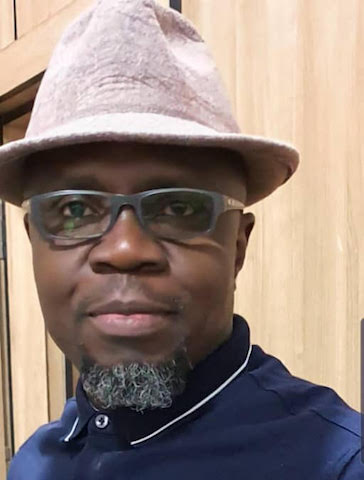
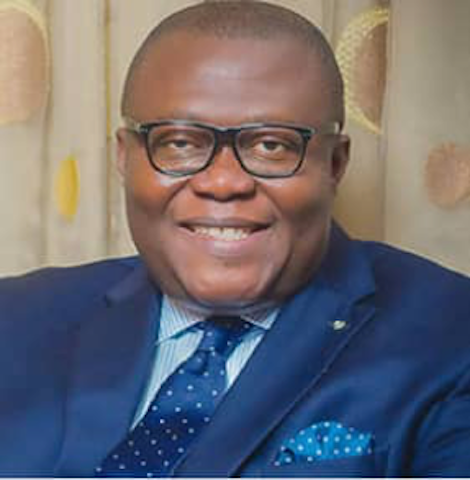
The poster also highlighted two important figures. Chief Ndutimi Alaibe was the chairman for the day. Chief Osita Chidoka, a former Minister of Aviation and Aerospace Development, was the guest speaker.
Almost everyone in Port Harcourt, a city full of political activity and wealth but surrounded by poverty, was filled with excitement, waiting for Akinwande Oluwole Babatunde Soyinka, Africa’s first Nobel Laureate in Literature.
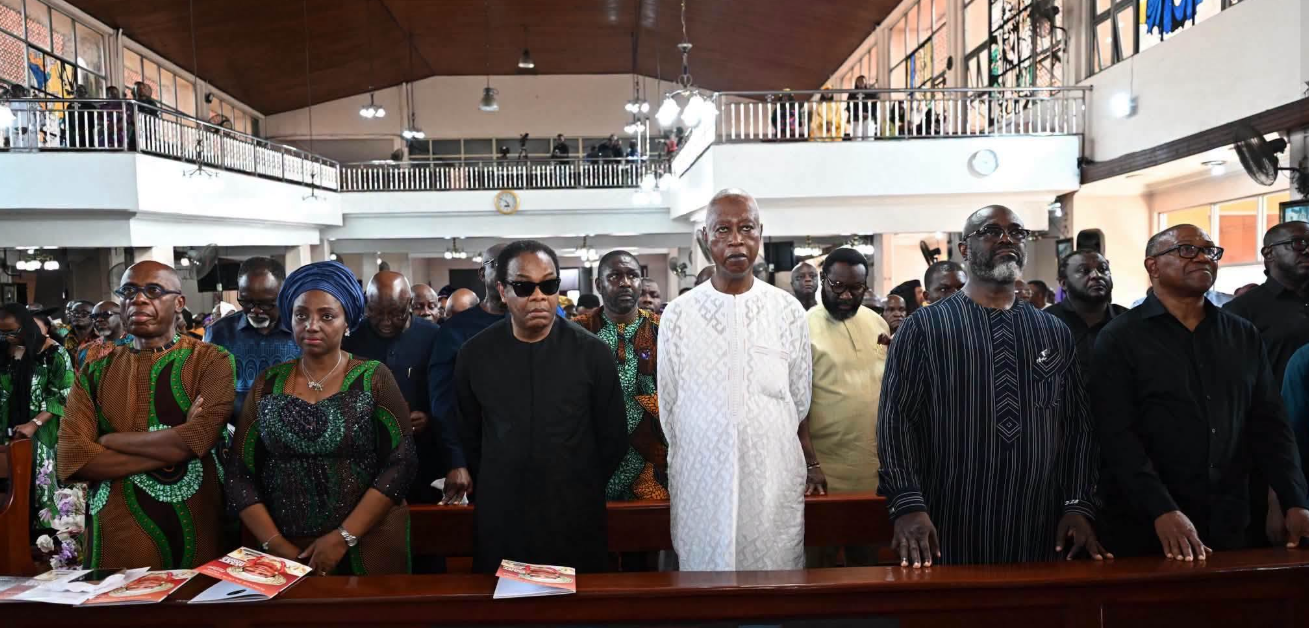
Then, quietly, the literary giant entered the hall without fanfare. Except for his distinctive white hair, wide smile, and sharp eyes, many almost overlooked him. Eventually, everyone stood up to honor him, the father of modern political literature.
At 92 years old, with a deep voice, he was not just there for a lecture in his honor. He was also there to take part in a special yearly event by the National Association of Seadogs, also known as Pyrates Confraternity. He founded this group many years ago.
The event turned out to be quite lively. The chairman, Chief Ndutimi Alaibe, affectionately called ‘Timi, paid warm tributes to Wole Soyinka. He set the stage for the lecture, which sparked lively discussions.
‘Timi told the crowd that Nigeria is much better today because of people like Soyinka. Throughout his life, Soyinka has often chosen the tough path of conscience, courage, and truth, even when it would have been easier to remain silent.
He called Soyinka a generous man, loyal to his friends, and praised his willingness to support worthy causes. He said, “Today, we honor you not merely with words, but with our presence and our shared commitment to engage the very questions your life has posed to our nation for more than six decades, questions of justice, accountability, freedom, and the moral courage required to build a truly democratic society.”
Besides the lecture, the event also honored the National Association of Seadogs Martyrs. This group included members who were arrested on February 17, 1997, imprisoned, and tortured by the military in Rivers State for being too radical.
Dr Joseph Oteri, the confraternity leader, shared that their suffering lasted 72 days. He described it as an unplanned journey into the terrible darkness of General Sani Abacha’s regime, “for daring to believe that Nigeria deserved better than the boot of a dictator,” until a court freed them.
‘Timi noted that the arrest of the Pyrates was mainly “for refusing to be silent in the face of oppression.” He called the victims “enduring symbols of resilience and civil courage in the struggle for the restoration of democracy and the rule of law.”
He added that this anniversary reminds everyone that democracy is not freely given but won through the sacrifices of many Nigerians, some well-known and others unknown, who faced intimidation, persecution, and loss to defend freedom, justice, and accountable governance.
Reflecting on the past, he named other martyrs of democracy like “Dele Giwa, whose fearless journalism challenged military rule until it cost him his life, Ken Saro-Wiwa and the Ogoni Nine, whose deaths raised awareness for environmental justice, and Kudirat Abiola, whose bravery helped reclaim a stolen democratic mandate.
He also remembered Chief Alfred Rewane, who lost his life for his commitment to democracy. He recalled Chief Bola Ige, former Attorney-General and Minister of Justice, whose assassination remains a national shame.
He said, “Whether through imprisonment or assassination, torture or intimidation, these men and women bore heavy personal burdens so future generations could live under the rule of law instead of fear.”
‘Timi emphasized that their stories show that civil courage is not just an idea. It means standing up for what is right, even when it is hard or dangerous.
“As we honor their memories today, may we also recommit ourselves to completing the work for which they sacrificed so much, building a Nigeria based on justice, accountability, constitutional governance, and respect for the dignity of every citizen.”
The hall was silent, with occasional applause and smiles from Soyinka as ‘Timi recalled moments he shared with the respected professor over the years. This relationship has deeply influenced his understanding of Soyinka’s significance to Nigeria.
He reminisced about a 2006 meeting when Soyinka was part of a mission that visited the Niger Delta to promote peaceful dialogue and fact-finding. They even visited the Niger Delta Development Commission, where ‘Timi worked.
After listening to their presentation, Soyinka remarked that the NDDC had taken on a huge responsibility for a troubled region and deserved recognition as one of the positive initiatives of the Obasanjo administration. He added, “I will remember to commend him when next I see him.”
Two years later, ‘Timi’s late wife, Alaere, invited Soyinka, who was in the United States, to visit ‘Timi’s village of Igbainwari in Opokuma, Bayelsa State, to open the Wole Soyinka Library. This was an initiative by Alaere’s organization, Family Reorientation, Education and Empowerment (FREE).
What made this visit special was that Soyinka “did not just come in for a ceremony and leave. He chose to stay the night in our simple country home in that remote community.
“For a global figure like him, a Nobel Laureate whose voice is respected worldwide, this was an extraordinary act of humility. He even tried local Izon brew.
“By being there, he honored our family and a community that often feels overlooked. He showed that no place is too small, and no people too insignificant, to be treated with dignity, learning, and hope.
“He spoke highly of my late wife’s vision, courage, and determination, recognizing that her work is a powerful example of what passion and selfless service can achieve. He said, “I am not often impressed with people, but she has succeeded in impressing me with her drive, her vision, and her total commitment.”
‘Timi said Soyinka had a significant impact during that visit. He spoke to the youth of the Niger Delta, whose militancy was a major challenge at the time.
Soyinka advised them to choose dialogue over violence and to build a future based on peace, not conflict. He challenged them to embrace “intellectual militancy in pursuit of the region’s development, a strong call to swap weapons for ideas, knowledge, and constructive engagement.”
‘Timi’s memories were not just nostalgic; they were relevant to the current event. He said long before “reclaiming the state” became a popular phrase, Soyinka was already living its meaning.
How do you describe a man like Soyinka visiting a remote community that many think is too small to matter, just to open a library and spend a night with strangers? It shows that true leadership is not about distance but about standing with people wherever they are. ‘Timi praised this as principled leadership and accountability with wisdom and humility.
On the theme: “Reclaiming the Nigerian State through Accountability, Justice and Civil Courage,” the former NDDC managing director said it speaks to Nigeria’s realities, the country we live in and the nation we want to build.
He stated, “Nigeria is blessed with amazing talent, abundant natural resources, and resilience. Yet we still fall short of our potential. Our problem has never been a lack of understanding; it has been a failure to act on what we know.”
He believes that too often, the institutions meant to hold power accountable have been weakened. This makes justice a privilege instead of a right for many Nigerians.
Restating the values of the confraternity, he said, “This gathering cannot, in good conscience, talk about reclaiming the Nigerian state without tackling one of the main evils the National Association of Seadogs was created to fight.”
That evil, tribalism, has led to partisanship, clannishness, and ethnic bias, while the true values of honesty, selflessness, and love have been forgotten, said ‘Timi.
He pointed out that tribalism has become a systemic issue in Nigeria, damaging our society’s foundation.
He stressed that reclaiming the Nigerian state starts with reclaiming ourselves, ensuring that the principles we value are applied fairly, regardless of tribe, politics, or who holds power.
In the end, he said, “accountability is not maintained just by laws but by the courage of people who demand those laws apply equally to everyone.”
He argued that reclaiming the Nigerian state will not come from a single bold act but through many principled decisions by citizens unwilling to be indifferent, institutions that stick to their roles, and leaders who choose integrity over convenience and bravery over comfort.
Reflecting on his experience in public service, ‘Timi said he learned that real development cannot happen without accountability. Where institutions are weak, hope fades; where accountability is strong, even limited resources can make a lasting impact.
He urged participants to look beyond the day’s event as they work to rebuild Nigeria. “Nations are not reclaimed by words alone,” he said, “but when conscience wins over convenience, when institutions are stronger than individuals, and when citizens are brave enough to do what is right, even when it’s hard.”



Drop your comment
No comments yet — be the first to drop the gist 👇