
I find it hard to write about Dotun Oladipo in the past tense. The words feel wrong. I keep thinking about the Dotun who was still here, sending his bulletin, sharing ideas, encouraging colleagues, and doing his work in journalism.
At just 56 years old, Dotun Oladipo has left us too soon.
John Donne, the English poet from the 17th century, wrote words that fit this moment well:
"No man is an island, entire of itself; every man is a piece of the continent, a part of the main; and if a clod be washed away by the sea, Europe is the less, as well as if a promontory were, as well as if a manor of thy friends or of thine own were; any man’s death diminishes me, because I am involved in mankind. And therefore never send to know for whom the bell tolls; it tolls for thee."
These words have stuck with me since I first read them. I have thought of them during times of great loss, like the Bellview Airlines crash in October 2005. But I never thought I would use them to understand the death of Dotun Oladipo.
For whom does the bell toll?
It tolls for Dotun. But it also tolls for all of us.
It tolls for the journalists who worked with him, for the publishers he mentored, for the members of the Guild of Corporate Online Publishers (GOCOP) he supported, for the readers who enjoyed his work, and for the many lives he touched in ways that became clear only after he passed.
It tolls for me too.
The first time I used the title of Donne’s famous piece, 'Death Be Not Proud', was in October 2005, when I wrote about the Bellview Airlines crash on 22 October.
On Sunday, 23 October, my family was about to go to church when I got a call from Eniola Bello, then Editor of ThisDay. Bellview Airlines had crashed the day before, and I was needed at the office to lead the reporting team to the crash site in a remote village in Ogun State.
I was the Features Editor then, and, like in military service, I had to follow the editor’s orders.
I arrived at the ThisDay office in Apapa, Lagos that morning. The Chairman, Nduka Obaigbena, offered his car for the trip. We drove to Lisa village in Ifo Local Government Area, Ogun State, where the aircraft had crashed and was buried underground.
There was hardly any sign of the plane. No recognizable piece was visible, except for a bit of smoke and broken tree branches from the impact.
All 111 passengers and six crew members died.
Many responders were there, including the Red Cross and the Ogun State Government team led by then Commissioner for Health, Dr Iyabo Obasanjo-Bello. The mood was heavy. Everyone felt the weight of the tragedy.
Journalists are trained to stay emotionally detached from their stories.
I tried to apply that principle, but I also had to write about a tragedy that was hard to comprehend.
In writing that piece, I reached for John Donne’s ‘Meditation XVII’, from his 1624 work, “Devotions upon Emergent Occasions,” which inspired Ernest Hemingway’s 1940 novel, For Whom the Bell Tolls. I had written about Donne’s meditation five years earlier, after the Kenya Airways Flight 431 crash on 30 January 2000, which I covered at Murtala Muhammed Airport, Lagos, where relatives of the victims sought information about their loved ones.
The plane, mostly carrying Nigerian passengers, crashed into the Atlantic Ocean shortly after take-off from Abidjan, Côte d’Ivoire.
Dr Francis Enemuo, a respected political scientist and lecturer at the University of Lagos, and Reverend Father Edmund Ikenga-Metuh, a well-known Catholic priest and professor, were among those who died in the Kenya Airways crash.
Now, more than twenty years later, I am facing that same bell again.
Last Tuesday, I found myself lost in thought, mulling over Donne’s timeless words. It was evening, and I casually checked my phone for new messages. Suddenly, I saw a pop-up on the GOCOP WhatsApp group. It was from Danlami Nmodu, our president.
Seeing Dotun Oladipo’s name on the pop-up made me open the message.
What I saw did not make sense.
I had just woken up from sleep, so I rubbed my eyes to be sure I read it right. Our Dotun Oladipo had died?
I checked my WhatsApp messages.
Dotun had sent his news bulletin to me at 2:50 p.m. that same day.
Is this a joke?
It was hard to believe.
I called Danlami. When he didn’t answer, I called Olumide Iyanda, our vice president. He confirmed it.
Then Danlami called me back and confirmed it.
By then, Gabriel Akinadewo was already at Dotun’s house that night. I called him. He said he was staying the night there.
That made sense.
A tragedy had struck GOCOP.
The Weight of His Example
I started thinking about my personal journey with Dotun.
But everyone who met Dotun has their own story with him. He left something of himself in each person he met.
As I read the messages from our members on the GOCOP platform, I began to cry.
Journalists are trained to manage emotions. For an editor, the more tragic or strange a story is, the more interesting it becomes news. We learn to keep a distance from the events we cover, no matter how heartbreaking.
But this was different.
Reading the tributes on our platform broke my professional distance. I became misty-eyed.
How can anyone who knew Dotun not talk about his honesty, strength, and selflessness?
There was something special about him. His honesty was not just safe words.
His selflessness was not for show. It was simply how he lived.
Maybe that is why the grief feels so heavy.
We grieve when people die. But sometimes, losing someone makes us see the value of their life that we might have taken for granted while they were alive.
Dotun was one of those people.
I remember back in 2019, when Dotun was President of GOCOP, I tried to raise funds for one of our members, the late Ben Bright-Mkpuma, who had kidney failure.

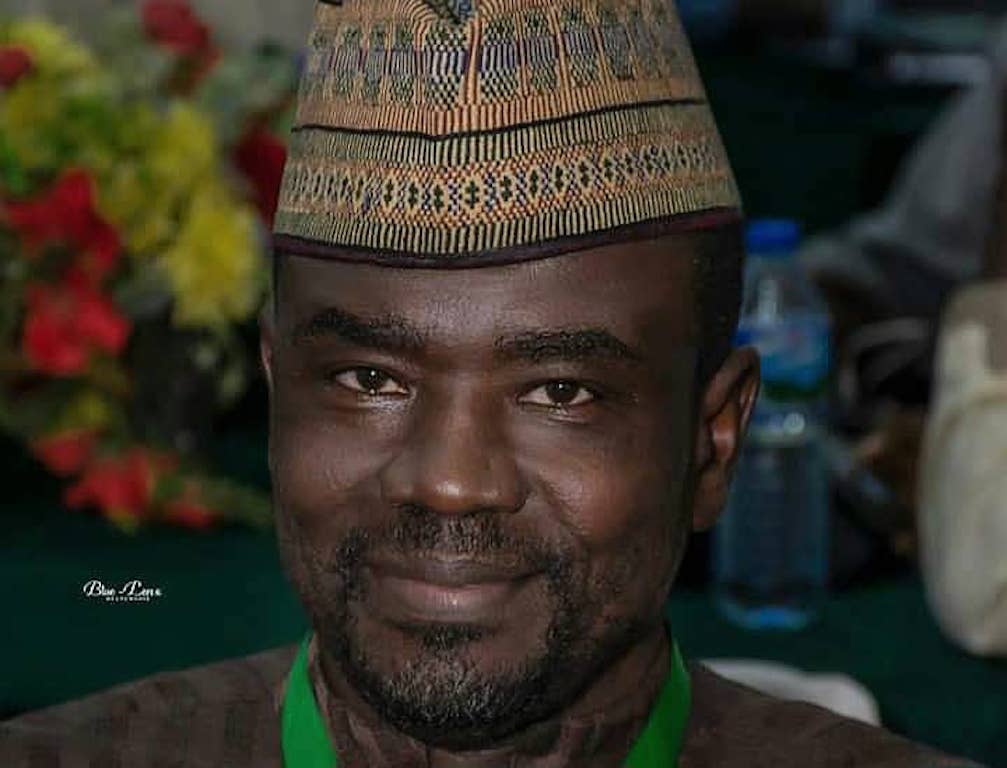

Dotun noticed my commitment to the cause. He could have just praised me, like many would. Instead, he decided that whatever I raised, GOCOP would match it, making it a ₦1 million donation to the Bright-Mkpuma family.
At that time, GOCOP had no rule that required them to do this. Dotun didn’t have to use the organization’s support for my personal effort. But he did.
I raised about ₦600,000. True to his word, GOCOP matched it. ₦1 million was sent to the Bright-Mkpuma family.
When Bright-Mkpuma passed, Dotun made sure GOCOP was officially represented at his burial.
That was Dotun.
He didn’t just talk about support; he lived it. He knew that an organization is more than just offices, titles, and meetings. It is a community that must support each other when times get tough.
I felt that same kindness personally in 2025 when my parents died and were to be buried.
Dotun stepped up.
He didn’t wait for me to ask. He rallied our friends to contribute and started the process with his own donation.
That gesture has stuck with me.
Some people offer sympathy when tragedy strikes. Others show up.
Dotun showed up.
And sometimes, that is the best definition of friendship.
The Eagle Online
Dotun was one of the journalists who recognized the power of online publishing after a successful career in traditional media.
The Eagle Online, which he started, became one of Nigeria’s top online news platforms. Dotun became a role model for many online publishers.
What set him apart was that he didn’t guard his success. He was always willing to share his knowledge.
As President of GOCOP, he brought members together and worked to ensure they benefited from programs to make their businesses sustainable. At GOCOP conferences, he shared ideas about what The Eagle Online had done to improve Nigeria’s online media space. More importantly, he encouraged other publishers to share their ideas for everyone’s benefit.
I remember when we were preparing for the annual conference in Lokoja, Kogi State, in 2024. I casually mentioned looking for opportunities to support online news businesses. Dotun immediately suggested I prepare a paper for presentation at the conference.
That was another side of Dotun: he saw potential in others and gave them space to grow.
When ‘The Sunday Stew’ column launched and I said it would be syndicated, Dotun was among the first to show interest.
Until his death, The Eagle Online never missed an edition of the column.
I think about that now.
Every Sunday, my words reached the readers of The Eagle Online. Behind that was a man who once again opened the door for another journalist.
That was Dotun.
He built his own platform, but he also helped others build theirs. He knew that one publisher’s success did not lessen another’s. He believed the online media world became stronger when publishers shared knowledge, opportunities, and audiences.
In an industry where competition can make people protective of information, Dotun chose to be generous.
And that was part of his legacy.
A Different Kind of The Sunday Stew
This is the hardest edition of ‘The Sunday Stew’ I have ever written since the column started in March.
I have struggled with the idea of writing about Dotun Oladipo in the past tense. Even now, the words feel wrong. I keep thinking about the Dotun who was still here, sending his bulletin, sharing ideas, encouraging colleagues, and doing journalism.
Even the story of his passing and the reactions from people and organizations was hard for Sundiata Post to publish. There are stories we report because we must, even when we wish they weren’t true.
This has been one of those stories.
So this is a different kind of ‘The Sunday Stew’.
There is no cleverness here, no attempt to craft a profound ending. There is only the painful task of remembering a man who mattered.
I started this piece with John Donne because his words have helped me through other losses: “Any man’s death diminishes me, because I am involved in mankind; and therefore never send to know for whom the bell tolls; it tolls for thee.”
The bell has tolled for Dotun.
Yet, as I write this, I still can’t bring myself to say goodbye.
Maybe because Dotun’s last bulletin arrived on my phone at 2:50 p.m. that day, Tuesday, 25 August, before I learned he was gone.
Maybe because, in journalism, we are used to deadlines and bulletins, but there is no edition that prepares you for the final bulletin.
And maybe because some people don’t leave us completely when they die. They stay in the things they built, the people they helped, the doors they opened, the ideas they shared, and the memories they left behind.
Dotun left us much.
His burial starts with a service of songs on Thursday, 10 September at Daystar Christian Centre Headquarters, Oregun, Ikeja, Lagos. He will be laid to rest on Friday, 11 September, from 10:00 a.m. to 11:00 a.m. at the same venue.
But I won’t say goodbye.
I will simply say: Thank you, Dotun, for providing us with the shelter of your example.
You named your news platform The Eagle Online because you understood the strength of the eagle and the power of its wings. With those wings, you have left us a lasting legacy and flown to a higher, more glorious place.
May the angels of heaven guide you as you rest in peace.
Farewell, Dotun Samson Oladipo.




Drop your comment
No comments yet — be the first to drop the gist 👇