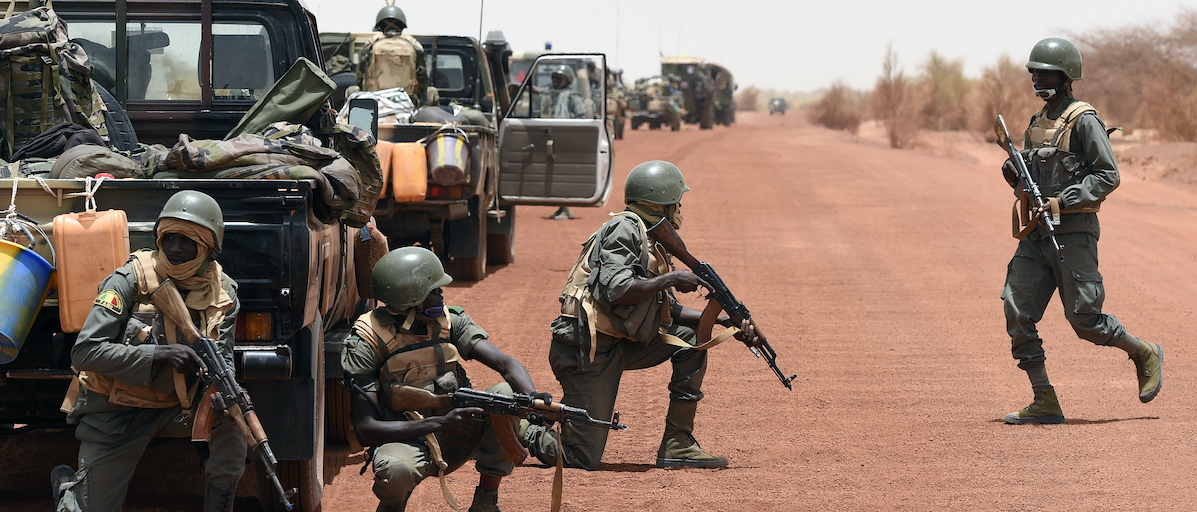
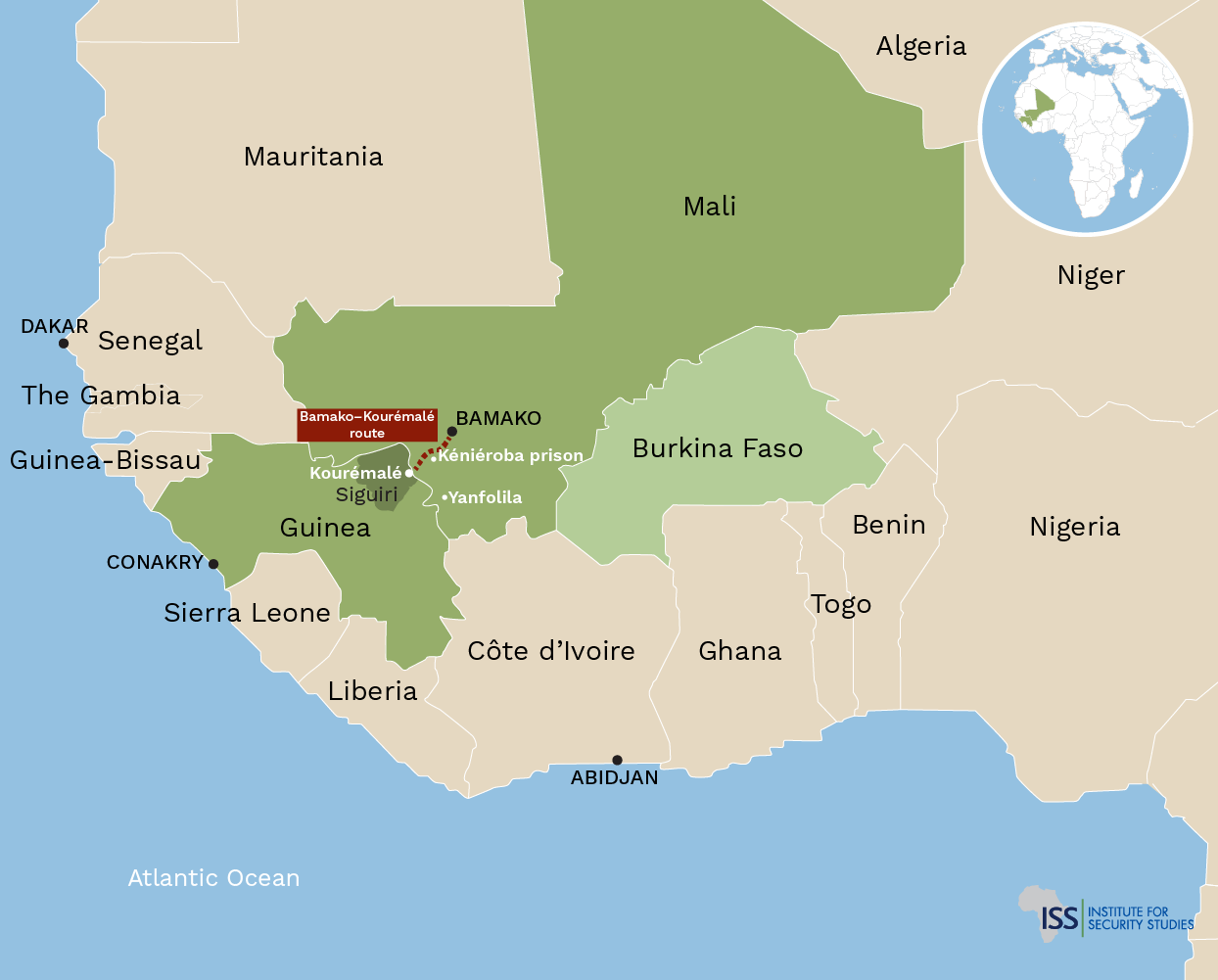
Recent attacks in Central Sahel show a serious change in the terror threat in West Africa. This situation needs more from the countries in the region and their partners than just statements of support for those affected. Burkina Faso, Mali, and Niger, the three members of the Alliance of Sahel States (AES), need urgent security cooperation.
On 25 April, the al-Qaeda-linked group Jama’at Nusrat al-Islam wal-Muslimin (JNIM) and the separatist Azawad Liberation Front (FLA) carried out a series of coordinated attacks in several cities across northern, central, and southern Mali. This was the most ambitious operation by these armed groups since the Malian security crisis began in 2012. The attacks resulted in the death of Defence Minister Sadio Camara and allowed the insurgents to take control of the towns of Kidal and Tessalit in the north.
On 4 July, the FLA-JNIM coalition repeated their synchronized attacks on six areas in the country. While the Malian Armed Forces (FAMa) managed to stop most of the assaults, the insurgents captured part of Anéfis in the north. This forced FAMa and its Russian ally, Africa Corps, to stay inside their military base. After six days of heavy fighting, FAMa and Africa Corps pushed back the attackers and regained control of Anéfis.
These events suggest that the FLA-JNIM alliance is becoming more organized. The two groups are combining their knowledge of the area and local connections.
FLA is more active in the northern regions, while JNIM uses its skills in asymmetric warfare in the central, western, and southern regions. The al-Qaeda-linked group can also carry out complex, coordinated attacks. For example, on 1 July last year, they launched seven attacks at the same time in the west of Mali. They also targeted key economic routes to Bamako to disrupt trade.
While the FLA-JNIM alliance is causing security problems in Mali, the rise in bold, collective attacks can also be seen in the other two AES countries.
On 30 June, Burkina Faso’s armed forces said they stopped ‘complex and coordinated’ attacks by terrorist groups in the east and north. In Niger, the army fought off two attacks aimed at Niamey’s Diori Hamani International Airport. The first attack happened on 28 January this year and was claimed by the Islamic State Sahel Province. The second attack was on 18 June and was claimed by JNIM.
The rise in joint operations, the focus on strategic infrastructure, and the use of advanced technology, especially commercial drones, show a change in the terror threat.
By showing that governments cannot protect their citizens, these armed groups are challenging the authority of states in the Sahel. They might create conditions that could lead to government changes. While it is unlikely that a jihadist group will take over a government soon, this risk cannot be ignored. Such a scenario would have serious effects not just for the Sahel but also for West Africa and beyond.
The gradual spread of armed groups into coastal countries, especially northern Benin and Togo, along with JNIM’s disruptions of trade routes, shows the dangers of terrorism becoming a regional issue. This could affect security, trade, and international interests.
The April attacks in Mali led to a flurry of official support statements. Many neighboring countries, including Senegal, Mauritania, Algeria, Morocco, and Benin, condemned the attacks and expressed support for Mali. The Economic Community of West African States (ECOWAS) and the African Union (AU) also condemned the violence and called for a united response.

Outside Africa, the European Union, Turkey, and Saudi Arabia condemned the attacks and expressed their support for Mali’s leaders.
The AU has become the main source of institutional support. It was the only organization to condemn the 4 July attacks in Mali and also spoke out against the January and June attacks in Niger. Algeria, which has strong ties with Niger, was the only neighboring country to express its ‘deep indignation’ and full support for the Nigerien government and people.
These acts of solidarity are encouraging, but they need to come with more practical actions. Several recent diplomatic moves could improve security cooperation in the region.
These include the recent warming of relations between Mali and Algeria, as well as between Niger and Benin. Senegal has good relations with AES countries and could use its ECOWAS presidency and role as chair of the ECOWAS Commission to promote security cooperation. Positive engagements with central Sahel states by Togo and Ghana are also important, as is improving dialogue between the AU Commission and AES countries.
At least two main actions should be prioritized to strengthen this cooperation.
First, the warming relations between Algeria and Mali, and Niger and Benin, should quickly lead to practical security cooperation measures. Re-establishing military coordination and sharing information would help manage border issues and cross-border threats, while reducing the chance of diplomatic crises.
Second, the AU, which has recently increased its involvement with AES countries, has a chance to mediate dialogue. This could help restart regional security cooperation.
Better relations between Bamako and Algiers also provide a chance to revive the Nouakchott Process. This is a cooperation mechanism against terrorism that the AU set up in 2013. It includes Algeria, Burkina Faso, Côte d’Ivoire, Guinea, Libya, Mali, Mauritania, Niger, Nigeria, Chad, and Senegal. It could be expanded to include Togo, Ghana, and Benin.
The AU could seek support from the United Nations for its peace initiatives under Resolution 2719. This resolution allows for funding of peace support operations in Africa.
Preventing the Sahel from reaching a security crisis point has become a shared responsibility for keeping stability in West Africa.

Drop your comment
No comments yet — be the first to drop the gist 👇