A man gave in to his desires and slept with his friend's daughter. In no time, everyone knew about it. The shame was so great that it felt like he had been cast out to live alone in the forest. His friends turned their backs on him completely; he could not even go outside. Whenever people talked about the scandal, they echoed the Yoruba saying, "Àà tìí gbó̩?" It means, What will people say?
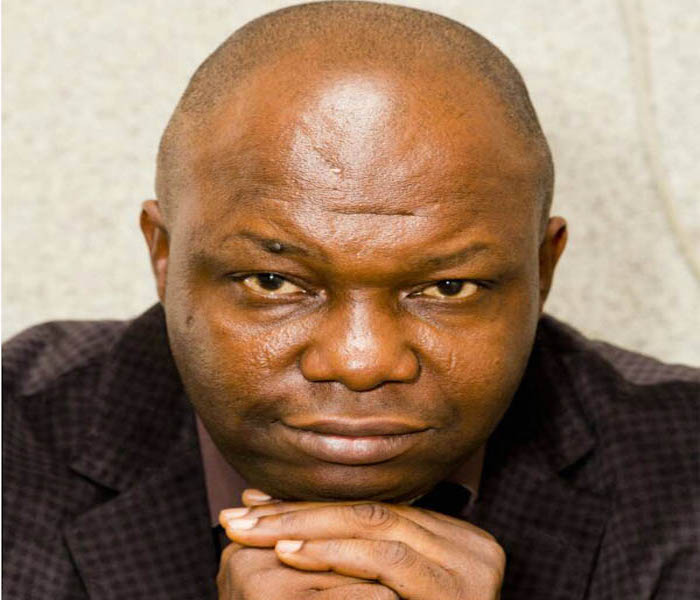
This story is not a fable or a movie plot. It came from a real-life example shared by Professor Toyin Falola, a leading historian in Africa. He shared this during a public lecture for the Ibadan Social Group (ISG) celebrating its 60th anniversary, which I had the honour of hosting.
Many of the problems we face in Nigeria today, both as a nation and as individuals, arise from the decline of the idea of "Àà tìí gbó̩?" The Igbo have their version of this idea, and the Hausa have theirs too.
Look at how Nigerian politicians lie without a second thought. Their promises are often empty, and they steal public funds with no shame. The chairman of the EFCC recently revealed that an official used ₦29 billion meant for a power project to buy personal properties. This official is facing charges mainly because he is on the wrong side of politics, while others who stole even more remain free. Why? They are in good standing with those in power.
I have spoken many times about the lies that come from Aso Rock, which represents the falsehoods of President Bola Tinubu. I have also avoided discussing Atiku Abubakar, believing that his presidency would not bring the renewal Nigerians need. Meanwhile, many view Peter Obi’s story as equally dubious, often calling him a liar.
When we step away from politics and look at our everyday lives, we see the same lack of moral hesitation. A young man was caught on CCTV in Lagos running away from a bridal party at a hotel with a bag that had a laptop and other valuables. He did not know that his face was now known worldwide for shame, damaging his family’s name forever. If he had thought about "Àà tìí gbó̩?", he might not have acted so carelessly.
Falola used "Àà tìí gbó̩?" to highlight how Nigeria has lost both shame and honour in its social and political interactions. This concept is deeply rooted in Yoruba culture. It goes beyond just a feeling of shame; it is an important social value. In Yoruba culture, "Ìtìjú" is similar and both ideas share a common ethical base. The main difference is that Yoruba views shame as a guide for moral behaviour, unlike the Western view that sees it as a weakness.
When a society is guided by these ideas, people understand that their actions affect not just themselves but their community as well. Achieving true honour involves the community, and committing a disgrace impacts everyone. This encourages individuals to consider how their actions will reflect on their name, family, and community. When a society loses sight of these values, moral decay sets in.
This view aligns with thoughts from the late Ghanaian philosopher Kwasi Wiredu, who said that traditional African ethics focus on community and social harmony. Wrong actions are seen as harmful to the community, not just violations of rules.
Forgive my brief detour into philosophy; I felt the influence of my teachers at the University of Lagos. By the way, in Yoruba tradition, the man from Falola's story who slept with his friend’s daughter eventually took his own life. I will compare him to the Bariba people of Nigeria and Benin.
Today, Nigerians from all walks of life wear their shame openly. Leaders show it, the poor suffer from it, and the rich flaunt it. The executive shows it, the judiciary reflects it, and Senate President Godswill Akpabio embodies political shamelessness. With the loss of "Ìtìjú" and "Àà tìí gbó̩?", we are only playing with the remains of a nation built on shaky ethical ground.
When "Ìtìjú" disappears, the social fabric breaks down. Modern Nigerian politics seems to thrive on the absence of public shame. Politicians no longer fear public reproach; instead, they see shamelessness as a tool.
Recent events in the judiciary remind one of the biblical story of Babel, where human pride led to confusion. The story tells how God caused chaos among the builders of the Tower of Babel. Justice Peter Lifu of the Federal High Court in Abuja recently nullified the leadership of the African Democratic Congress (ADC), led by Senator David Mark. He cited breaches of the party’s constitution, the Electoral Act, and the 1999 Constitution. This ruling voided all congresses and primaries held under that leadership, including Atiku Abubakar’s 2027 presidential candidacy.
Earlier, on July 2, 2026, Justice Musa Liman of the same court had upheld the same NWC. When two courts of the same level give opposite rulings on the same issue, it creates chaos.
While many expressed worry over these conflicting rulings, a Federal Minister casually remarked that nothing would happen even if the ADC was left off the ballot. This echoes the words of Chief Remi Fani-Kayode during the First Republic.


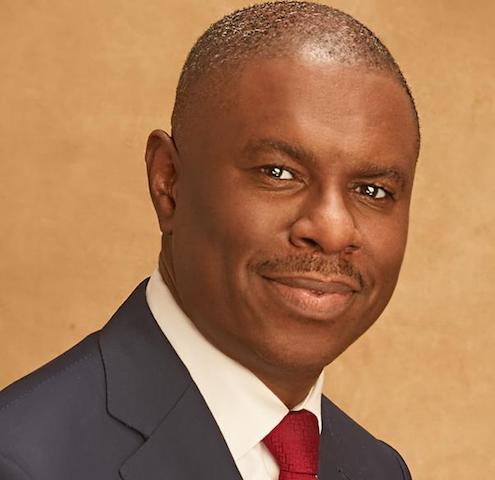
As Deputy Premier, Fani-Kayode once claimed that even if people did not vote for his party, it would still win. After a rigged election, he boasted that invisible forces would ensure his party won. The tone of today’s political statements from Minister Festus Keyamo is strikingly similar.
Consider Justice Lifu’s ruling along with comments from retired Supreme Court Justice Uwani Musa Abba-Aji. She mentioned that she was under EFCC investigation before being appointed to the Supreme Court. She also disclosed that the US had banned a seven-member Supreme Court panel, including herself, after the controversial January 2020 ruling in the Imo State gubernatorial dispute. When you see Hope Uzodimma, after years of being in power in Imo, showing signs of fear regarding democracy, it highlights the dangers of handing power to the wrong people.
These events reflect a growing belief, both locally and globally, that the values of "Ìtìjú" and "Àà tìí gbó̩?" have been abandoned in key state institutions. The US imposing bans on justices suggests that they see Nigeria’s judiciary as compromised.
Just as the US believes Nigeria's Supreme Court Justices are not trustworthy, many Nigerians believe that in that recent judgment, Justice Lifu spoke, but Aso Rock controlled the situation. Since the 2027 elections began, Aso Rock has shown a clear fear of free and fair elections, using various tactics to stifle competition.
So when the ADC ruling came out, Nigerians remembered the Yoruba saying, "Àjéké lánàá, omo kú l’ónìí", the witch owl cried yesterday, and the child died today. They see it as not just a coincidence but a warning of a coming tragedy. When political actions match judicial outcomes, people view them as deliberate, not random.
Nigerian leaders engage in actions devoid of "Ìtìjú" and "Àà tìí gbó̩?" because, as Toyin Falola notes, many African crises stem from a gap between modern governance and traditional moral codes. Falola stresses that the crisis in African governance is not just structural; it is an ethical breakdown, a failure to uphold the indigenous codes that once ensured human dignity. Wole Soyinka once said that “the man dies in all who keep silent in the face of tyranny,” suggesting that good governance collapses when moral accountability is absent.
This breakdown of moral restraint is clear when comparing democratic practices in various countries. While established political systems rely on accountability to handle breaches, Nigerian politics seems free from such checks. Cash and favours are openly given at polling stations, and officials declare results despite clear irregularities. Today’s political actors care little about this ongoing moral decline.
In Nigeria, we have lost what the Yoruba call "àbùkù", meaning stigma, disgrace, or embarrassment, while impunity reigns.
The Ghanaian philosopher Kwame Gyekye summed up this ethical necessity well, stating that a person is not just a physical being but a moral agent whose actions should reflect a sense of shared humanity. When leaders lose moral restraint, they lose the right to lead.
The Bariba people, who share a rich history with the Yoruba, have long held a strong ethical code regarding personal honour. In her 1984 study, anthropologist Carolyn Sargent highlighted that personal integrity was valued above survival. She noted a Bariba saying: "Sekuru ka go go buram bo," meaning, between death and shame, death is more beautiful.
Although modern times are eroding this bravery among the Bariba, Sargent noted that showing pain is seen as cowardice. In Bariba tradition, shame means weakness, and rather than live in shame, a true Bariba would end their life. This shows how precious honour is to them.
For Nigeria’s leaders and citizens, honour is currently absent. But we must understand that a society that does not ask "Àà tìí gbó̩?" is headed for decay. Laws, constitutions, and electoral reforms are needed, but they are not enough alone. Without a moral foundation that encourages self-regulation and a healthy fear of public disgrace, rules will always be ignored.
The key is to restore collective honour. In songs and praise names, Lagosians chant about honour but seldom live it. Traditional songs say that if Lagosians’ ancestral home in Igbeti is not shamed, Lagos (Èkó) cannot be disgraced. It is said, “Bí ojú kò bá ti èyìn Ìgbètì, ojú kò le ti Èkó.”
This principle demands that both leaders and citizens share a sense of honour. It forms the core of our humanity. Only when this foundation is strong and untarnished can Nigeria stand tall without shame.


Drop your comment
No comments yet — be the first to drop the gist 👇