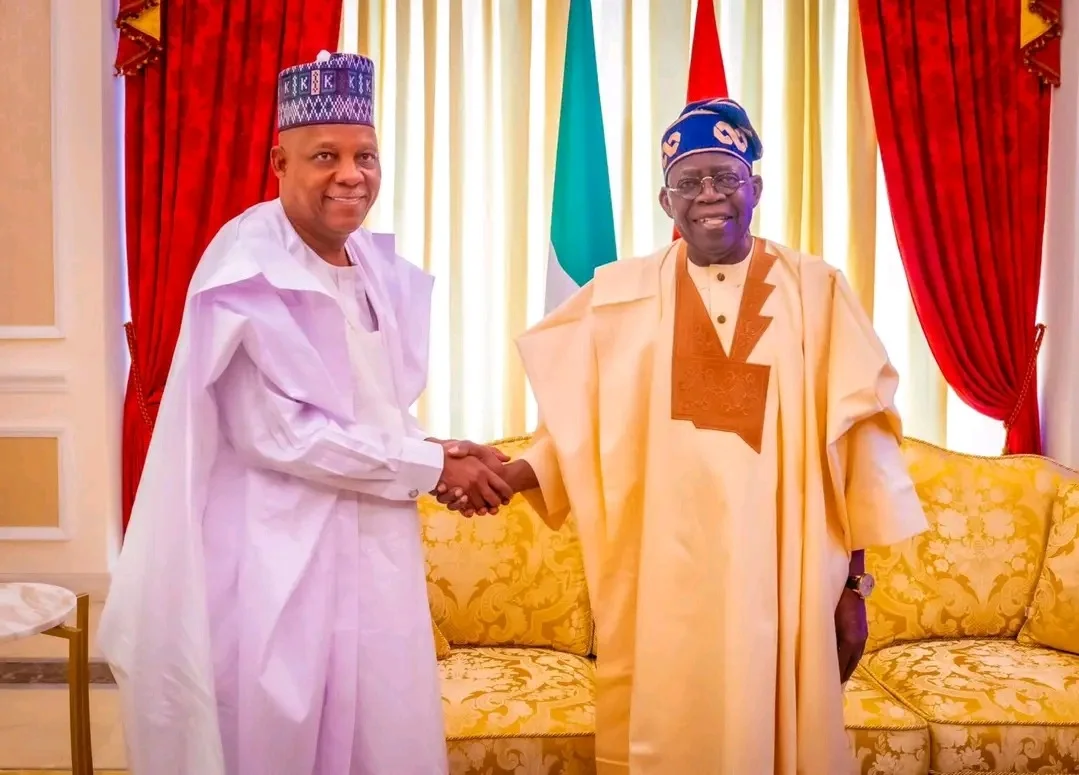
Vice President Kashim Shettima has told government agencies and people in the fertiliser business to quickly arrange for over three million bags of fertiliser to be made and sent to farmers across Nigeria. This is ahead of the upcoming dry-season farming.
This order came after President Bola Tinubu approved funding under the Renewed Hope Agricultural Stabilisation and Productivity Initiative. This initiative aims to make fertiliser cheaper, boost food production, and bring life back to Nigeria's fertiliser blending industry.
Shettima gave the directive on Monday at the Presidential Villa during a meeting with people in the fertiliser sector in Abuja. The Fertiliser Producers and Suppliers Association of Nigeria (FEPSAN) said that available raw materials can help produce about three million bags of NPK fertiliser in the next few weeks.
He also asked the Office of the National Security Adviser (ONSA) to check and track fertiliser stocks declared by stakeholders. This is to ensure transparency, accountability, and smooth distribution.
He stressed that farming communities in states with security issues should not be left out of the distribution plan. He highlighted the need for support to reach farmers in vulnerable and hard-to-reach areas.
On the wider economic impact of the presidential order, Shettima said reviving Nigeria's fertiliser industry would boost agricultural productivity. It would also create jobs and support rural livelihoods.
"A strong fertiliser value chain supports hundreds of thousands of direct and indirect jobs. Reviving this sector is important not only for agriculture but also for employment, rural livelihoods, and economic activities across the country," he said.
Shettima expressed worry that many fertiliser blending plants are not working at full capacity, even though there is high demand for affordable agricultural inputs.
"Today, many of our fertilizer blending plants are operating below capacity at the same time the high cost of fertilizer continues to increase the cost of production for our farmers," he noted.
He explained that President Tinubu's order is meant to tackle these problems by encouraging local production, restoring jobs, and ensuring farmers get fertiliser at lower prices.
"The government wants to support the rehabilitation and full use of our fertiliser blending capacity. We want the factories producing, and we want workers back to work. We want transporters, warehouses, and agro-dealers to be engaged again," he stated.
The vice president pointed out that farmers are the main beneficiaries of this initiative. He said the federal government plans to buy fertiliser made by Nigerian blending companies and sell it to farmers at affordable prices.
"But ultimately the Nigerian farmer is at the center of this initiative. Under the Renewed Hope Agricultural Stabilisation and Productivity Initiative, government intends to purchase fertilizers produced by Nigerian blenders and make it available to our farmers at affordable prices," he added.
Shettima thanked industry players and stakeholders for their readiness to work with the government. He stressed that the success of this intervention relies on timely production, good coordination, and effective distribution.
"Every stakeholder is expected to prepare accordingly in ensuring the success of the presidential mandate to deliver fertiliser to farmers for the fast approaching dry-season farming," he urged.
Earlier, the Minister of Budget and Economic Planning, Abubakar Bagudu, said President Tinubu's order is to make agricultural inputs cheaper while boosting local production and food security.
He revealed that stakeholders found about 496,000 metric tonnes of fertiliser-related stocks, calling it a reasonable starting point for the programme.
"From what has been presented, we have about 496,000 metric tonnes of stock, and it is a good, reasonable starting point," the minister said.
Bagudu assured that the government will collaborate with stakeholders to find more funding options through existing programmes to continue the initiative beyond the immediate presidential order.
"We will work with every other stakeholder to identify other government programmes that will have funding that can be used to support this initiative even beyond the duration of the President's directive," he stated.
Abubakar Kassim, President of FEPSAN, also praised President Tinubu for his personal involvement in reviving Nigeria's fertiliser industry.
"I want to thank the president for taking a personal interest in reviving the Nigerian fertiliser industry. We are extremely encouraged by this intervention because this is about food security, jobs, rural livelihoods and economic and social stability of our country," he said.
Kassim noted that Nigeria has put a lot of money into fertiliser blending plants, warehouses, and distribution networks, but many are still not fully operational.
He explained that reviving the industry would not only improve fertiliser availability but also bring back economic activities across production, transportation, storage, and distribution networks.
Kassim shared that FEPSAN members have assessed available NPK fertiliser stocks and raw materials. They can produce more in the coming weeks.
"Based on information received from our members, the raw materials currently available can support the production of about 148,000 metric tonnes of NPK 20-10-10 within the next few weeks as targeted. This will give about three million bags of fertiliser," he said.
Kassim also mentioned that members have around 29,000 metric tonnes of finished NPK fertiliser ready for immediate sale and distribution.
He is confident that the industry can provide about 3.5 million bags of fertiliser within the set time, noting that existing stocks and blending facilities are spread across Nigeria.
This distribution setup will help with faster delivery and reduce the challenges of getting fertiliser to farmers.
As part of this plan, President Tinubu also approved the Bank of Agriculture (BOA) and the Bank of Industry (BOI) to manage funds and finances for the initiative.
A representative from the Ministry of Finance Incorporated (MOFI) reported that they have about 90,000 metric tonnes of materials available, with more goods in transit. This brings the total to about 248,000 metric tonnes.
The representative is confident that the materials can be provided within the time frame set by the presidential directive.
This intervention is part of Tinubu's larger plan to boost agricultural productivity and food security. It aims to strengthen local supply, improve farmers' access to essential supplies, and support economic activities in rural areas.


Drop your comment
No comments yet — be the first to drop the gist 👇