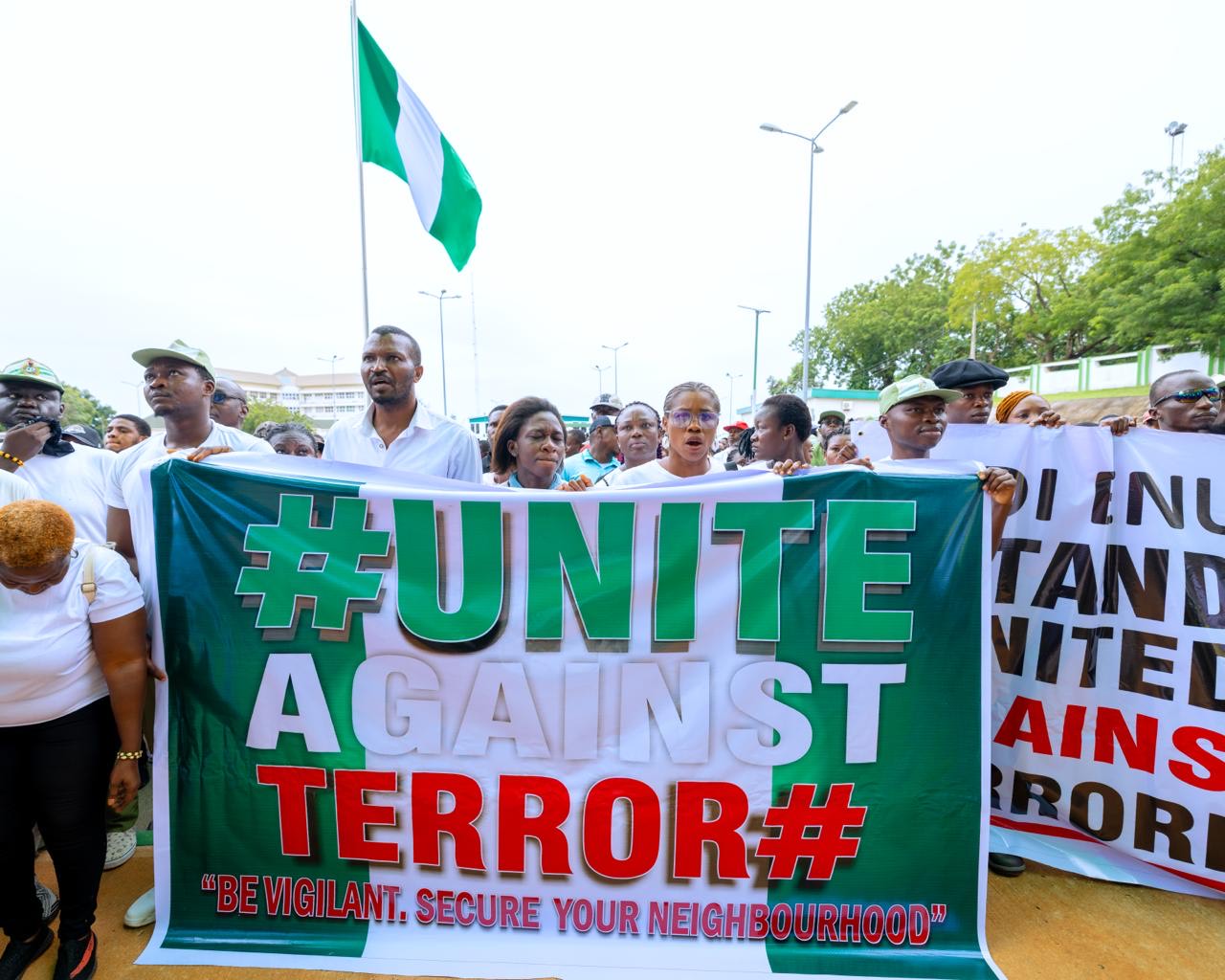
Yorubaland is surrounded by terrorists. Nigeria feels like a bitter place. The president’s birthplace is now a hub for criminals. Since the Ahoro-Esinele tragedy in Oriire LG of Oyo State on 15 May, violence has increased. Bloodshed is now a sad norm. Many people in Ondo, Ekiti, Ogun, and Osun feel the pain. On Friday, bandits attacked the Igbosi area of Idogun in Ondo State. They destroyed two buildings and kidnapped a nine-year-old boy. Nigerians are left tasting blood in their mouths, seeing it flow in their minds. News of killings and kidnappings has become a daily fear.
Sending children to school now feels dangerous. It feels like walking over a landmine. Boko Haram’s victory against education in the South-West is a harsh reality. Last week, unverified reports said terrorists in Oyo National Park were demanding ransoms for our children and teachers. War has truly started. But for the president, the votes for 2027 seem more valuable than the lives of his people. People wonder if the president even cares about the high number of deaths. He has changed from the leader of the nation to a leader who mourns, running a government of sorrow and regular condolences.
As I write, news comes in that terrorists have attacked Borno State again, killing soldiers and vigilante members. Like many areas in Nigeria, the Southwest is scared. Celebrating now feels wrong. Killings don’t even make the news anymore. The number of people buried is ignored. Our situation is like someone whose mother was sacrificed to Yemoja, the river goddess. Killings by terrorists feel like a game of chance. After the attack on Ahoro-Esinele and Yawota, where a teacher was killed and 46 pupils were kidnapped, the Southwest has become a cycle of conspiracies. Addressing one problem leads to many more.
Many parts of Nigeria look like places taken over by rebels in distant African lands. Anarchy is becoming our new normal. Signs of an ungovernable Nigeria are clear. The violent and bloody situation in Southwest Nigeria today is similar to what happened in the 19th century. JF Ade Ajayi and SA Akintoye wrote in their book "Yorubaland in the Nineteenth Century" that this was when the Binis invaded Northern Yoruba towns like Owo and Ekiti. Between 1830 and 1850, towns in Northeastern Yorubaland fell to Jihadist Fulanis. Led by Nupe Malam Dendo, they invaded Igbomina and Akoko. The Ilorin cavalry had many victories. The fight between Ibadan and Ijaye left a lot of bloodshed. By 1847, feared Ibadan forces occupied Ekiti, pushing out the Ilorin. By 1860, they spread their control over Ijesa, Akoko, Igbomina, and parts of Osun and Ife. The 16-year Kiriji war against the Ibadan later ended their dominance.
All these caused, as Ade-Ajayi said in another article, a shift from part-time fighters to full-time armies. Leaders of the Yoruba armies during this troubled time included Aare Latoosa, who led Ibadan in the Kiriji War, and Balogun Oderinlo, who defeated Fulani forces in the Osogbo War. Balogun Ogunmola was a tough strategist. There was also Basorun Oluyole and Balogun Ibikunle. The Kiriji war produced Ogedengbe Agbogungboro of Ilesa, known for his military skills. Then there was Fabunmi of Oke-Mesi, who became a key strategist after beheading an Ibadan tax administrator, which sparked the Ekitiparapo war. The collapse of the Old Oyo Empire in the same century led to these militia leaders rising to power. They became warlords who changed the political scene in Yorubaland.
These leaders sidestepped traditional lines and gained political power. They transformed Yoruba monarchies. Their military actions changed Yoruba society, making strength the key to authority. According to Ade-Ajayi, control of violence and access to weapons became central to power. This led to a complete militarization of Yorubaland until British colonial rule stepped in to restore peace in the late 1890s. Another example is the Agbekoya Parapo Revolt of 1968-1969. It was led by Tafa Adeoye and was a successful peasant revolt against the Federal Government.
I share this history to show what is happening today. All those militia leaders were once bandits who became respected generals. Ogedengbe Agbogungboro started as a local bandit who terrorized his village. He fought in the Ijesa and Igbajo wars, later becoming a major commander in the Kiriji war. He died in 1910 as the Odole of Ijesaland. Similarly, Fabunmi was a local bandit who retaliated against an Ibadan Ajele for attacking his wife.
Yoruba people have a saying that explains how necessity can lead to invention. It says, "ojó t’áa bá pà’jùbà làá níran àdá, ojó ogun bá le làá níran omo t’ó l**e." This means that in hard times, the right tools become essential. Ibadan broadcaster, Fresh FM’s Abolade Salami, shared this saying with me some years ago.
A few weeks ago, Sunday Igboho, a self-styled Yoruba nation activist, made headlines again. He became known in January 2021 when he gave a seven-day ultimatum to Fulani herdsmen in Oyo State to leave. People accused these herders of kidnapping and killing local farmers. He quickly became a folk hero in Yorubaland. The Muhammadu Buhari government pursued him, leading to an operation to capture him. On 1 July 2021, security forces raided his home in Ibadan and claimed to find seven AK-47 rifles, three Pump Action guns, 30 magazines, and 5,000 rounds of ammunition. Igboho then fled the country.
After being pardoned and returning from exile, Igboho announced a new security outfit called “Ìrù Ekùn Security Network.” He said it would work with the police and military to tackle terrorists and kidnappers threatening the people’s safety. He also wants to collaborate with South-West governors to strengthen existing security outfits like Amotekun Corps.
Following the kidnapping of pupils and teachers at Oriire, Igboho claimed to know the politicians behind it, saying they were against Tinubu. Those who know Igboho see him as bold, simple, yet controversial. He has a history of land disputes in Ibadan. But this is not the time for blame. It is time to find ways to stop the suffering. Igboho’s offer to fight insecurity in the Southwest, even reaching out to Kogi and Kwara States, needs serious consideration.
Igboho’s change from villain to hero has historical roots. But if the goal is for Yoruba to get their fair share of the national resources like the Niger Deltans, then his Ìrù Ekùn might be welcome. If the aim is true security for the Southwest, it could be dangerous. Igboho might rescue some children from terrorists in Oyo National Park, but many could die in the process. Ultimately, this could lead to disaster for the people.
First, giving such power to a non-state actor like Igboho is risky. What does he know about modern warfare? A past example shows this can backfire. Mohammed Yusuf, the founder of Boko Haram, was once protected by then Borno governor, Ali Modu Sheriff. During the 2003 elections, Sheriff gave him financial support and protection. In exchange, Boko Haram offered grassroots support. But when Sheriff tried to cut ties, conflict arose. This led to the deadly 2009 uprising, and Nigeria still suffers from this unholy alliance.
Second, as the Yoruba say, even when a mad person is healed, traces of madness remain. Handing over security to Igboho, a political ally, is risky. The timing of his outfit seems off. Giving such power to a person who has expressed anger at those against “our son” being president is like arming political thugs. HURIWA, a human rights group, has warned that Igboho’s Ìrù Ekùn could threaten national security.
Third, Ìrù Ekùn could encourage other regions facing violence to demand their own militias. It would be unfair not to allow them to do so, or else it would seem like ethnic favoritism. The president’s response to the Oriire kidnapping, sending a delegation instead of going himself, is not enough. He announced plans to recruit 1,000 forest guards with Oyo State’s help. But we don’t know how this will work or when it will start. Its effectiveness is also in doubt.
If almost three weeks after 46 pupils and teachers were kidnapped, the only plan is to recruit forest guards, it is worrying. The government should admit its limitations. When someone shows clear inability to act, Yoruba say they should confess their shortcomings to receive help. They say, "Jéwó, òbùn k’án dáso ró e." It seems the government is too weak to save us. Can it admit this?
In conclusion, Nigeria’s insecurity is the result of years of neglect. A Buhari minister once told Nigerians that Fulani herders from all over Africa could freely enter Nigeria. Those in power today seem too afraid to condemn the problems Buhari caused.
The state police idea seems to be the best way to go. Unfortunately, due to political concerns, the presidency is hesitating to act. IGP Tunji Disu’s five-year plan shows the government’s lack of urgency. To fight the guinea worm, known as Sòbìà, Yoruba herbalists use the Olúgànbe leaf. They boil it and use the water to clean the sore. The leaves also serve as a bandage for the burst worm site. To honor the help provided by the Oluganbe leaf, Yoruba say, "tíSòbìà y’óó bá d’egbò, Olúgànbe làá ké sí," meaning before the guinea worm becomes a serious wound, Oluganbe is called for help. This saying warns those who see early signs of trouble to find solutions quickly. But what if the Oluganbe is also the problem? That shows how complex Nigeria’s security challenges are, just like Igboho’s Ìrù Ekùn.
Drop your comment
No comments yet — be the first to drop the gist 👇