The High Costs of Environmental Reporting in Africa
Weeks ago, another environmental reporting assignment turned risky for journalists in Ghana.
In the Obuasi area of Ghana’s Ashanti Region, illegal gold miners, known as galamsey operators, attacked five journalists and environmental officers. The reporters were covering a mission to shut down illegal mining sites. They ran away in a chaotic situation that led to a serious road accident. Akwasi Adomako of JoyNews broke his leg and needed surgery, while his colleagues from Luv FM, Adom News, and Citi FM got head injuries and chest trauma.
This incident in Ghana shows a reality of environmental journalism that many overlook. Journalists covering environmental issues often face dangers like difficult terrain, road accidents, disease exposure, tough weather, and working in industrial areas. These risks increase significantly when environmental reporting involves illegal activities and strong political or business interests.
This problem was already clear a year before the Obuasi incident.
In October 2024, four journalists and media workers from Ghana’s Multimedia Group were detained and beaten by security guards from a mining company while reporting on environmental damage at a mining site in the Ashanti Region.
The victims included journalist Erastus Donkor, drone pilot Majid Alidu, camera technician Edward Suantah, and driver Edward Arko. They went to document the ongoing destruction of parts of the restored Asenanyo Forest Reserve, which is causing pollution in streams that flow into the Ankobra River.
These incidents are part of a broader trend of attacks against environmental journalists.
A recent report by the International Press Institute (IPI) noted 26 different attacks and threats against environmental journalists in sub-Saharan Africa between October 2025 and March 2026. The cases involved journalists reporting on illegal mining, logging, oil management, land and water management, among other issues. The IPI report found that state security agencies were the main source of threats, but private companies, armed groups, and local actors were also involved.
When looking at the overall state of media in Africa, environmental journalism is quickly becoming the most dangerous area for journalists on the continent.
In general, journalism in Africa faces many challenges, including press freedom violations. The 2026 World Press Freedom Index from Reporters Without Borders (RSF) reported that journalism in over 90 of the 180 countries assessed worldwide faces serious restrictions. Of these, 34 are in Africa, including Nigeria, Niger, Mali, and Chad.
Newsrooms across the continent struggle with underfunding, digital attacks, restrictive laws like state cybercrime acts, and the rise of misinformation fueled by artificial intelligence.
While the situation is worrying for journalists in all areas, environmental journalists face even greater risks. They work in a dangerous space where multi-billion-dollar industries, organized crime, and fragile ecosystems meet. A reporter looking into illegal mining can attract attention from government officials, security agencies, mining companies, and communities that depend on the activities being investigated. This makes environmental journalism especially complicated.
The Hidden Costs of Following the Money
Environmental journalism usually means reporting on forests, rivers, climate change, wildlife, and pollution. In Africa, it’s becoming much more. Many of the continent’s key environmental stories are really about money.
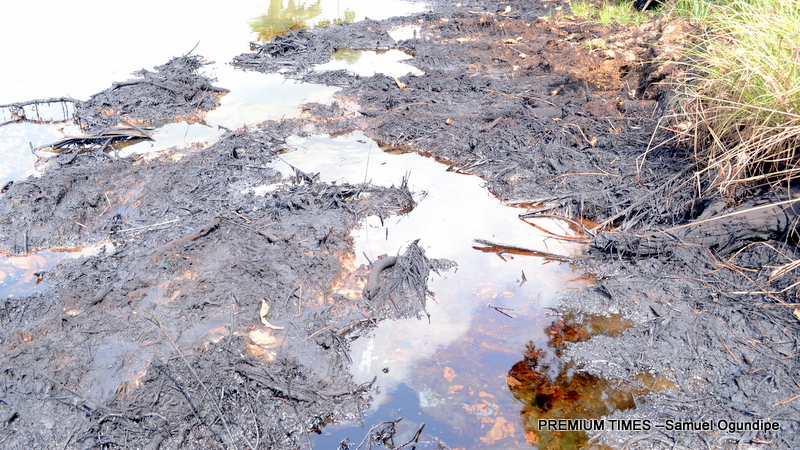
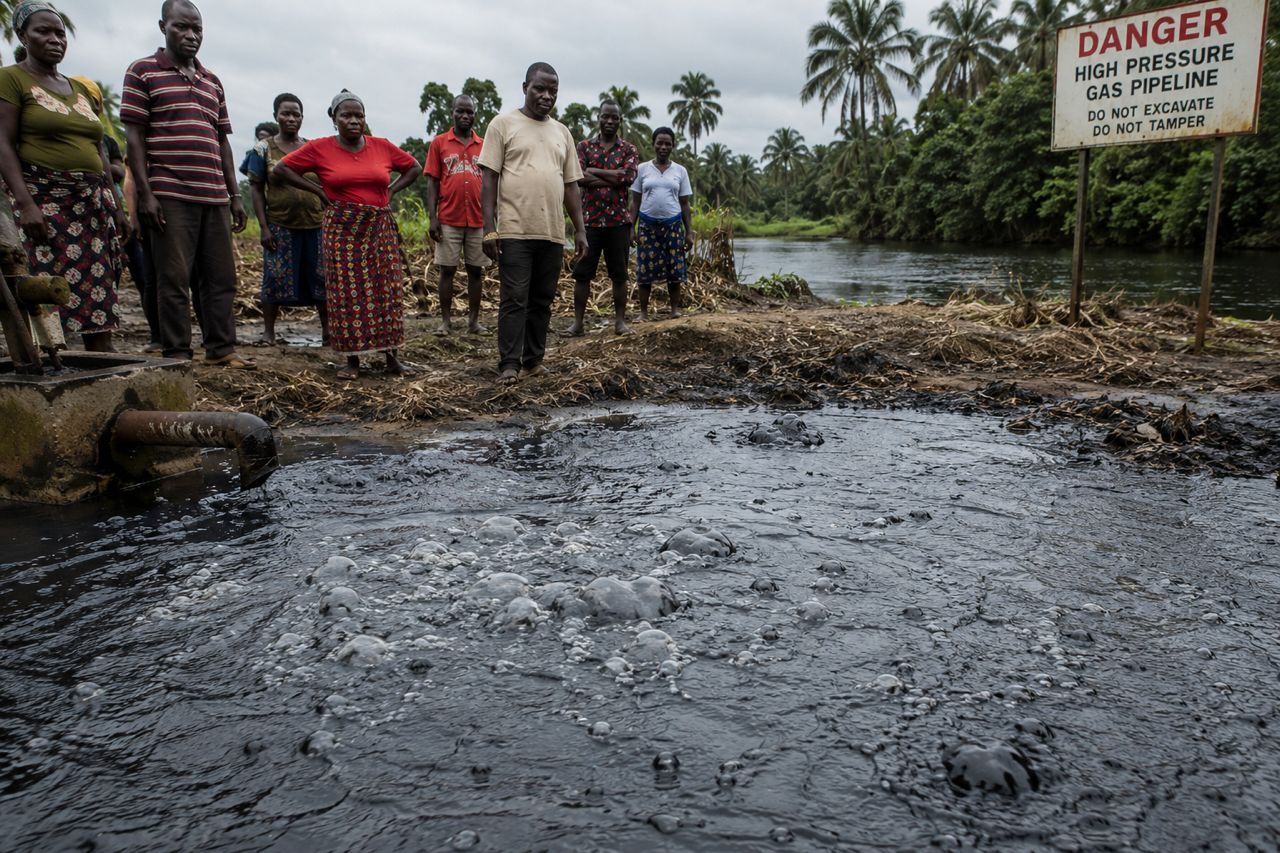
Illegal mining ties into land ownership, licensing, taxes, political favors, and illegal financial flows. Illegal logging often involves smuggling networks. Wildlife trafficking connects local poachers to international markets. Oil pollution raises questions about corporate accountability and how public resources are shared.
Environmental journalists do not just report environmental damage; they also investigate the political and economic systems that allow this damage to happen. This is why environmental investigations can be dangerous.
Dapo Olurunyomi, the founder and CEO of the Centre for Journalism Innovation and Development (CJID), said that environmental journalism has evolved from just reporting on environmental harm to looking into illegal financial flows, corruption, and governance. He mentioned reporting on mining in the Congo region and the Niger Delta, where the focus is moving from environmental damage to the interests that keep it going.
He called this a new moment for environmental journalism, needing more awareness from governments, society, and especially journalists, who he sees as knowledge carriers that can shape public policy.
This is crucial as environmental destruction links closely with economic and political interests. In northern Nigeria, including Zamfara, Katsina, and Niger, natural resources have become sources of illegal wealth for conflict actors. Yet, reporting often stops at labels like banditry or terrorism without looking at the money flows from resource exploitation.
“Environmental journalists must ask questions beyond what is happening to the land or water: Who owns the operation? Who benefits? Who issued the licenses? Where does the money go? Which officials or institutions are responsible for oversight?” he stated.
This shift makes environmental journalism a type of investigative journalism that can reveal powerful interests.
Mr. Olurunyomi said newsrooms should provide specialized training, resources, and dedicated beats for journalists. Reporters need to know mining rules, licensing processes, procurement, financial flows, and governance systems in environmental exploitation.
He mentioned that organizations like Reporters Without Borders and the International Press Institute are starting to work on this, but much more needs to be done.
The need for specialized skills becomes clear when journalists leave the newsroom and go into the environments where these stories happen.
Fiona Macleod, a South African investigative environmental journalist and founder of the Oxpeckers Investigative Environmental Journalism Centre, said in an interview that the shift of environmental journalism from a “nice to have” beat to an essential one has consequences for reporters. “The more important environmental stories become for national economies and public policy, the more likely they are to clash with powerful interests,” she added.
Reporting Beyond the Newsroom
The physical demands of environmental reporting make the beat particularly tough. Investigative stories often require journalists to leave major cities and go to remote forests, mining communities, oil-producing areas, wetlands, border regions, and conflict zones.
A journalist investigating illegal mining may need to enter forest reserves and mining communities where security is weak or sometimes absent. The further journalists go from their newsrooms, the less protection they may have. This is especially true for freelancers and small local newsrooms. A reporter working alone may lack access to security officials, lawyers, insurance, or an employer willing to help if things go wrong.
In August 2023, Nigerian investigative journalist Damilola Ayeni, then an editor with the Foundation for Investigative Journalism (FIJ), traveled to northern Benin for a cross-border investigation into environmental conservation around the Pendjari National Park. While taking photos of the park for the investigation, police arrested him and accused him of being part of a jihadist terrorist group.
Mr. Ayeni was held for nine days without communication, during which neither his colleagues nor his family knew where he was. According to FIJ, a man claiming to be the police commissioner in Parakou demanded 800,000 CFA francs (about $1,315) for his release. He was eventually freed without charges after the Nigerian Embassy in Benin intervened.
Mr. Ayeni’s case highlights a less-discussed aspect of environmental journalism in Africa. Journalists covering conservation, biodiversity, and protected areas often work in places where environmental governance overlaps with counterterrorism, border security, and heavy policing. In these situations, journalists face dangers from criminal groups, private interests, and the risk of being seen through a national security lens.

This means that routine investigative work can be misinterpreted as spying or terrorism, putting environmental journalists at risk of detention, intense questioning, and criminal charges.
The dangers do not only occur after a journalist publishes a story. In many cases, the risks start even before the story begins when the journalist travels into the area where the story is happening. Once environmental reporting enters these spaces, the impact can go beyond the journalist’s immediate safety.
The Scale of the Threat
A 2024 UNESCO study found that at least 749 journalists and news organizations reporting on environmental issues were targeted between 2009 and 2023 through murder, violence, detention, and online harassment.
UNESCO surveyed over 900 environmental journalists from 129 countries and found that 70 percent had faced attacks or pressure related to their work. Among those affected, two out of five later faced physical violence. The organization also recorded at least 44 environmental journalists killed over the past 15 years, with only five cases leading to convictions, resulting in an almost 90 percent impunity rate.
UNESCO’s data comes from a survey of a select group of environmental journalists and does not mean that 70 percent of all environmental journalists globally have faced physical attacks. Similarly, the 749 figure includes documented cases involving journalists and news outlets and is not a complete count of every incident.
Despite these details, the findings show that threats against environmental journalists include more than just physical violence. Journalists in this field face online harassment, intimidation, detention, censorship, and pressure from employers and authorities.
UNESCO also found that nearly half of the journalists surveyed had practiced self-censorship due to fear of retaliation or conflicts of interest, while one-third reported being censored by their own news organizations. When journalists avoid stories because they fear consequences, communities miss out on vital information about pollution, land degradation, and illegal activities that affect their lives. In many African communities, the gap is worsened by the disconnect between environmental journalism and public awareness.
The Challenge of Widespread Ignorance
The threats faced by environmental journalists in the region are worsened by the gap in knowledge between the issues they report on and the people impacted by them. When this disconnect exists, environmental journalists often find themselves isolated from both the communities they want to support and the resources they need.
In an interview with the CJID, Mr. Ayeni pointed out that ignorance is one of the biggest problems facing environmental journalism in Africa.
“Many either don’t know the importance of environmental conservation or, faced with poverty, simply don’t care. So, your mission, no matter how well stated, cannot save you if you become their victim,” he said.
State Complicity and Abuse of Cybercrime Laws
The risks become more complicated when environmental reporting meets restrictive laws. Across Africa, governments use laws related to cybersecurity, national security, defamation, and public order to prosecute journalists. Vague laws are often used to criminalize legitimate journalism, especially reporting that reveals corruption or failings in public service.
The 2026 RSF World Press Freedom Index noted the use of national security and cybersecurity laws as a significant trend in the region. RSF reported that 24 of sub-Saharan Africa’s 48 countries have “difficult” press freedom conditions, while five are classified as very serious.
The Democratic Republic of Congo, for example, ranked 130th globally, with RSF noting severe security issues for journalists, especially in the conflict-affected eastern regions.
The Way Forward
Environmental journalist and investigator Gustavo Faleiros emphasized the need for detailed planning before entering high-risk areas. He discussed the importance of having a solid plan, doing prior research, and finding reliable local contacts before traveling.
Mr. Ayeni stressed the importance of planning for environmental investigations.
“My 2023 experience opened my eyes to the risks of such work, and today, I plan better and get more people involved. Many times, an environmental story takes you to the most remote, dangerous parts of the country,” he said.
He also noted that having a trusted team is as crucial as other safety measures.
“Two months ago, I was in a Kogi State LGA almost completely forgotten by civilization and government. But I kept updating a few trusted people about my movements. If they didn’t hear from me within a certain time, they knew to escalate it to the right channels,” he said.
The dangers facing environmental journalists need more than general safety tips. Newsrooms, civil society groups, and media freedom organizations must rethink how they train, support, and protect reporters.
Mr. Olurunyomi believes that this begins with specialized training.
“Normal security training, which is almost never available, should be combined with training that helps journalists understand mining rules, licensing processes, land systems, procurement, and financial flows linked to natural resource exploitation,” he said.
He also pointed out that environmental crimes often require journalists to work across borders. Since financial flows and resource-related crimes usually operate through networks, newsrooms should create regional partnerships and develop shared safety protocols.
For journalists themselves, preparation must start before an assignment. Mr. Ayeni recommends knowing who controls the area, who benefits from the activities being investigated, which agencies are involved, and what to do if communication is lost. During a recent assignment in Kogi State, he kept trusted contacts updated about his movements so they could take action if they stopped hearing from him.
However, he emphasized that individual caution cannot replace institutional support. Newsrooms should provide security and first-aid training, emergency communication systems, legal support, and evacuation plans, especially for freelancers and reporters in remote or dangerous areas.
Mr. Olurunyomi also urged civil society organizations to better utilize regional mechanisms, like the African Commission’s Special Rapporteur on Freedom of Expression and Access to Information and the African Court on Human and Peoples’ Rights.
“Civil societies must be able to attract attention quickly,” he said, adding that strategic litigation and regional human rights mechanisms can offer extra protection when journalists are attacked or detained.

Drop your comment
No comments yet — be the first to drop the gist 👇