
There is a heavy dread settling into homes and markets across Nigeria. It is not just the usual annoyance of rising prices. It has become a shared fear. Every time a struggling Nigerian adds up their daily transport costs, a parent looks at an overdue school fee notice, or a young worker sees their salary can't buy a bag of rice, the same thought comes to mind: Nigeria will happen to me.
We must be clear: this is not a brief problem or an unavoidable crisis. It is a planned economic structure. The Nigerian government currently runs a system designed for the political elite and those close to power. How do we address unchecked borrowing that runs into tens of billions of dollars, while the middle class disappears and the working poor face financial ruin? As Tinubu’s government approaches the National Assembly to seek approval for a massive $20.52 billion and €1.045 billion external borrowing plan, the gap between government spending and public suffering has never been wider.
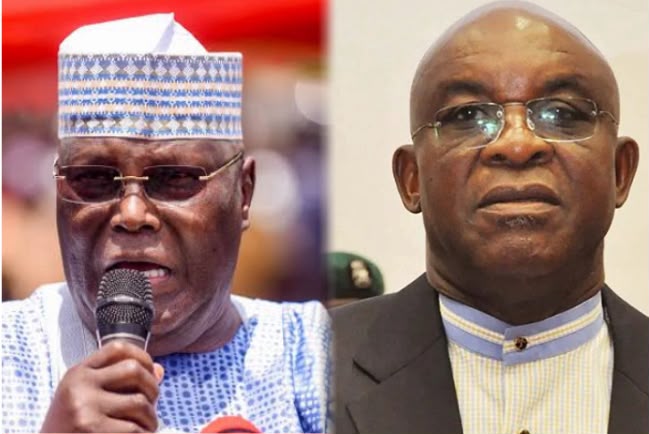
This is the main point of Atiku Abubakar’s economic view: the government now exists mainly to protect the interests of those in power, while ordinary people struggle to afford basic needs.
The numbers tell a story that government reports cannot hide. The PiggyVest Savings Report 2025 shows a country at its breaking point. Three in ten Nigerian adults earn below ₦100,000 monthly. More than half enter each new month without knowing how they will pay for food and utilities. Only six per cent of the population feels financially secure. Food now takes up seventy-two per cent of household income. Meanwhile, data from the EFInA Access to Financial Services Survey shows that fifty-three per cent of Nigeria’s poorest have no access to basic financial support, while around 80 per cent are facing some kind of financial strain.
As wages barely move, inflation eats away at purchasing power, leaving workers with money that disappears before they reach the market.
Atiku has consistently argued that no economy can support its working class without focusing on five key public services: transportation, education, health, food, and housing. Under the current government, all these areas have become tools of financial hardship.
When petrol subsidies were suddenly removed on the first day of this government, they promised 1,000 Compressed Natural Gas buses to ease the situation. That promise disappeared quickly. The Presidential CNG Initiative has mostly stalled, forcing millions of workers to spend their daily wages on high transport costs just to keep low-paying jobs. In contrast, Atiku has proposed an industrial subsidy program to lower energy costs and state-backed investments in public transport to reduce commute costs for urban workers.

In public education, instead of funding universities and vocational schools, tuition fees across public institutions have been raised beyond reach. The government’s answer was NELFUND, which has trapped vulnerable young Nigerians in debt before they earn their first paycheck. Atiku suggests replacing these predatory student loans with direct funding grants and debt forgiveness to ensure education helps social mobility, not adds to debt.
Public healthcare is a disaster for family stability. Out-of-pocket medical costs mean that one emergency, one surgery, or one serious illness can wipe out savings and push a middle-class family into poverty. Atiku’s plan focuses on expanding universal health insurance and strengthening primary care facilities to protect vulnerable households from crippling medical costs.
Housing is perhaps the most glaring failure. Building homes is known to create jobs and distribute wealth, yet public housing in Nigeria serves only the elite. Look at what effective governance can achieve: between 2020 and 2024, Algeria built and distributed over 1.7 million public housing units through its state-backed AADL program. That initiative provided homes for millions while creating many jobs. In Nigeria, state-backed housing is almost non-existent for the poor. Instead, it is built for speculators in Abuja and Lagos, while ordinary workers live in slums or pay high rents. This government promised 100,000 housing units but has delivered less than one thousand, even though it claims about 10,000 units are being built. Atiku’s plan calls for significant state-backed investments in affordable housing to boost economic activity and restore dignity to the working class.
At the heart of this crisis is the food situation. Agricultural output is dropping because farmers face rural insecurity, high diesel costs, and lack of federal support. When farmers cannot access their land safely, families in cities cannot afford to eat. When the price of a basket of tomatoes or a tuber of yam rises too high, the government fails its citizens. To change this, Atiku proposes direct input subsidies, security for farming areas, and incentives for rural farmers to stabilize food supplies and lower prices. His plan also suggests moving from subsistence farming to providing support for mechanized farming.
So, who does this Tinubu economy benefit? Economic figures might look good in press releases from Aso Rock, but they only serve politicians, contractors, and financial insiders. For the teacher in Ibadan, the trader in Onitsha, the commercial driver in Kano, and the young graduate in Lagos, Nigeria has turned into a daily struggle with no end in sight.
Atiku Abubakar’s warning is clear: you cannot borrow your way to national success while making life unaffordable for your people. Until the government shifts its focus from elite interests to protecting the purchasing power of the poor, the frightening thought of “Nigeria could happen to me” will remain the daily reality for many.

Drop your comment
No comments yet — be the first to drop the gist 👇