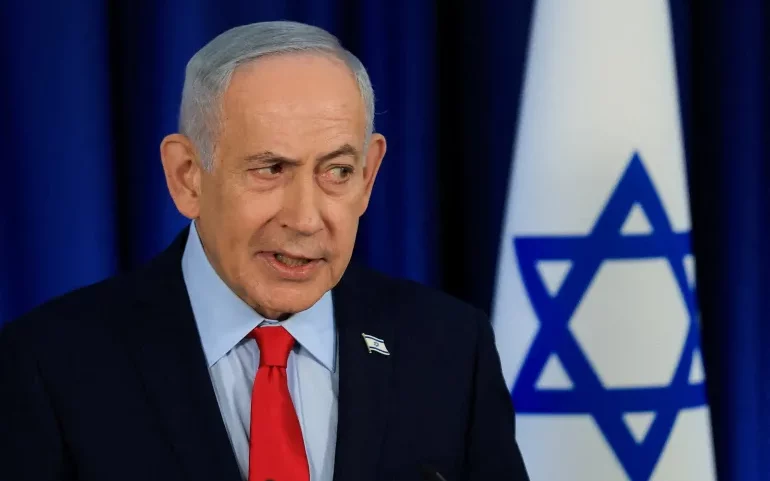
Prime Minister Benjamin Netanyahu's right-wing group has taken a slight lead in the Israeli parliamentary election as about a third of the votes have been counted.
Yet, exit polls show that the election outcome is uncertain. Neither Mr Netanyahu nor his rival Gadi Eisenkot seems able to secure a clear majority in parliament.
The two updated exit polls released so far indicate that both Mr Netanyahu’s right-wing group and Mr Eisenkot’s bloc are tied at 51 seats. Israeli news outlets often use polls to predict election results.
To create a majority government, a bloc needs at least 61 seats.
This election will decide if Mr Netanyahu stays in power or if there will be a change in leadership in Israel.
The voting is seen as a referendum on the country’s leadership following the Hamas attack on 7 October 2023, the wars that followed, and the political and security choices made since then. The outcome could affect the war's direction, relations with Palestinians, Israel’s global image, and its political future at home.
As polls indicated a close race, Mr Netanyahu called for a strong right-wing government to appeal to the Zionist public. He urged the creation of a “national right-wing government.”
He warned against depending on Arab parties for support. Arabs represent one-fifth of Israel’s population, and many see themselves as Palestinians.
He highlighted what he termed his government's military successes and insisted that their work was not finished.

“Iran is weaker than ever; Israel is stronger than ever,” he stated.
He also mentioned that Israel has a “unique opportunity” with President Donald Trump to “remove the Iranian threat once and for all.”
On the other hand, the opposition has challenged the initial projection of 50 seats for Mr Netanyahu’s group, claiming it undervalued their support.
Mr Eisenkot described the election as a response from Israeli society to the 7 October attacks and three years of conflict.
“People had not remained indifferent. They had come out to vote,” he said.
Mr Eisenkot believes Israelis voted for “change,” and he plans to create “a government that represents the entire society.”
Meanwhile, Arab-led parties are celebrating too, with exit polls suggesting they will secure 19 seats. This would be the highest number they have ever held in parliament.

Drop your comment
No comments yet — be the first to drop the gist 👇