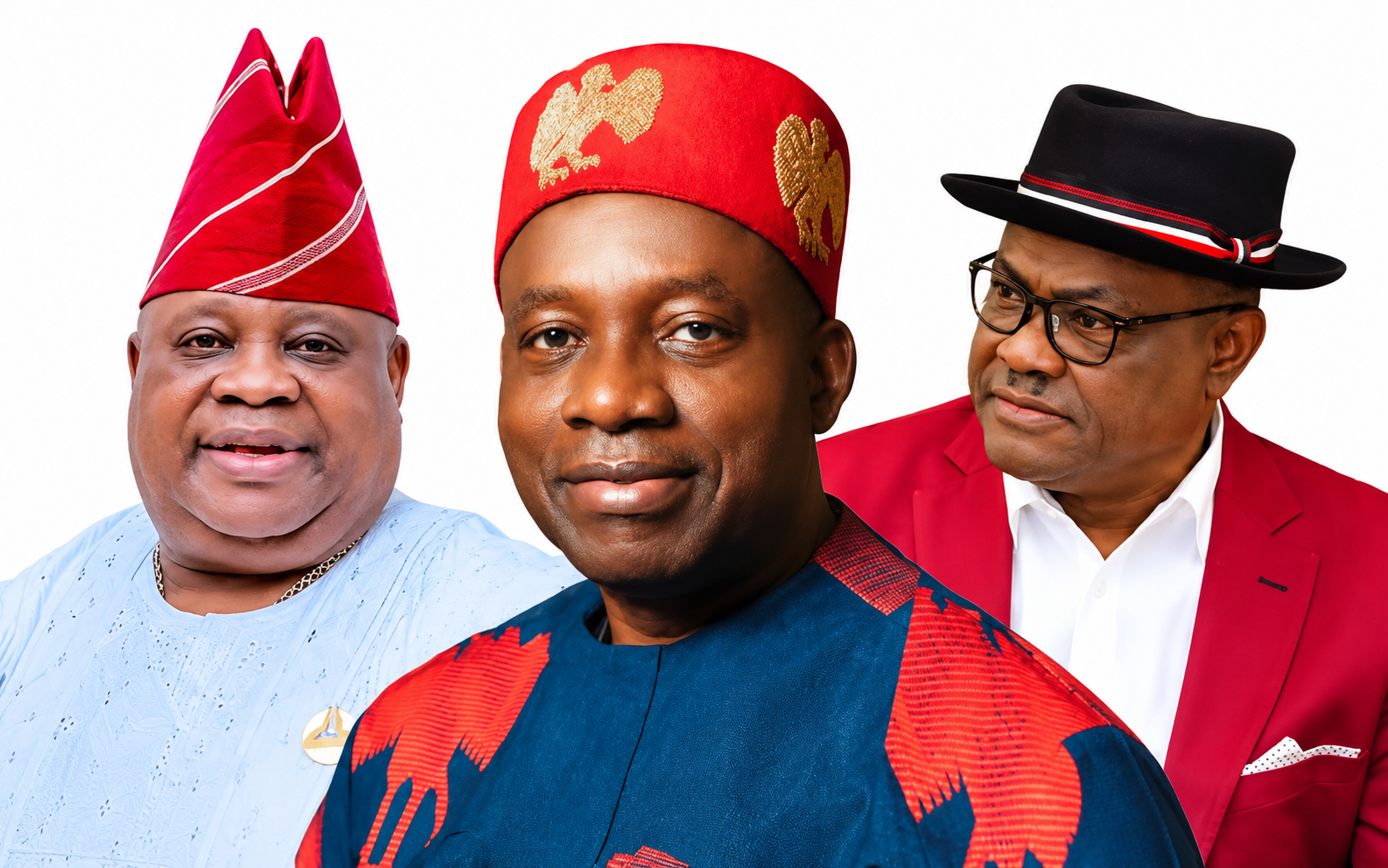
Three key opposition politicians now have roles in President Bola Tinubu’s re-election campaign in their states. This decision has raised eyebrows about party loyalty as the 2027 general elections approach.
Nyesom Wike, the Federal Capital Territory Minister from the Peoples Democratic Party (PDP), Chukwuma Soludo, Governor of Anambra State from the All Progressives Grand Alliance (APGA), and Ademola Adeleke, Governor of Osun State from Accord, are now part of the ruling All Progressives Congress (APC) Presidential Campaign Council.
The new list was announced on 13 October. Wike will lead the campaign in Rivers State and the FCT, Soludo in Anambra, and Adeleke in Osun.
Some opposition members and even some APC members have criticized these appointments. They question the impact of giving leadership roles in the campaign to politicians from other parties.
Controversy in Accord
The situation is particularly tense in Accord, where the Board of Trustees has backed Adeleke’s support for Tinubu. This support comes even though there is an unresolved legal battle over the party’s presidential nomination.
As the APC gears up for its national campaign, the president plans to attend rallies in 12 states from October to January 2027.
Wike’s role in Tinubu’s campaign is now official, even as he remains with the PDP. He supported Tinubu during the political disputes before the 2023 election and later became the FCT minister. His campaign duties include Rivers, where he was governor from 2015 to 2023, and the FCT, where he currently works.
Wike has described himself as a field commander for the campaign in the FCT. This appointment expands his support for Tinubu beyond just endorsements to a more active role in two important areas.
Still, it is unclear how his responsibilities will fit with the current APC campaign plans in Rivers and the FCT.
Soludo's Role
Governor Chukwuma Soludo has also been named as the coordinator of Tinubu’s presidential campaign in Anambra.
Soludo won a second term in November 2025 under the APGA banner. His new role means a sitting governor from a different party will coordinate support for Tinubu’s re-election in Anambra.
This appointment suggests some political cooperation, but it does not indicate that Soludo has switched to the APC or that APGA has merged with the ruling party. Questions remain about how Soludo’s campaign duties will connect with existing APC officials in Anambra.
Adeleke's Situation
Ademola Adeleke has been appointed to lead Tinubu’s re-election campaign in Osun State.
Adeleke recently won re-election in August on the Accord platform after previously being with the PDP. His appointment is under scrutiny due to a pending legal issue regarding Accord’s presidential nomination.
On 5 October, a Federal High Court in Abuja ruled that Accord and the Independent National Electoral Commission (INEC) must recognize Gbenga Olawepo-Hashim as the party’s presidential candidate for 2027. The court found that the party did not submit Olawepo-Hashim’s name despite evidence from its primary on 30 May.
Accord’s national chairman, Maxwell Mgbudem, has challenged this ruling at the Court of Appeal. While the judgment is under appeal, there is no confirmation on the outcome or if any later orders have changed the situation.
Adeleke’s choice to support Tinubu has garnered backing from some party officials. On 14 October, Accord’s candidates in Osun promised to rally support for the president.
Two days later, the Board of Trustees endorsed Adeleke’s role as campaign coordinator and expressed support for Tinubu. This endorsement came after some people claiming to be Accord leaders in Lagos criticized Adeleke’s political loyalty.
The Board rejected their claims and challenged their authority to speak for the party. However, this support does not mean Accord has officially withdrawn Olawepo-Hashim’s candidacy or backed Tinubu as its presidential candidate.
Questions About Authority
The situation raises two main issues: the outcome of the legal matter regarding Accord’s presidential nomination and whether the party has officially supported Tinubu’s re-election.
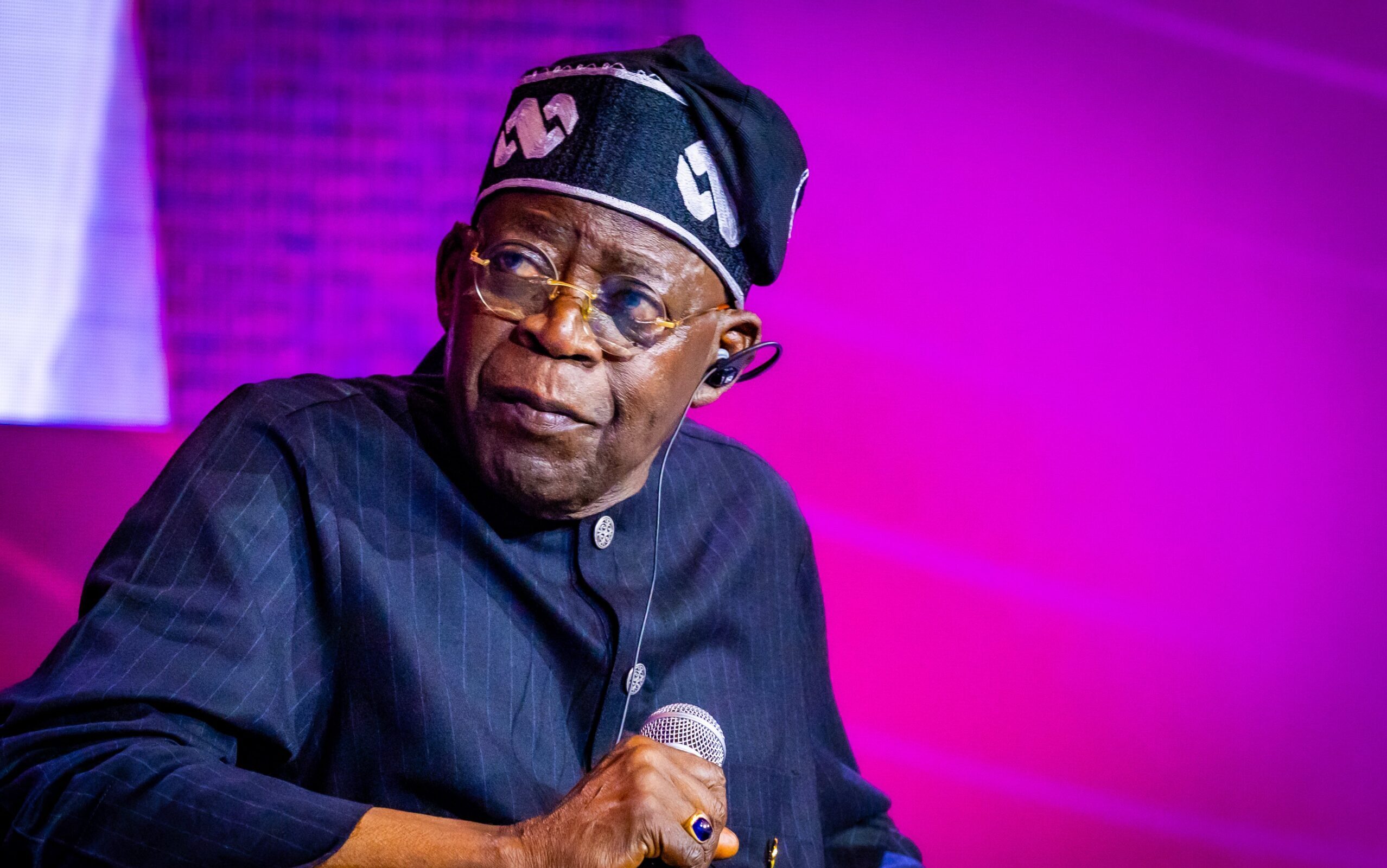
Tinubu leads the expanded campaign council, with Vice-President Kashim Shettima and APC National Chairman Nentawe Yilwatda among its key officials.
Former Zamfara State Governor Abdulaziz Yari is the director-general. Other top officials include Senate President Godswill Akpabio and House of Representatives Speaker Tajudeen Abbas.
Imo State Governor Hope Uzodimma is the secretary, while other senior APC members have received regional and mobilization roles. The council also includes former governors and other political figures in advisory roles.
The difference between state coordinators and advisers matters. State coordinators drive campaign efforts in specific areas, while advisers do not always have direct responsibility.
All appointees’ roles should be understood alongside the final APC council list. The inclusion of politicians from outside the APC has raised concerns from opposition members and some ruling party members about loyalty and accountability.
Former Vice-President Atiku Abubakar, the ADC presidential candidate, criticized the expanded campaign council on 14 October. He questioned its size and accused Tinubu of trying to distract the public from economic issues and insecurity.
Atiku also criticized using the Presidential Villa for the council’s launch, stating it should not host political activities. He believes the president should be judged on his performance rather than how many politicians join his campaign.
Another ADC leader, Dele Momodu, spoke against Wike, Soludo, and Adeleke’s roles on Arise Television on 14 October. He compared Tinubu’s growing political influence to the power held by the late military ruler Sani Abacha.
Objections have also come from within the APC. Polycarp Alegu, a media aide to the Ebonyi State APC chairman, questioned why other party politicians were given leadership roles over longtime APC members. He warned this could hurt loyal party members’ morale.
Ongoing Discussions
Paul Ibe, media adviser to Atiku, raised questions about whether politicians can lead a rival party’s campaign while still being part of their own parties. He specifically pointed out Adeleke’s role, given Accord has its own presidential nomination.
These criticisms highlight concerns about the authority behind these appointments and whether the relevant party rules allow such arrangements. However, the appointments do not automatically mean any party rule has been broken.
Despite the backlash, some politicians in the involved parties support the new appointments. Wike has defended the coalition as part of a larger political alliance backing Tinubu.
Representatives from the PDP and APGA have publicly supported their members joining the campaign structure. In Accord, the support has gone beyond personal endorsements.
The Board of Trustees backed Adeleke’s role on 16 October, following earlier support from Accord’s legislative candidates in Osun for Tinubu.
Still, this backing has not resolved the internal disputes within the party. Olawepo-Hashim has questioned Adeleke’s decision to support Tinubu, while the party’s national leadership is appealing the court ruling about his nomination.
These developments show the difference between political endorsements by party officials and formal decisions impacting a party’s presidential nomination.
Former House of Representatives member Sam Onuigbo welcomed the inclusion of politicians from other parties, saying it shows cooperation.
The expanded council is set to help implement the APC’s planned nationwide campaign. Although the party aims to campaign in all 36 states and the FCT, Tinubu will only attend rallies in 12 states from October 2026 to January 2027.
Tinubu’s proposed appearances begin in Kaduna on 24 October. Other stops include Rivers on 7 November, Plateau on 14 November, Oyo on 21 November, Borno on 25 November, Enugu on 28 November, and Bauchi on 29 November. Other planned visits are Sokoto on 4 December, Delta on 12 December, and Kano on 17 December. Adamawa is set for 4 January 2027, with Lagos closing the rallies on 9 January.
The APC has indicated the itinerary might change. Of the three non-APC state coordinators, Wike’s role in Rivers aligns with a state where the president will campaign.
Anambra and Osun are not on the list for presidential visits. This means Soludo and Adeleke will lead campaign efforts in their states without a presidential rally unless things change.
This setup places more responsibility on state coordinators and other officials to rally support in places the president won't visit. The proposed schedule has also faced criticism from the ADC Presidential Campaign Council.
Kola Ologbondiyan, the council’s media director, accused Tinubu of avoiding direct contact with voters. Ologbondiyan argued that a president seeking re-election should be ready to address issues like the economy and security before voters.
The APC dismissed claims that the limited schedule shows unwillingness to campaign. On 15 October, Obafemi George from the campaign council’s media committee said the president has evaluated the electoral landscape and aims to balance campaigning with governance.
George argued that a presidential candidate does not have to attend rallies in every state. He added that Tinubu would continue to promote his administration’s policies while ensuring government duties are not neglected.
These appointments reflect the political alliances forming ahead of the 2027 election. For the APC, including politicians from other parties could help expand its support base in states where Tinubu has followers beyond APC members.
For the appointed politicians, this arrangement highlights a separation between their party ties and the presidential candidate they are working for. This situation also occurs as six opposition parties involved in the G100 initiative discuss possible electoral cooperation, including choosing a common candidate.
While the APC is bringing in politicians from other parties, G100 participants are focusing on collaboration among opposition parties. These two processes show different types of political alignment ahead of the elections.
Yet, the expanded council does not clarify how the non-APC coordinators will work with existing state party leaders, what powers they will have, or how their campaign activities will be funded. These questions are crucial in states where the assigned coordinator is from a party other than the APC.
As the APC gets ready for its campaign launch in Kaduna on 24 October, the expanded council highlights the alliances supporting Tinubu’s re-election. It remains to be seen how these appointments will function with existing party structures and if the cross-party arrangements will lead to coordinated campaigns.

Drop your comment
No comments yet — be the first to drop the gist 👇