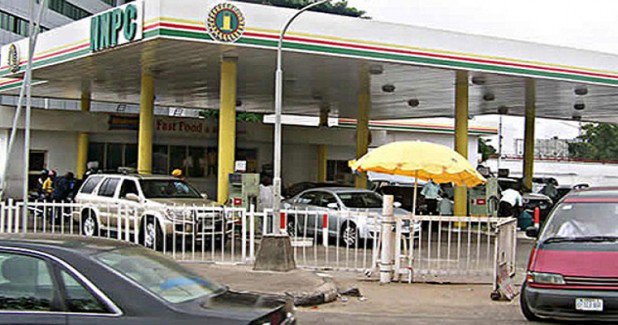
The Tinubu administration wants to change Nigeria’s economy. They want to remove an unsustainable subsidy and make the petroleum market work better. Finance minister Taiwo Oyedele spoke about this in a recent press briefing called "Fuel Prices and the Subsidy Question." He pointed out that while these goals are connected, they are not the same.
A key point from the briefing is the proposed price ceiling of ₦1,350 per litre for petrol. This proposal is important for Nigeria’s reform plans and how the government manages its money.
Under this plan, if petrol prices go above ₦1,350, refiners and importers will take the loss. They will later recover this loss when prices drop. The government prefers to call this “price smoothing” instead of “subsidy” or “price control.” The main issue is whether this is a real price smoothing method or a forced way of financing for fuel suppliers.
At first glance, this plan looks like a way for suppliers to recover costs over time. But if prices do not fall enough, and suppliers cannot recover their losses, then it turns into a sort of subsidy or unfair charge on the government.
The government needs to answer some important questions. How will they check the costs and verify losses? Will suppliers earn interest on the amounts they have to wait to recover? What if international prices stay high for a long time or if there are exchange rate issues? Can suppliers get back their total costs if prices do not drop enough?
Also, does this plan cover Dangote refinery, the Nigerian National Petroleum Company Limited (NNPCL), and independent importers? What if a supplier does not want to join or cuts supply because they have no cash? Is there a limit on how much money can build up?
Clearly, the finance minister’s press briefing raises many questions. One big question is how the NNPCL will get enough refined fuel to run this plan. Another question is why they chose a 30-day trial period for the margin discount plan. There are many ways to test new policies, but not much proof that Nigeria can be treated like a testing ground for these ideas. The risk of policy failure is high. So, why are they doing this now?
With elections coming next year and people struggling with living costs, the government is under pressure, as seen in the minister’s comments. It is easier to ask how the government can keep this plan going when the NNPCL's ability to refine fuel is limited, rather than answer what will happen when a private refinery holds the key to success.



If the government wants to sell petrol for less than the market price, it sends a strong signal to Dangote refinery. The discussion would shift from whether Nigeria should continue subsidizing petrol to deeper issues. We would need to look at domestic refining capacity, competition, energy security, and the government’s ability to benefit from high crude oil prices.
However, Dangote refinery, located in an export processing zone, can easily sell its products abroad. The same cannot be said for the federation. If NNPCL sells petrol below its cost, it would hurt its earnings and what it can send back to the government. Given the tight situation of the national treasury, it would be good for the government to clarify how the NNPCL-station discount will be funded. Will it come from the company’s profits, a direct payment, or some other way?
Ultimately, PREMIUM TIMES believes the key question about funding this scheme is not if the finance ministry pays right away. It is whether this plan creates costs that someone will have to pay eventually.
Nigerians have faced serious challenges over the last three years. They have endured these hardships as the Tinubu government tries to fix past spending mistakes. Changing course now would look bad and be hard to explain, especially if they just change the name from "subsidy" to "price modulation."
At the same time, if the government’s policies are meant to strengthen reform, then the difference between subsidy and price modulation might not matter as much. What truly matters is whether this policy will ensure a steady fuel supply at reasonable prices without unfair costs to taxpayers, suppliers, or future administrations.
As they ensure that deregulation works in a market with uneven refining capacity, the national oil company’s refineries are not running well. Crude supply is limited, and one private refinery is very important. The finance minister will likely need to hold another briefing to ease concerns from the market and the public.

Drop your comment
No comments yet — be the first to drop the gist 👇