Osun has 2,339,233 registered voters. Out of these, 1,906,390 have collected their Permanent Voters Card (PVC) and can vote in Saturday’s governorship election.
But just looking at the number of registered voters doesn’t show us where the election could be decided.
We need to know where those voters live, how many will show up, and what margins the candidates can achieve in those areas.
INEC’s data shows that Osogbo has the highest number of registered voters in the state, with 167,704. This represents 7.17 percent of the total.
Ife East comes next with 128,515 voters, or 5.50 percent. Olorunda has 123,063 registered voters, which is 5.26 percent. Ife Central has 122,454 voters, or 5.24 percent.
Iwo has 106,813 registered voters, making up 4.57 percent of the state’s total. Irewole has 96,528 voters, which is 4.13 percent, while Ifelodun has 94,870, or 4.06 percent.
The ten LGAs with the most voters have 1,113,813 registered voters, which is 47.6 percent of the total register.
This means nearly half of Osun’s registered voters are in just ten out of the thirty LGAs.
A large number of registered voters is just potential strength. The actual votes depend on PVC collection, mobilization, turnout, and the margins each candidate can achieve.
INEC reported that the number of registered voters in Osun increased from 1,954,800 to 2,339,233, an increase of 384,433. The commission also noted that 322,822 newly registered voters collected their PVCs, which is 62 percent, before extending the collection deadline to July 31.
These figures highlight the importance of the electorate size. A large number can give an LGA significant electoral influence. But it all comes down to how many voters actually turn up on election day.
The 2022 election offers some context, but Saturday’s contest is a different race.
Ademola Adeleke won the 2022 governorship election by a margin of 28,344 votes against the then incumbent, Gboyega Oyetola of the All Progressives Congress (APC).
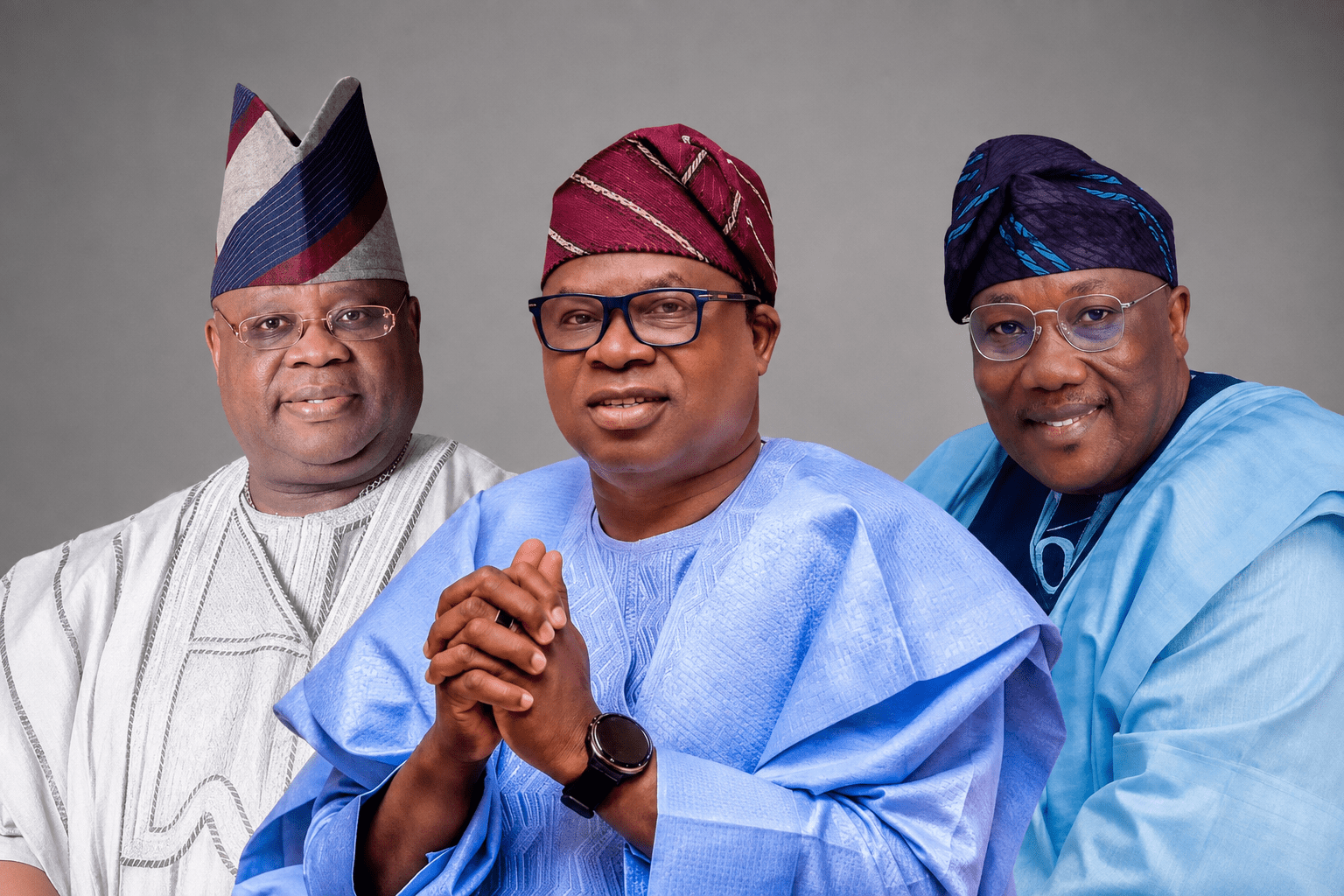
This time, Mr. Adeleke is aiming for another term. The APC is fielding Bola Oyebamiji, while Najeem Salaam is running under the African Democratic Congress (ADC). There are 11 other candidates on the ballot.
So, how will the current voter distribution affect the 2026 elections?
Ede: A Key Voting Area
Ede North has 96,644 registered voters, and Ede South has 67,729.
Together, they have 164,373 registered voters, making up about seven percent of Osun’s electorate.
Ede is a major voting area. For Mr. Adeleke, the region he comes from is politically very important. But the size of the electorate also means the APC and ADC will want to fight for votes there.
On Saturday, what matters most will be the turnout and the margin each candidate secures.
Osogbo and Olorunda: Over 290,000 Voters
Osogbo has the highest number of registered voters, 167,704, or 7.17 percent of the total.
Olorunda has 123,063, which is 5.26 percent.
Together, these two LGAs have 290,767 registered voters, making up 12.4 percent of Osun’s total.
This gives the state capital a significant concentration of voters in this election.
The key figure could be the margin between the leading candidates after counting the votes.
If turnout is high and the race is close, a few thousand votes here could change the overall result.
Ife: Over 317,000 Registered Voters
The three Ife LGAs, Ife East, Ife Central, and Ife South, have a total of 317,224 registered voters, about 13.6 percent of the state’s electorate.
Ife East has 128,515 voters, Ife Central has 122,454, and Ife South has 66,255.
This makes the Ife area one of the largest voter concentrations in Osun.
High voter turnout could mean Ife has a strong influence on the final results.
Iwo: 106,813 Registered Voters
Iwo has 106,813 registered voters, making up 4.57 percent of the state’s electorate.
This is the fifth-largest LGA by voter population.
Ijesa Area: 332,473 Voters
The Ijesa area also has a significant voter population.
Ilesa East has 89,491 registered voters, Ilesa West 86,699, Atakumosa East 47,767, Atakumosa West 44,076, and Obokun 64,440.
Together, these five LGAs have 332,473 registered voters, which represents about 14.2 percent of Osun’s total.
This is a large enough voting block for candidates to pay close attention to.
Medium-Sized LGAs Matter Too
The election will not only be decided in the biggest voter areas.


Irewole has 96,528 registered voters, Ifelodun has 94,870, and Ejigbo has 87,676.
Oriade has 84,283, Odo-Otin 82,574, Boripe 81,067, and Ayedaade 77,649.
Other notable electorates include Egbedore with 67,440, Irepodun with 67,131, Ife North with 65,718, Isokan with 65,379, and Obokun with 64,440.
Even smaller LGAs play a role: Orolu has 51,021 registered voters, Atakumosa West 44,076, Ola-Oluwa 44,761, and Boluwaduro 29,797, while Ifedayo has 28,361.
But when combined, votes from medium and smaller LGAs could make a difference in a tightly contested election.
Three Candidates, Different Strategies
Having three main candidates also complicates things.
Governor Adeleke, Mr. Oyebamiji, and Mr. Salaam do not need to win every big LGA to stay competitive.
What matters is the mix of votes and margins.
A candidate could narrowly lose a large LGA and still be in the race, while a big loss in another area could create a gap that's hard to close.
The ADC’s performance could also play a role, even if they don’t win many LGAs.
If Mr. Salaam gets strong support in areas where Mr. Adeleke and Mr. Oyebamiji are close, his votes could change the margin between the main candidates.
This makes how votes are distributed more important than just the total across the state.
The Register is Just the Start
Some registered voters may not vote. Others may have registered somewhere they no longer live. The actual turnout and where they vote can change the figures significantly.
There is also a constitutional requirement on top of just having the most votes.
A governorship candidate must get the highest number of votes and at least one-quarter of the votes in at least two-thirds of the LGAs.
With 30 LGAs in Osun, this means meeting the one-quarter mark in at least 20 LGAs.
Candidates cannot focus solely on the biggest voter areas.
They need both numbers and a good geographical spread.
This is the key calculation behind Saturday’s election.
Osogbo’s 167,704 voters matter. So do Ife East’s 128,515, Olorunda’s 123,063, Ife Central’s 122,454, and Iwo’s 106,813.
But the smaller LGAs are important too.
The winner will be the candidate who can turn support across enough areas into actual votes and build a large enough margin to win.
What the Experts Say
Development consultant and public affairs expert Jide Ojo said the increase in Osun’s voter register was expected due to registration drives since the last governorship election.
But he said the distribution of voters across the state needs more focus.
Mr. Ojo highlighted Ede North and Ede South as crucial for Adeleke because he performed well there in 2022.
He also mentioned Osogbo, Olorunda, the three Ife LGAs, Atakumosa East and West, Obokun, and the broader Ijesa area.
He does not expect a landslide victory.
“I don’t expect that any of the candidates, whoever wins, will have a landslide,” he said, predicting the final margin could be between 20,000 and 30,000 votes or even less.
If that prediction holds true, small changes in the bigger LGAs could determine the winner.
Legal expert and public affairs analyst Liborous Oshoma told PREMIUM TIMES that candidates should also look beyond the largest voter centres because of the need for geographical spread.
“You must focus on having a spread, and then you start looking at where the population is, where you get more numbers to add to your totals,” Mr. Oshoma said.
Ezenwa Nwagwu, co-convener of the Say No Campaign and Executive Director of the Peering Advocacy and Advancement Centre in Africa (PAACA), warned against equating the voter register with turnout.
“There is voter apathy. There is voter turnout. They don’t mean the same thing,” he said.
Mr. Nwagwu noted that people may register but still stay away due to fear, intimidation, their views on government, or money influence in elections.
He also pointed out that students and others might be registered where they don’t live on election day.
He urged political parties, security agencies, and INEC to ensure voters can participate freely.
“The executive agencies must be professional and neutral. INEC must follow its own rules and ensure everyone can cast their votes without obstacles,” he stated.

Drop your comment
No comments yet — be the first to drop the gist 👇