
Opposition parties are worried about campaign funding as the 2027 general elections approach. They claim the ruling All Progressives Congress (APC) has a big financial edge. Economic hardships and fear of political backlash are stopping potential donors from helping rival parties.
In interviews with Sunday PUNCH, leaders from the Nigeria Democratic Congress, the Tanimu Turaki-led interim National Working Committee of the Peoples Democratic Party, the Peoples Redemption Party, the Young Progressives Party, and the Obidient Movement Worldwide voiced their concerns. They believe the lack of funds could hurt their chances against the ruling party.
To cope, they are focusing on grassroots mobilisation, town hall meetings, digital campaigns, voluntary contributions, and forming political alliances to connect with voters. This is their way of reaching people without needing the APC’s financial power.
The worries come as the Electoral Act 2026 has raised limits on campaign spending. Now, presidential candidates can spend up to N10 billion, up from N5 billion. For governorship candidates, the cap has risen from N1 billion to N3 billion.
Under the new law, senatorial candidates can spend up to N500 million, a jump from N100 million. House of Representatives candidates can now spend N250 million instead of N70 million. State House of Assembly candidates have a new limit of N100 million, up from N30 million.
The spending limit for Area Council chairmanship candidates has increased from N30 million to N60 million. For councillorship candidates, the cap has doubled from N5 million to N10 million. The law also raised the maximum amount an individual or entity can give to a political party or candidate from N50 million to N500 million.
The National Assembly defended these changes, saying inflation and higher costs for advertising and campaign logistics made the old limits unrealistic. But opposition leaders worry that these new limits make it harder for parties with less money to compete in elections where cash is key.
The National Publicity Secretary of the NDC, Osa Director, said the APC has “bottomless resources.” He believes this financial edge won’t guarantee them victory at the polls.
“The signs and the stigma are there for everybody to see, hence the reason more people are resolved to vote them out in 2027,” he stated.
Director said the NDC will focus more on town hall meetings and local engagement rather than big rallies. He noted that the party is mobilising at the grassroots and setting up structures across constituencies for upcoming elections.
“However, the NDC is going to cope because we will campaign through the nooks and crannies of Nigeria. Already, we are holding town hall meetings everywhere, including the structures at the local level, House of Assembly, governorship and National Assembly,” he said.
He dismissed claims that the party lacks visibility due to not holding large rallies, arguing their strategy is focused on direct voter engagement. Director blamed the funding gap on the ruling party’s inability to separate public funds from personal wealth.
“Funding is a challenge to anyone except the APC, because they have not been able to understand the difference between public funds and personal resources. To them, Nigeria’s money is theirs,” he said.
He acknowledged that his party also struggles with the country’s economic issues but insisted they are managing with available resources. He also condemned efforts to use financial incentives to sway voters.
“Voters should not feel compelled to support a candidate simply because they received money during a campaign,” he said.
For the Tanimu Turaki-led interim NWC of the PDP, campaign funding is not the biggest issue facing opposition parties. The group’s National Publicity Secretary, Ini Ememobong, told Sunday PUNCH that restrictions on political participation and threats of violence are bigger problems than lacking funds to compete with the APC.
“Personally, I don’t think the campaign funding challenge of the opposition should be the primary issue here. It’s the constriction of the political space, and this is a complaint we have made several times,” he said.
Ememobong said the PDP is counting on committed members to contribute their own resources, as they did when the party started. He believes these contributions help keep the party active despite ongoing legal challenges.
“For us in the PDP, it is a known fact that when we started, we did not have money. We only had people who were dedicated. So, what money could have done, people did. That is the funding model we are also taking today,” he added.
He noted that financial resources alone cannot ensure political participation where candidates face threats. “The more important thing is the systemic constriction of the political space, where you now discover that threats are being issued that you cannot go to some places except you take permission from governors,” he said.
Ememobong maintained that political parties must campaign freely and safely for elections to be credible. He argued that money cannot replace the freedom to move or the absence of threats against candidates and supporters.
The National Chairman of the PRP, Hakeem Baba-Ahmed, said his party and others trying to unite against the APC lack the funds to compete. He blames the monetisation of elections on rising poverty, accusing politicians of taking advantage of voters’ financial struggles.
“The PRP, like most parties, feels the pain of a nation struggling to establish the basic principles of democratic governance by the monetisation of the electoral process. Our people’s poverty is deepened by governors and those in power and further exploited during elections,” Baba-Ahmed said.
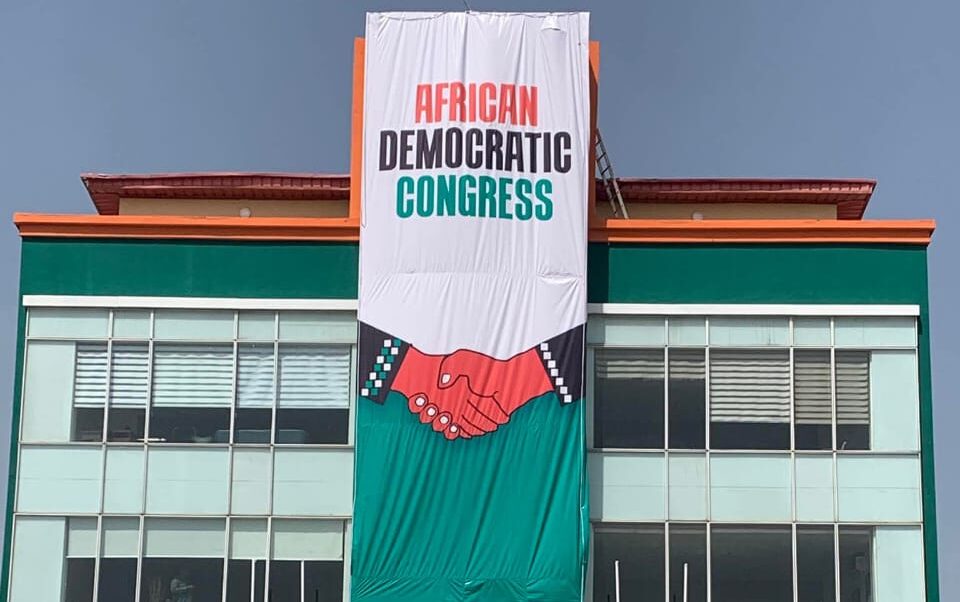

He added that the PRP and its partners are crafting campaign strategies that don’t rely on handing out money. They plan to present credible policies to show Nigerians that a government change can improve their lives.
“The PRP and most parties involved in the alliance to build a solid resistance to the return of the APC really don’t have that kind of money. That is because we don’t have any sources to steal from,” Baba-Ahmed said.
He also spoke against the cash distribution to groups like women and youths, calling it a way to use stolen public funds to gain votes. He said the party will focus on policy ideas and quality leadership rather than cash handouts.
He believes that opposition unity and candidate quality can lessen the impact of money in elections. “Above all, we believe that the quality of the candidates we have, the efforts to form a political alliance and its outcome will literally destroy this steal-and-bribe strategy,” Baba-Ahmed noted.
The YPP National Publicity Secretary, Martins Egbeola, highlighted state resource access as a big advantage for the APC. He said economic hardship makes it tough for opposition parties to raise funds.
“The funding challenge is a general problem confronting opposition parties, except perhaps the ruling APC, which enjoys the advantage of access to state resources,” he said.
Egbeola explained that the party is using cost-effective strategies like digital platforms, grassroots mobilisation, and direct voter engagement. He believes that limited funds should not stop the party from sharing its message or presenting candidates.
“We believe Nigerians deserve leadership that prioritises their welfare rather than politics driven by money and the abuse of public resources,” he stated.
The Media Director of the Obidient Movement Worldwide, Onyeka Dike, said that intimidation of supporters for Peter Obi and Rabiu Kwankwaso is stopping potential donors from showing their support. He mentioned the closure of a business owned by Tobore Alex Agbah, who allegedly organised a march in support of the Obi-Kwankwaso alliance.
Dike said this incident sends a scary message to others who might want to back the opposition. “This is the kind of incident that sends a chilling message to other Nigerians who may wish to support the opposition,” he said.
He also claimed that some business people who support Obi are scared to offer financial help because of fears their businesses might be targeted.
“Many legitimate businessmen who believe in him are afraid to openly identify with his campaign or provide financial support because they fear that their businesses could become targets,” he said.
Dike pointed out the pressure on opposition supporters while noting reports of wealthy individuals buying many campaign buses. He said the movement will keep mobilising supporters through grassroots efforts and voluntary contributions rather than trying to compete with the ruling party’s funds.
“Our strength is the people, and we intend to turn that strength into votes, lawful participation and a decisive democratic mandate,” he said.
He added, “No amount of pressure, fear or financial imbalance can erase the hunger for change. The time is short, but our resolve is firm. We will keep organising, keep mobilising and keep pushing for a New Nigeria.”
On the other hand, the APC has denied claims that it uses state funds for its campaigns. The party insists its financial strength comes from widespread support and major donors, stating that being in power doesn’t mean they misappropriate government resources.
Malam Bala Ibrahim, the party’s National Director of Publicity, called the opposition’s allegations baseless. He challenged them to provide proof that public funds are being used to finance the APC’s campaigns.
“Have they (opposition parties) got any proof that APC, as the ruling party, is getting funds from public funds or getting money from the state treasury?” he asked.
Ibrahim insisted that the APC’s ability to attract more donors shows its popularity and public support, rather than misuse of state funds.
“It is natural that the APC has more major donors and campaign financiers than other parties. We are in the majority. We have the public acceptance. I can tell you that the majority of Nigerians are members of the APC,” he said.
He added that opposition parties should work on attracting more supporters instead of blaming the APC for their funding issues.
“It is unfortunate they have not gotten the kind of acceptance the APC has. And if they want to be schooled on how to get that acceptance, they should come and register with us,” he said.

Drop your comment
No comments yet — be the first to drop the gist 👇