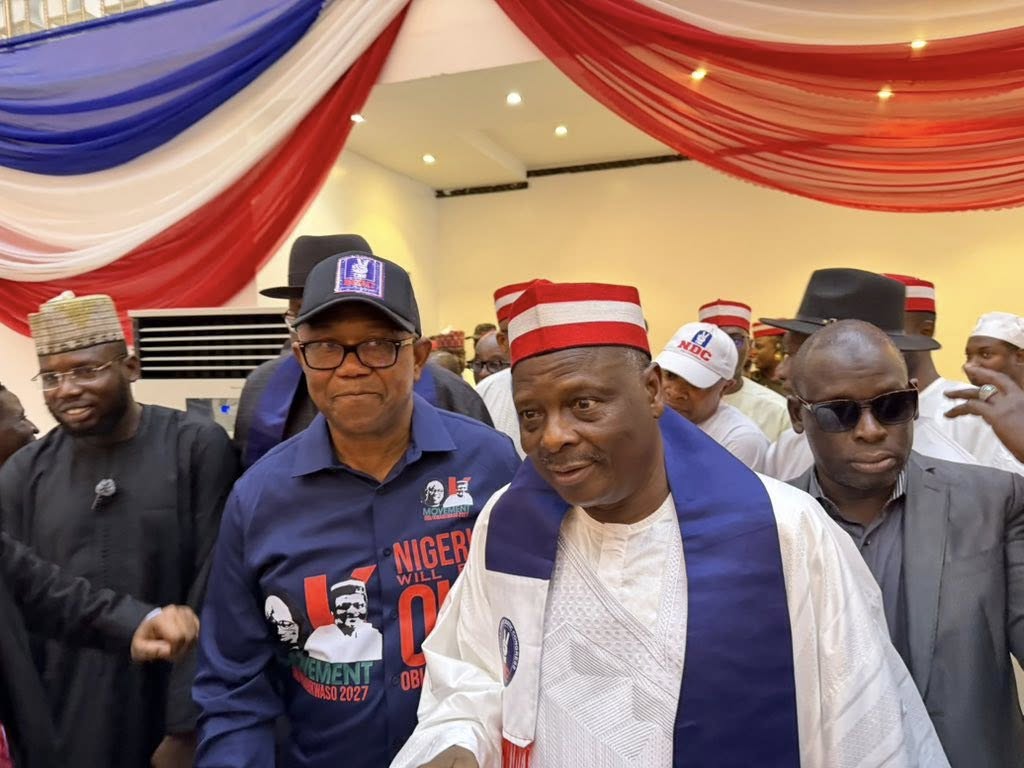
Rabiu Kwankwaso, the vice-presidential candidate of the Nigeria Democratic Congress (NDC), has said that Peter Obi, the party’s presidential candidate, signed two agreements promising to serve only one four-year term if elected in 2027.
Mr Kwankwaso said the documents include a formal agreement for the political party and a personal promise between him and Mr Obi. The former governor of Kano State shared this during an interview on Channels Television’s Politics Today on Monday, 20 July.
According to Mr Kwankwaso, the deal states that the presidency will return to Northern Nigeria in 2031 after Obi’s four-year term ends.
“We have agreed to formalise it in writing,” Mr Kwankwaso said. “We have executed one document for the party and another between the two of us.”
When asked if he trusts Mr Obi to keep his word and not seek a second term, Mr Kwankwaso showed confidence. He said his discussions with the former governor of Anambra State assured him that Obi would respect the agreement. “I personally believe him, and, based on what I now know about him, I do not believe he will change his mind when the time comes,” he said. “We are all gentlemen.”
Mr Kwankwaso mentioned that he and Mr Obi will continue to work together after their term ends. “The agreement is that after four years, we will continue to work together as a group, as a party, and as friends and brothers,” he said. “After our four-year term, from 2027 to 2031, power returns to the North. That is the consensus.”
The former defence minister did not say he would be the NDC presidential candidate in 2031. His remarks were about the presidency returning to the North, not about his own political goals.
Copies of the agreements have not been shared publicly, and PREMIUM TIMES has not checked their contents. So, it is not clear if the documents include penalties for breaking the agreement or how the NDC would choose a northern presidential candidate in 2031. Mr Obi has often promised to serve only one term if elected, but he has not confirmed the specifics of the agreements mentioned by Mr Kwankwaso.
This agreement shows a big change in the political ties between Obi and Kwankwaso, whose efforts to work together before the 2023 elections fell apart. At that time, Mr Obi was the Labour Party candidate, while Mr Kwankwaso ran with the New Nigeria Peoples Party (NNPP).
Although both parties talked about a joint ticket, talks broke down when they could not agree on who would be president and who would be vice-president. They ended up running separately; Mr Obi came third, and Mr Kwankwaso finished fourth but won in Kano State, where his Kwankwassiya movement is strong.
Looking back on their past disagreements, Mr Kwankwaso said their relationship improved as he learned more about Mr Obi’s vision. “I now recognise that Peter is a serious politician who has this country at heart. He is someone to be relied upon,” he said.
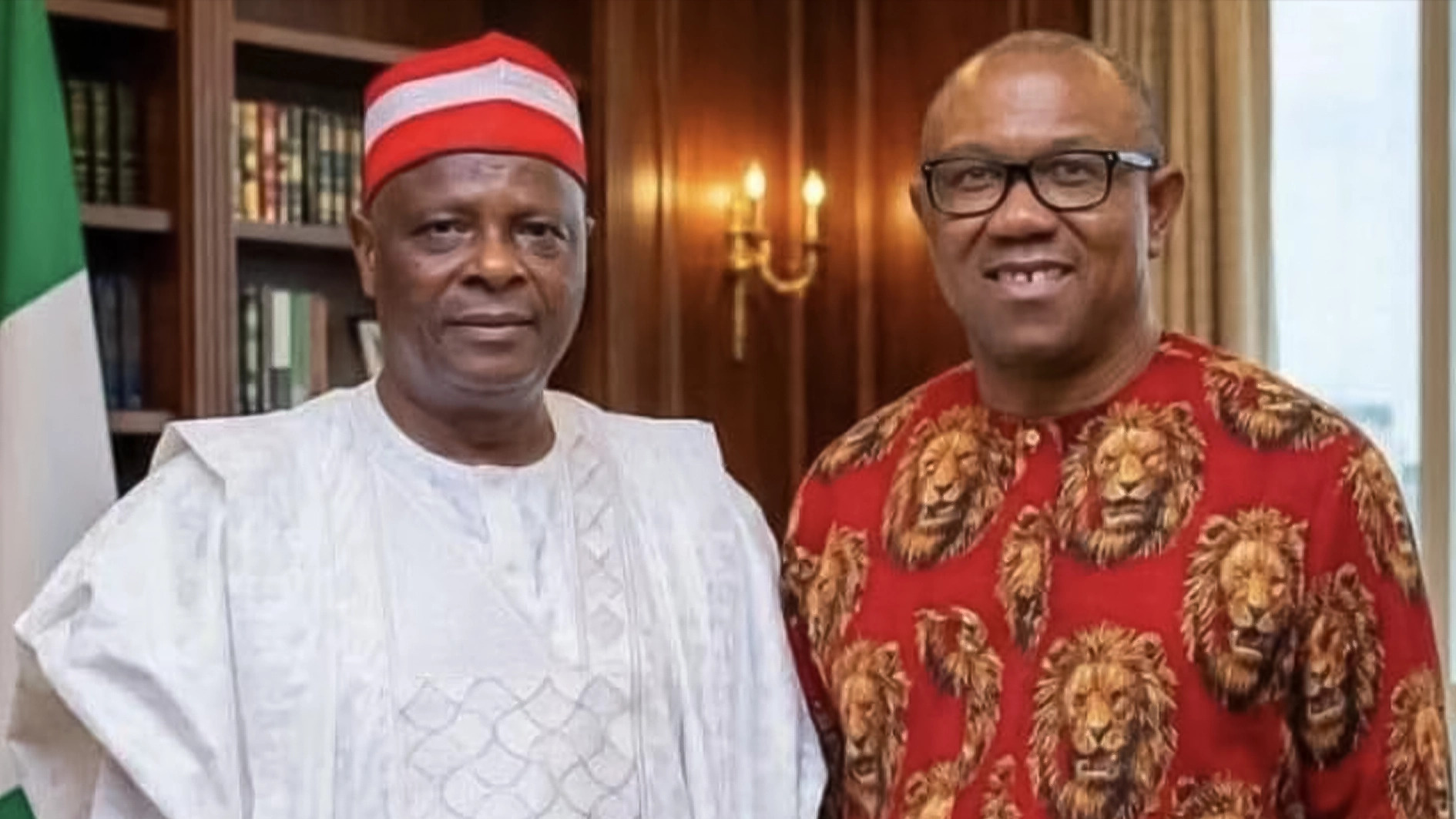
“When we compared our blueprints, we realised that we share a similar vision and mission for the country. That was why it was easy for us to agree to work together as a family.”
After the 2023 election, Obi and Kwankwaso started talks again to unite opposition parties against President Bola Tinubu and the All Progressives Congress. They later teamed up with other key opposition figures, like former Vice President Atiku Abubakar, former Transportation Minister Rotimi Amaechi, former Senate President David Mark, and former Osun State Governor Rauf Aregbesola, under the African Democratic Congress (ADC).
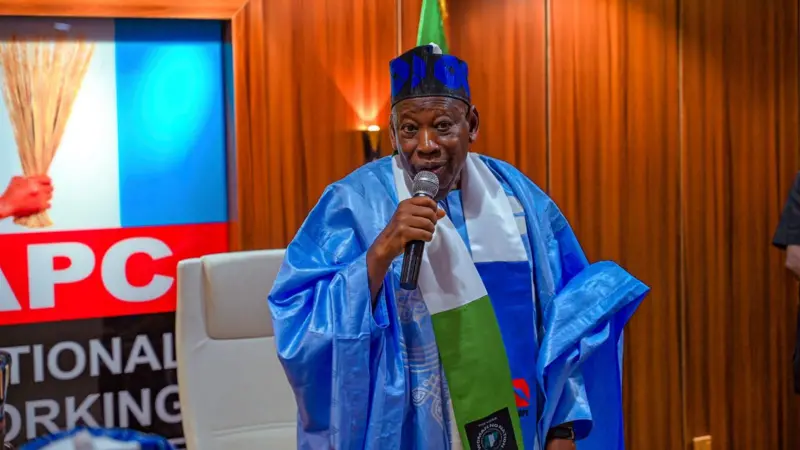
The ADC plan aimed to avoid the split in opposition votes that helped Mr Tinubu win in 2023. On 25 April, coalition leaders agreed to support a single candidate against the current president. The agreement, called the Ibadan Declaration, aimed to strengthen political structures ahead of the 2027 election. But the coalition faced problems over issues like zoning and party leadership. Obi and Kwankwaso eventually left, citing legal and organisational issues within the ADC. Their exit weakened the coalition, and even though the ADC claimed it would survive, their departure was seen as a big blow. Atiku later got the ADC presidential ticket, setting up a situation where major opposition candidates might run separately.
Before Obi and Kwankwaso formally left the ADC, their supporters began promoting a possible joint ticket through the “OK Movement”, an initiative created to rally support for an Obi-Kwankwaso partnership. On 26 April, the NDC openly invited both politicians to join the party. They officially joined on 3 May and got their membership cards at the party’s national secretariat in Abuja.
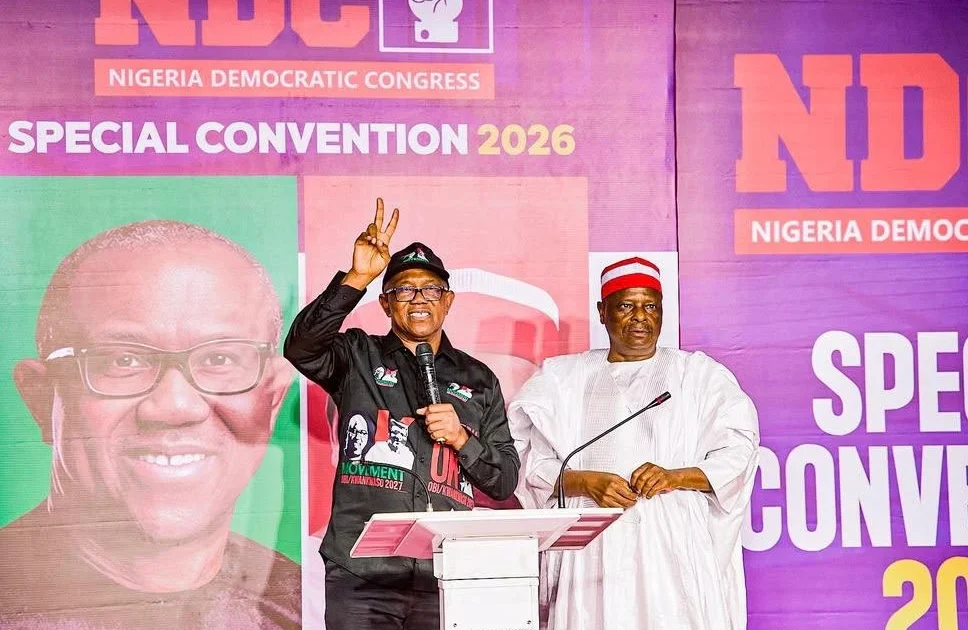
At the NDC convention on 9 May, Mr Kwankwaso backed the party’s choice to zone its presidential ticket to Southern Nigeria. Mr Obi was later screened and cleared for the party’s presidential primary before being confirmed as its candidate on 30 May. He named Mr Kwankwaso as his running mate, promising that the former Kano governor would be a partner in the government. The one-term deal seems to explain why Mr Kwankwaso supported the ticket zoning to the South and accepted the vice-presidential nomination.
During the interview, Mr Kwankwaso dismissed claims by former Borno State Governor Ali Modu Sheriff that northern voters would not back Mr Obi in 2027. He argued that Mr Sheriff’s view did not reflect the true situation in Kano and other northern states.
Mr Kwankwaso pointed out that Mr Obi is familiar with elections in Northern Nigeria, highlighting his results from the 2023 presidential election. “In the last election, he contested and received over two million votes in Northern Nigeria, and by any standard, two million is a significant figure,” he stated.
His point shows the electoral strategy behind the NDC ticket: combining Mr Obi’s support from young voters, the South-east, and parts of the North-central with Mr Kwankwaso’s political strength in Kano. Still, experts have questioned if Mr Kwankwaso’s influence goes beyond Kano into other North-west states, and the NDC ticket will also face competition from Mr Atiku and other candidates.
The written agreement will likely be a key part of the NDC’s efforts to reassure northern political leaders and voters that an Obi presidency would end after four years. Until the documents are released or their contents are verified, the proposed transition remains a political promise, not a legally binding agreement.

Drop your comment
No comments yet — be the first to drop the gist 👇