The ADC primary for governor in Kwara State has turned into more than just picking a candidate. The selection of Zakari Mohammed, former spokesperson for the House of Representatives, as the party's candidate has sparked discussions about political shifts, zoning, and the ADC's ambitions for the 2027 elections.
Weeks after the ADC held its primary, the importance of this event is still being felt beyond the party's circles. What started as a standard candidate selection has grown into a bigger talk about political realignment, zoning, and how the ADC plans to make its mark ahead of the 2027 elections.
Zakari Mohammed’s emergence as the ADC’s candidate is significant. It offers a look at how the ADC plans to position itself in a state where bigger political parties have long held sway. It also highlights the challenges the party faces at the national level.
As political parties sharpen their strategies, the results from the ADC primary provide a way to understand how Kwara’s next governorship race might unfold.
In the weeks before the ADC primary, the mood among politicians was more about certainty than suspense. There was a sense of control over the process, from the structure to the delegates and the outcome.
When the votes were counted at the party secretariat in Ilorin, the expected outcome was confirmed. Zakari Mohammed emerged as the party's candidate with 18,860 votes. The primary took place on Friday, May 22, with results announced on Saturday, May 23. This exercise did more than just pick candidates.
It showed the ADC's effort to build a strong electoral structure in Kwara, even as the party faces challenges nationally.
On the surface, the primary looked orderly. The Independent National Electoral Commission monitored the event. Party officials claimed the process was smooth. Delegates took part in a direct primary that ended without any major issues.
Shimaka Sekegh, Secretary of the Kwara State ADC Governorship Primary Election Committee, announced the results on behalf of Chairman Orker Yisa. He confirmed Zakari Mohammed's victory among others competing for senatorial and House of Representatives positions.
While Mohammed was seen as a single aspirant who easily passed through the primary, some insiders view it differently. They say what appeared to be a consensus was actually a careful move to avoid the fragmentation seen in larger parties.
One insider, who asked to remain anonymous, said, "The ADC made a strong effort to stabilize the party through a consensus arrangement and avoid the same problems that affected larger parties like the APC."
This strategy helped ensure that the tickets for senatorial and House of Representatives slots were given out alongside the governorship position, creating a complete electoral lineup ahead of 2027.
Candidates for the senate were chosen from all three districts: Hajia Risikat Tunrayo Abdullahi (Kwara Central), Akogun Iyiola Oyedepo (Kwara South), and Malam Taoheed Bala Usman (Kwara North). House of Representatives candidates were also confirmed across various constituencies, including Ilorin West/Asa, Oyun/Offa/Ifelodun, and Ilorin South/Ilorin East.
After the primary, Babatunde Mohammed, Kwara State ADC Chairman, praised party members for a peaceful and successful process. "The primaries were hitch-free," he said, showing satisfaction with how members conducted themselves and the level of mobilization during the exercise.
He urged party members to go back to the 193 electoral wards in the state and work for the party's success in the upcoming general elections. The leadership's message was clear: focus on unity first, and competition later.
Kwara North Zoning Debate
The most politically sensitive aspect of Zakari Mohammed’s candidacy is its geographical implications. His selection touches on one of Kwara’s ongoing debates about zoning.
For years, people from Kwara North have said that the area has been left out of the governorship rotation despite its influence and coverage across five local government areas. By picking a candidate from Baruten Local Government Area, the ADC did not just fill a slot. They entered a long-standing political conversation.
This choice has immediate consequences. Rival parties must now respond to a zoning issue they did not start but can no longer ignore. Zakari will face the Speaker of the Kwara State House of Assembly, Yakubu Danladi-Salihu from the ruling APC, in the 2027 governorship election. Both candidates come from the same region: Baruten Local Government Area in Kwara North.
In the context of Kwara politics, this is viewed as more than coincidence. It is seen as a strategic move.
ADC's Growing Presence
The ADC's rising profile in Kwara is part of a larger plan to present the party as an alternative option ahead of 2027. Zakari Mohammed’s candidacy is seen in this light: a gathering of political players looking for relevance outside the APC and PDP.
The influence of former Governor Abdulfatah Ahmed and former APC National Publicity Secretary Bolaji Abdullahi strengthens this shift. Both hold important roles in the party’s national structure. Abdullahi is the interim national spokesperson, while Ahmed chairs the party’s presidential election committee, which extends Kwara’s influence nationally.
This has led to the perception that Kwara is becoming a key area for ADC mobilization. Notably, the primary showed not just who ran but also who did not. There was no visible sign of factional disputes at the governorship level.
Instead, potential candidates were either moved to legislative contests or integrated into the broader campaign efforts. This lack of open conflict is seen in two lights. Supporters see it as maturity, a conscious effort to avoid the internal problems affecting larger parties. Critics view it as managed agreement, a way to limit competition to keep elite alignment.
Either way, the outcome achieved what the ADC needed at this moment: a united front.
National Challenges
While the Kwara ADC seems stable, the national party is experiencing serious structural problems. A leadership crisis is causing rival claims to national authority, with factions linked to David Mark and Nafiu Bala reportedly fighting for control of the party's national chairmanship.
This dispute has created legal uncertainty, affecting recognition with the INEC and slowing down national coordination. Adding to the tension are claims of disrupted national conventions, logistical issues, and challenges maintaining membership lists required for elections.
One internal description sums it up: a party that is growing politically while breaking apart structurally.
Presidential Politics
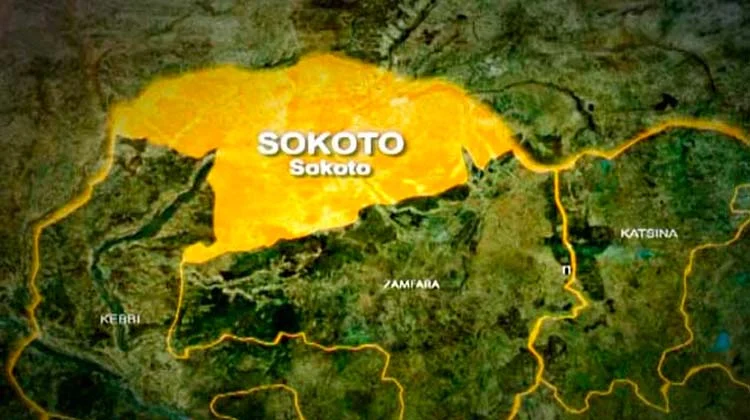
The ADC's internal dynamics are also shifting due to significant presidential ambitions. Former Vice President Atiku Abubakar has become a strong figure in the ongoing national primaries, reportedly doing well in states like Zamfara, Yobe, Sokoto, and Adamawa.
His entry, backed by a ₦90 million nomination fund, has repositioned the ADC as a serious player in presidential politics. At the same time, Peter Obi's departure on May 3, 2026, citing a "toxic political climate," revealed more internal issues.
Obi's alignment with the Nigeria Democratic Congress and Rabiu Kwankwaso marked a big shift in opposition and took away one of the ADC’s most recognized reformist figures. The combined impact has left the party shaped more by competition than by shared beliefs.
Funding Accusations
In Kwara State, the ADC's growing presence has also led to controversy. The Kwara North Development Commission claimed that Governor AbdulRahman AbdulRazaq was secretly funding the party as part of a broader strategy for 2027.
The group said the ADC’s stability and its silence on government issues suggested hidden support from the state’s political leaders. "All the poise of the ADC in the state is being sustained and maintained by the governor and his agents," the group claimed.
This raised suspicion about the party's rapid growth. However, party leaders strongly rejected this claim. Former Nigerian Ambassador to Japan, Isa Gana, called it baseless. "How can Governor AbdulRazaq be funding the ADC, which is out to take power from his party?" he asked.
Political Messaging
In his acceptance speech, Zakari Mohammed described his emergence as both symbolic and strategic: a win for inclusion and a signal of broader political goals. He positioned the ADC as a party for everyone, including young people, women, seniors, and artisans.
"By the grace of God, we will deliver on the ADC manifesto. It is a party for young people, women, senior citizens, artisans, and everyone," he stated. He expressed confidence in the party’s national ambitions.
"ADC will take over the control of Ahmadu Bello Government House, Ilorin, next year," he declared. "ADC will occupy Ahmadu Bello Way and ADC will occupy Aso Rock." His words showed not just hope but also a clear attempt to frame the ADC as a national contender, not just a regional party.
Kwara's New Political Landscape
Zakari Mohammed’s emergence has changed the early dynamics of the 2027 governorship race in Kwara. It brings a northern-based candidate into a field already influenced by zoning and shifting alliances.
But more than just personalities, the deeper issue is structural. The ADC is building its electoral framework in Kwara while dealing with national leadership issues, ideological splits, and presidential competition reshaping its identity.
Path to 2027
For the Kwara ADC, this primary represents both an arrival and a starting point. Arrival in the sense of a completed state-level structure capable of fielding candidates across all levels. Starting point in that it tests whether that structure can survive national challenges while competing against established political forces.
For now, Zakari Mohammed is the face of this experiment: a candidate emerging from consensus, but within a party still seeking stability at the national level. In Kwara’s complex political scene, the balance between order and instability may define the real battle ahead of 2027.
Drop your comment
No comments yet — be the first to drop the gist 👇