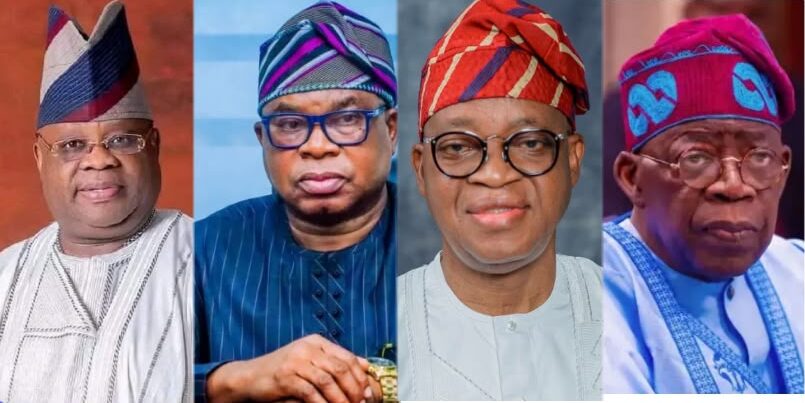
The defeat of the All Progressives Congress (APC) in Osun State’s governorship election on 15 August was more than just a shift in power. It was the party's failure to reclaim the Government House four years after Gboyega Oyetola lost the seat to Ademola Adeleke in 2022.
For Mr Adeleke, the victory is a result of a political journey that started less than ten years ago. This journey was influenced by his famous family name, an unexpected win for a Senate seat, a tough governorship race, and a year of court battles over the credibility of the 2018 election. Eventually, he has won two successful bids for the highest political office in the state.
In the recent governorship election, Mr Adeleke, representing the Accord Party, defeated Bola Oyebamiji of the APC to secure another four years. Mr Adeleke received 511,067 votes, while Mr Oyebamiji got 444,815, according to results from the Independent National Electoral Commission (INEC).
The governor received his certificate of return on Wednesday in Osogbo from INEC National Commissioner Kunle Ajayi, who represents the South-west. At the event, Mr Adeleke announced plans for a N500 million fund to help victims of election-related violence.
This victory has changed Mr Adeleke's status from a politician linked to the powerful Adeleke family to an incumbent governor that Osun voters have chosen to keep.
Yet, this win also fits into a bigger picture in Osun politics. Incumbency and party structures have often failed to secure political survival in the state.
From Family Ties to Political Player
Mr Adeleke did not come into Osun politics from a typical background. He is the younger brother of Isiaka Adeleke, Osun’s first civilian governor and later a senator for Osun West. Their father, the late Ayoola Adeleke, served as a senator during Nigeria's Second Republic from 1979 to 1983, representing the old Oyo State Senatorial District. The Adeleke family has remained a key player in the state’s political scene.
Mr Adeleke’s political breakthrough happened in 2017, when his brother passed away, leaving a vacancy in the Osun West senatorial district. He initially sought the APC ticket but changed to the Peoples Democratic Party (PDP) after not getting the ruling party’s nomination. He then contested the July 2017 senatorial by-election on the PDP platform.
His victory established him as a strong political figure. He won 97,480 votes, defeating APC’s Mudashiru Hussein, who got 66,116 votes. Mr Adeleke won in nine out of the ten local government areas in the district.
This win was significant because the APC was in control of the state government under Governor Rauf Aregbesola at the time. It showed that the Adeleke name still had the power to attract votes years after their family first entered the state's political scene.
Changing Governments in Osun
To understand Mr Adeleke’s rise, we need to look at Osun’s electoral history. Since Nigeria returned to democracy in 1999, the state has switched between political parties and leaders, making it one of the most competitive electoral areas in the South-west.
Bisi Akande of the Alliance for Democracy ruled from 1999 to 2003 before Olagunsoye Oyinlola of the PDP won the governorship election in 2003. Mr Oyinlola won a second term in 2007 but faced a long court battle that cut his second term short. Rauf Aregbesola of the Action Congress of Nigeria (ACN), one of the parties that formed today’s APC, challenged the result and won in 2010.
This ruling changed Osun’s electoral calendar, making the state one where governorship elections are held off-cycle. During Aregbesola’s first term, the PDP was the ruling party at the federal level under former President Goodluck Jonathan.
Mr Aregbesola then won another term in 2014 after the ACN merged with other parties to form the APC. He governed until 2018 when his party’s candidate, Gboyega Oyetola, took over from him after narrowly defeating Mr Adeleke.
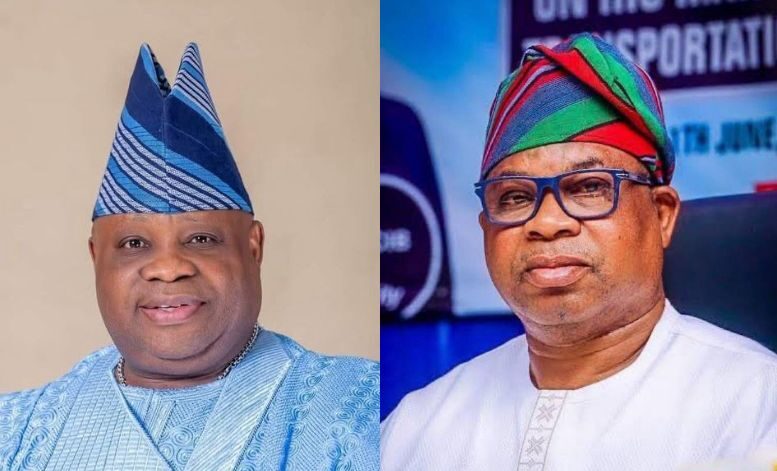
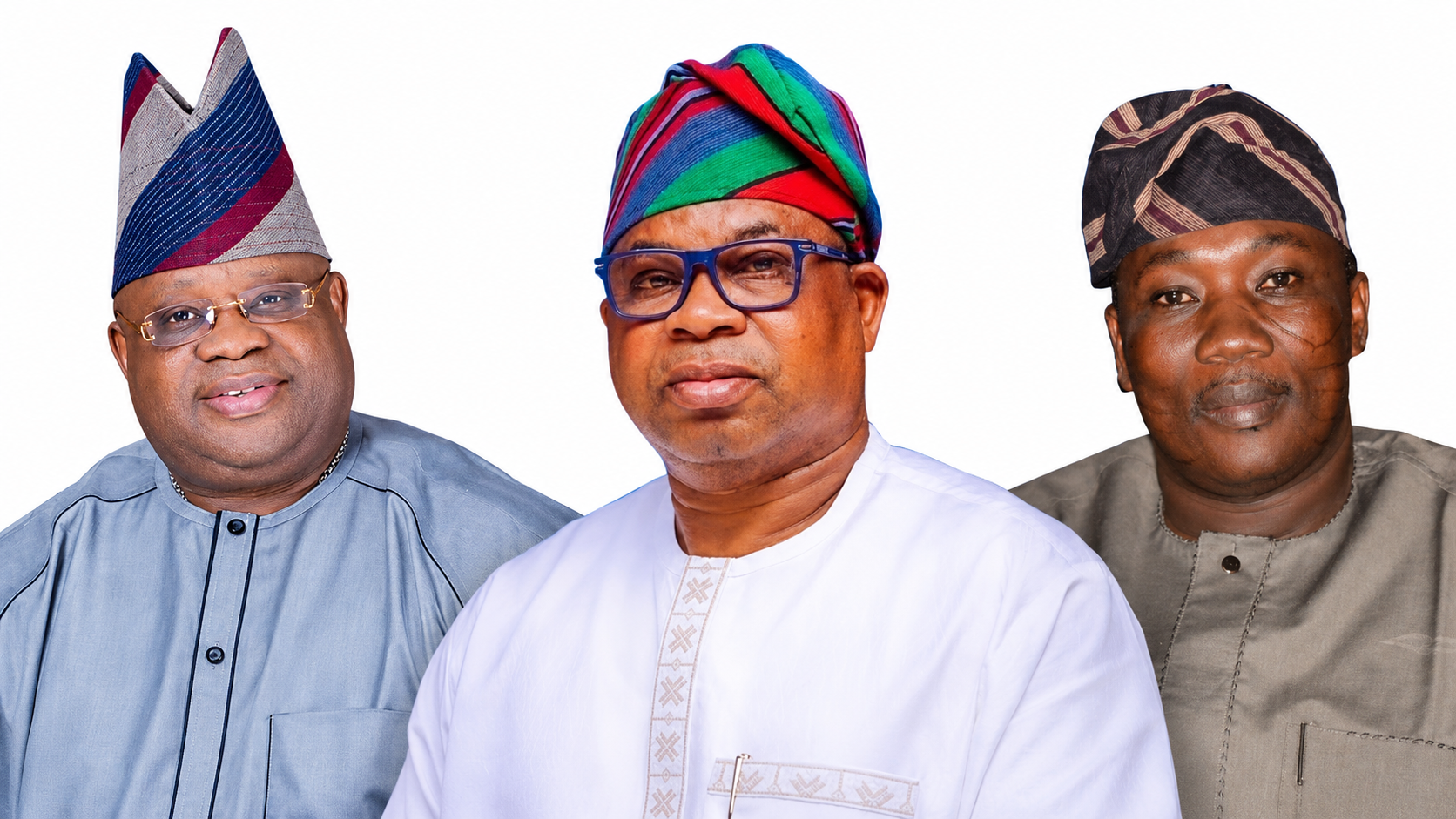
Before Mr Oyetola was declared winner, the September 2018 election was first called “inconclusive” because the 353 votes separating Mr Adeleke and Mr Oyetola were fewer than the votes canceled across seven polling units. Mr Adeleke had 254,698 votes, just ahead of Mr Oyetola with 254,345.
The supplementary election on 27 September favored Mr Oyetola, leading to his victory. Mr Adeleke and the PDP took the matter to court but lost after a lengthy legal battle. Mr Oyetola’s term, however, lasted just one term as the voters returned power to the PDP, electing Mr Adeleke in 2022.
The pattern shows that Osun voters are willing to change who governs them. This change sometimes happens at the polls, or as in Aregbesola’s case, through a successful court challenge.
The Next Challenge for Adeleke
Mr Adeleke’s recent re-election has blocked the APC’s effort to reclaim Osun, but it also puts new pressure on him as governor. His first term was marked by visible infrastructure projects, workers’ welfare improvements, reducing debts, and increasing revenue. Yet, there are still questions about education spending, healthcare, local government administration, and the quality of major projects.
Concerns were also raised about projects favoring his Ede area and giving government jobs to his family. His second term will be judged not just by promises made during the campaign but by whether he can turn his first-term efforts into lasting benefits for the people and be fairer in distributing projects and jobs.
‘Osun Election Showed People’s Power’
Prince Gutap, an election expert at Yiaga Africa, said the Osun election results show voters asserting their choice at the polls. He pointed out that active participation from the people was one of the clear lessons from the election. They wanted to ensure their votes counted.
Mr Gutap warned against using Osun as a model for Nigeria as voter participation varies across regions. Still, he noted that the state shows how an engaged electorate can influence political outcomes.
“The willingness of voters to participate actively in the election was to ensure that their choice at the poll determines who governs them. That is important for democratic growth,” he said.
He shared an incident during the election where citizens reported a man they suspected was trying to buy votes. Police responded quickly and arrested him. “That’s the trust we want in our security agencies, that when we see a problem, we can tell them, and they will act fast,” Mr Gutap added.
He noted that Osun’s political history shows voters can reward incumbents but also withdraw support when they want change. “We have seen voters removing governors at times and re-electing them at others. This shows voters respond to leaders who address their issues and improve their lives,” he said.
Public affairs journalist Dayo Akintobi also said the recent Osun election showed the growing power of voters there. Speaking on Channels Television, he said the results reflected the will of voters who stayed engaged during the electoral process despite fears of violence and vote-buying.
He explained that voters’ determination to protect their votes made it hard for any political force to change their choice. “What happened in Osun was people power. People’s power showed its strength, and nobody allowed themselves to be pushed around by political giants or federal pressure,” he said.
He also noted that despite reports of vote-buying, if voters took money but voted based on their beliefs, politicians might start to rethink spending large amounts to influence voters.

Drop your comment
No comments yet — be the first to drop the gist 👇