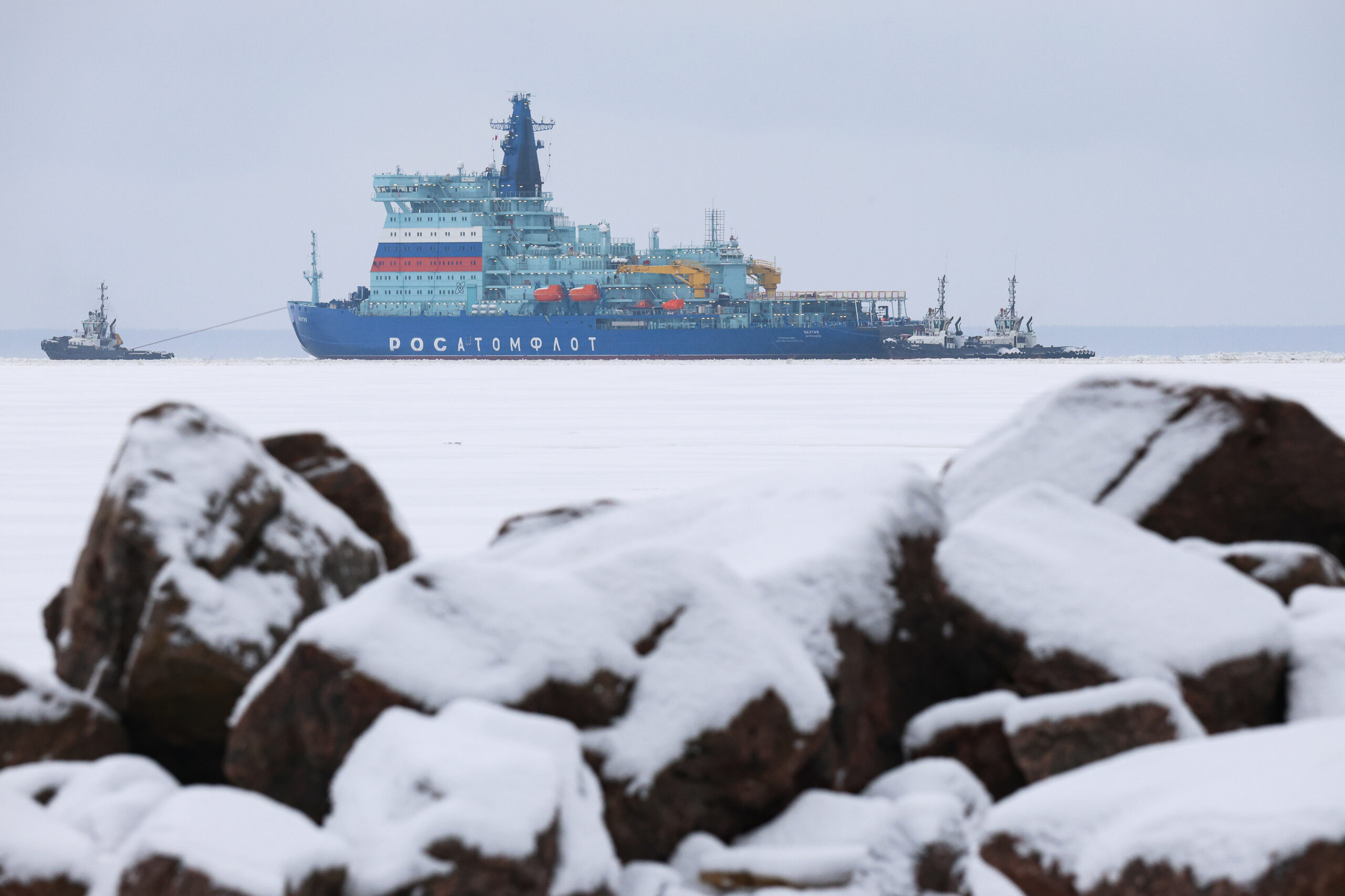
Global warming and rising sea temperatures are making the Northern Sea Route (NSR) a better option for shipping between Asia and Europe through the Arctic. This route was often blocked by thick ice before now.
On 15 August, the Dubai Tower container ship left Ningbo port in China and reached Teesport in Britain on 9 September. This journey is part of a new seasonal container service linking China and northern Europe. This shorter path, called the Ice Silk Road, has benefits over the Suez Canal and the Cape Route, which could affect Africa.
The long-term sustainability of this route is still uncertain. It may not be fully usable for year-round shipping anytime soon, but the advantages of the NSR are clear.
Before the recent issues in the Red Sea, about 15 percent of global maritime trade and 30 percent of global container trade passed through the Suez Canal. Now, much of this traffic goes around South Africa’s Cape of Good Hope, adding up to 14 days to the usual travel time. The entire journey can take more than 40 days. The NSR is about 40 percent shorter than the traditional routes.
The NSR also avoids key chokepoints like the Strait of Malacca in Southeast Asia and the Bab al-Mandab Strait between Yemen and the Horn of Africa. These areas are prone to security issues and navigation problems. The World Shipping Council reported 120 attacks globally from November 2023 to January 2026, with the Bab al-Mandab Strait being a hotspot. The Strait of Hormuz also faces blockages due to the ongoing US-Israel war on Iran, adding to the risks.
The Strait of Malacca and the Gulf of Aden near northern Somalia have been linked to piracy and sea robbery, increasing safety concerns along the usual Asia-Europe shipping route. Another effect is the rise in insurance costs, as major insurers are raising their rates, in some cases, tenfold.
The NSR is cooler, which helps with cold chain logistics, especially for agricultural and electronic goods. This will be more important as the world continues to warm.
Climate change is a mixed bag for the Arctic. The same warming that reduces ice cover and opens routes like the NSR also brings new navigation risks. The melting ice allows for larger areas of open water, which can lead to rough seas. Thinner ice can be easily broken up and moved by Arctic storms.
There are other factors to consider. Greater access to the Arctic is making it geopolitically important. The NSR runs mostly along Russia’s Arctic coast, relying heavily on that country’s infrastructure and icebreaker services. This could replace risks from the Middle East with new dependence on Russia.
At the same time, competition for the Arctic is heating up, with US President Donald Trump pushing for control over Greenland.
The impact on Africa is not clear yet. The NSR might mean that African ports are left out of the shipping routes between China and Europe. Right now, the Suez Canal and Egypt could be the hardest hit.
For the rest of Africa, the economic impact of the NSR might be less severe. The recent increase in shipping around the Cape of Good Hope has led to more investments and demand for fuel services in a few countries, particularly Namibia and Mauritius.
But evidence suggests that this increased traffic has not brought economic benefits to African economies in general. Just going around the Cape does not create revenue from transit, and ships usually stop for supplies and maintenance elsewhere, not at African ports.
This lack of income makes it hard to cover the rising costs of monitoring and safety due to increased traffic around the Cape. So if traffic moves north, the immediate economic effects may be limited.
Still, African countries may not be completely disadvantaged by the NSR. Major trading nations could invest in alternative shipping routes to lessen their reliance on any single path, especially the NSR and its weather conditions.
Look at China’s strategy. President Xi Jinping signed deals with Egypt in September to boost Chinese investments in the Suez Canal Economic Zone. This shows a long-term plan for a post-Iran war situation and safer routes in the Red Sea. By investing in the NSR, China is positioning itself across multiple shipping routes. Other countries might follow suit.
The Suez Canal will likely remain important, while the Cape might become the third-best option for shipping between Asia and Europe. The Cape Route does have the advantage of being open all year and not facing seasonal or geopolitical issues.
Africa needs to avoid being sidelined as the global shipping landscape changes with the NSR. Keeping the Cape of Good Hope open does not require huge new investments in African ports, as ships can continue passing without stopping. Instead, African nations should integrate into the logistics networks forming around these routes. This calls for a proactive approach to managing maritime issues.
Singapore, a major player in global shipping, offers a good example. It has been preparing for changes in established shipping routes by developing expertise in Arctic shipping, including ice-capable vessels and icebreakers, while looking into Arctic port development. At the same time, it is ensuring its own maritime hub stays competitive.
African countries cannot compete with Singapore on the same level, but they can decide if they benefit from the changes that the NSR will bring.
The NSR’s development shows that there is growing investment in sea-based logistics. The capacity of vessels, along with the push for cleaner shipping, will enhance this mode of transport in a global economy.
Improving Africa’s ports and inland logistics will attract trade from outside Africa and boost trade within Africa under the African Continental Free Trade Area agreement. Both will help achieve the continent’s Agenda 2063 goals.



Drop your comment
No comments yet — be the first to drop the gist 👇