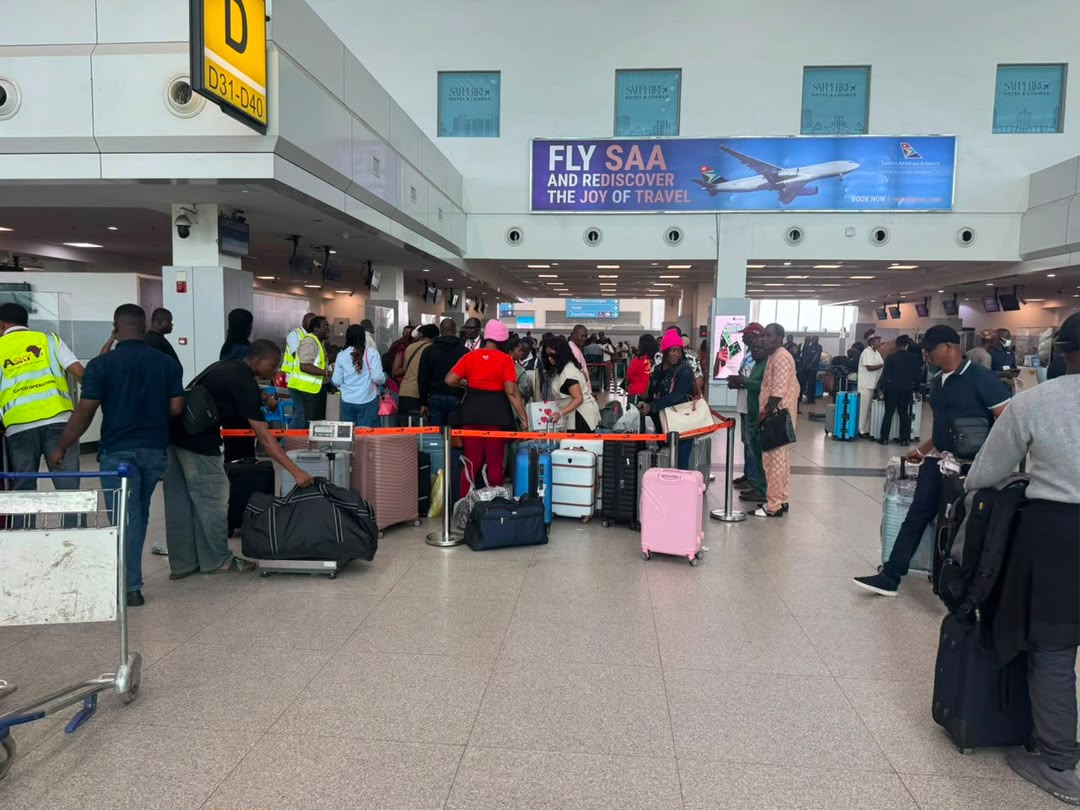
Nigerian airlines have said that a lot of flight delays and cancellations come from airport congestion, poor infrastructure, and bad weather. They pointed out that some of these disruptions happen outside their control.
The airline operators admitted that they are responsible for delays they can control. They urged passengers to be aware of their rights when disruptions happen.
They spoke on Tuesday during the Aviation Day of the 23rd Akwaaba African Travel Market in Lagos. The theme for the day was “Delayed and Cancelled Flights: The Rules and the Rights of Passengers, The Airline Perspective.”
This discussion comes as concerns about flight disruptions in Nigeria are growing.
PREMIUM TIMES reported earlier that the Nigerian Civil Aviation Authority (NCAA) recorded 7,961 domestic flights in August. Out of these, 4,765 were delayed, and 36 were cancelled.
More than 600 of the delays lasted at least two hours. Four hundred and seven delays lasted between two and three hours, while 235 lasted more than three hours.
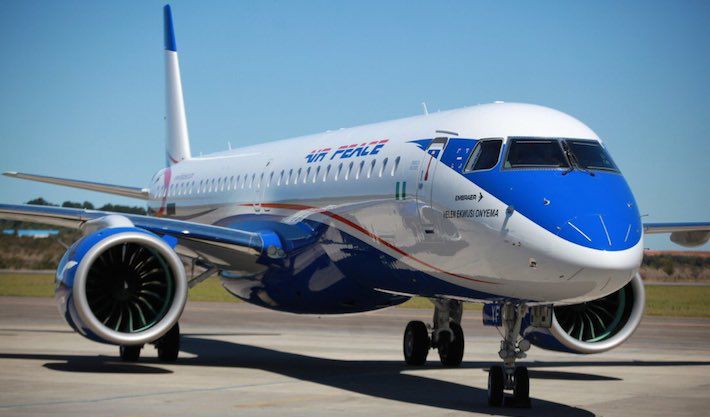
Air Peace had 1,330 delays out of 1,864 flights. United Nigeria Airlines reported 943 delays from 1,231 flights.
These numbers have led to more scrutiny of how airlines plan their schedules and deal with passengers during flight disruptions.
Adedayo Olawuyi, the Chief Commercial Officer of United Nigeria Airlines, said it is wrong to blame all delays on airlines. He said we must consider the conditions at airports and other things affecting flight operations.
Mr Olawuyi compared airport congestion to many cars fighting for a single parking space. He explained that an aircraft could be ready to leave at its scheduled time but may stay on the ground because other aircraft are blocking the ramp or waiting for the runway.
“Sometimes that’s what we face because of congestion at the airport,” he said.
He added that an aircraft scheduled to leave at 6:59 a.m. could take off more than 30 minutes late due to congestion, even if the airline did everything right.
Mr Olawuyi mentioned that airlines also face technical issues that require some aircraft to be out of service until repairs are done.
“We operate machines. Have you ever woken up, and your car did not start? Sometimes we have technical challenges,” he said.
He stressed that safety rules mean airlines cannot let an aircraft fly until all necessary checks and repairs are done.
Weather can also add to delays. He shared an example of a recent United Nigeria flight from Lagos to Kano that was delayed due to bad weather in Kano.
The flight left Lagos at about 10:30 p.m., but when it got close to Kano, a thunderstorm affected the runway lights, making it impossible for the aircraft to land. The aircraft then returned to Lagos and landed around 1 a.m., he said.
“That’s not the fault of the airline,” he noted.
Mr Olawuyi also said many Nigerian airports cannot operate well at night. This means delays earlier in the day might lead to cancellations later when operations go into the night.
In response to NCAA data showing that about 60 percent of domestic flights were delayed in August, Mr Olawuyi said the figures should separate delays the airline can control from those caused by outside factors.
“I will use an analogy. You go to school, and 60 percent of the students fail. Is that the fault of the school?” he asked.
He said that if we remove the controllable delays, and there is still a high number of 60 percent, then we can say the problem is with the airlines.

Mr Olawuyi argued that we should not blame airlines alone for flight disruptions. Airports, regulators, and other operators in the aviation system also play a part in how flights are managed.
His comments come after the NCAA raised concerns about the ability of airlines to operate well amid all the delays.
In September, NCAA Director-General of Civil Aviation, Capt. Chris Najomo, asked if some airlines are trying to run schedules beyond their aircraft and crew capacities.
The NCAA has also emphasized that while delays and cancellations can happen for reasons beyond an airline's control, airlines must still follow passenger protection rules during disruptions.
Mr Olawuyi also talked about what airlines must do for passengers during disruptions. He said passengers should know their rights under the NCAA’s passenger protection rules. Airlines expect travelers to cooperate during disruptions.
“Passengers should know that their rights protect them,” he said.
He explained that passengers can get refreshments when a domestic flight is delayed for a certain period. Airlines must also help passengers during long disruptions.
He urged travelers to check airline messages for updates, arrive on time, and use online check-in when possible.
“When there are challenges, we expect you to remain calm,” he said.
Under NCAA Part 19, airlines must provide help during qualifying delays and cancellations, including refreshments and communication after two hours of a domestic delay. Longer delays may mean reimbursement, re-routing, accommodation, or compensation depending on the situation.
The rules also separate disruptions caused by things within an airline's control and extraordinary circumstances outside the airline's control. This separation is becoming more important as airlines try to explain their performance against rising delays recorded by the NCAA.
Trevor Henry, the Chief Commercial Officer of ValueJet, also linked many delays to airport congestion and operational problems.
He mentioned presidential movements, weather, check-in congestion, security checks, and crowded boarding gates as factors that slow down operations.
He said congestion can still happen even after passengers have boarded and the aircraft is ready to go.
“When the aircraft taxis to the runway, especially in the morning, there can also be congestion from the taxiway to the runway before takeoff,” he said.
Remi Jibodu, the Chief Operating Officer of the Murtala Muhammed Airport 2 (MMA2), suggested better coordination of flight schedules to ease congestion during busy times.
He noted that thousands of passengers arriving at the airport at the same time can put extra pressure on airport facilities.
Mr Jibodu pointed out that it is common for over 10 airlines to plan flights around 7 a.m., causing congestion at check-in points, boarding areas, taxiways, and runways.
“What we can do then is to have a coordinated system,” he said.
He suggested that airlines and airport operators look into staggering departure times instead of having many airlines trying to operate at the same busy time.
“The truth is that at this point, we have to look at the slot system to see how we can coordinate it. It may not be a full slot system, but we must be able to give a little bit of concession to that,” Mr Jibodu said.

Drop your comment
No comments yet — be the first to drop the gist 👇