One major issue for political parties in Nigeria is how poorly they handle internal democracy. This often does not reflect the people's choices. As a result, discontent grows and leads to splits and political fragmentation. This problem cuts across many parties in the country, especially after the recent congresses and primary elections.
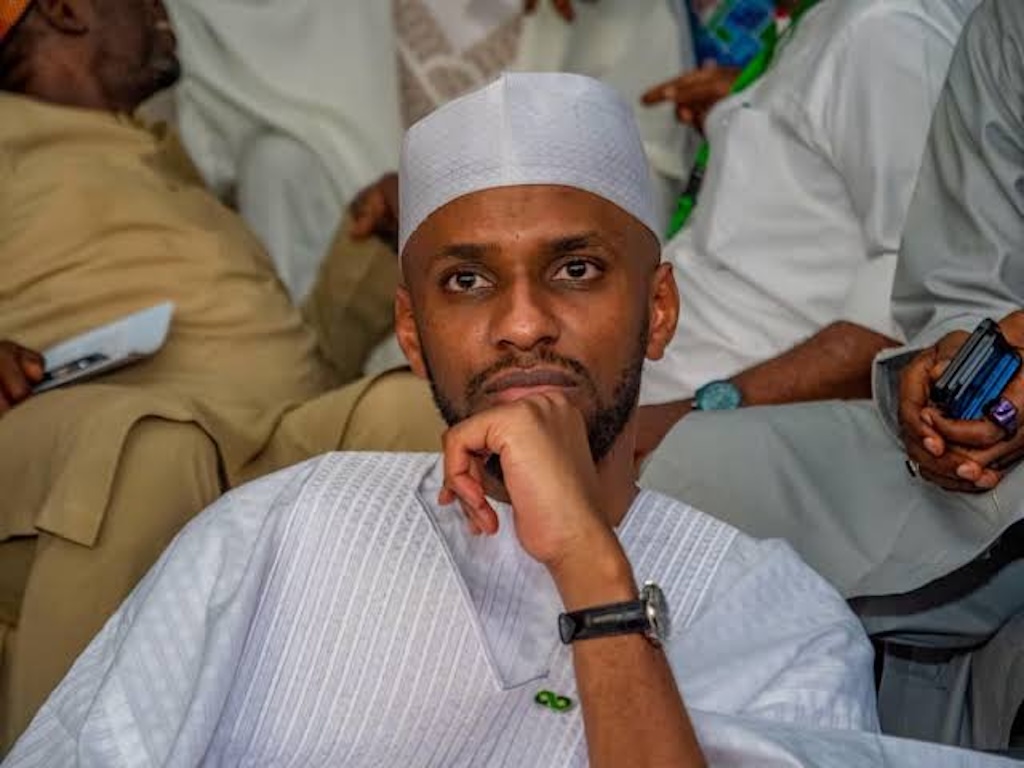
Right now, the All Progressives Congress (APC) in Adamawa State might be heading for a serious political crisis as the 2027 elections approach. Frontline member and former governorship candidate, Abdulrahman Bashir Haske, is reported to be moving to the Allied Peoples Movement (APM).
If this happens, it could be more than just one politician switching parties. It may reveal deep unhappiness within the Adamawa APC. It could also test the party's ability to keep supporters who feel left out by its internal politics.
Haske seems to attract supporters who see him as a strong alternative in the state's political scene. His backers claim he could have won the APC governorship ticket if the party's primary process had been fairer. This idea matters a lot because political defections rarely occur alone. When a politician leaves with a strong support system, it can have a much bigger impact than if they were to leave alone.
Reports say some of Haske's supporters have already moved to the APM. This could change the game's dynamics for the APC as the 2027 elections draw near. His close associate, Alhaji Hussaini Ahmadu Har, said this shift could lead to a “political tsunami.”
Yet, we should take political statements with a grain of salt. Every politician thinks their movement is bigger than it is. The true test will be when they mobilize their supporters and show their actual strength.
The APC should pay attention to this situation. Similar discontent is seen in many states where it rules. Adamawa is not a place where political wins can be taken for granted. The state has a history of competitive elections, changing alliances, and powerful political figures. Losing a strong candidate with a large followership could complicate the APC's plans for 2027.
More importantly, Haske's possible switch could inspire other politicians and supporters in different parties who are unhappy with their own situations. His group believes they can attract supporters from the APC, African Democratic Congress (ADC), Labour Party, and others.
If this occurs, the APM could become a significant player in Adamawa. But the bigger question is why politicians like Haske feel the need to leave the APC in the first place.

Political parties exist not just to win elections but also to manage ambitions. When many politicians want the same position, how a party runs its internal processes becomes very important. If the process seems rigged, it breeds resentment that is hard to control.
For the APC, Haske's case should serve as a warning, not just a defection story. The party needs to ask if its internal systems are inclusive enough for ambitious politicians and their followers. It should think about whether pushing influential candidates away could hurt its chances in elections.
For Haske, moving to the APM does not mean he will automatically win. Building a political base outside a major party has its own challenges, like funding, organization, visibility, and converting popularity into votes.
His supporters may call the movement a “train of victory,” but elections are won at the polling stations, not on social media. This is why the next few months will be very crucial.
If Haske successfully brings a large political base from the APC to the APM, it could change the political scene in Adamawa and make major parties rethink their strategies for 2027. But if the expected mass defection does not happen, it could show the limits of personality-driven political movements.
Either way, one thing is clear: Haske's political future is no longer just an APC issue. His next steps could affect the broader struggle for political power in Adamawa State.
For the APC, the real risk may not be Haske leaving, but the chance that many who follow him may not return. This highlights the weakness of Nigeria's democratic culture, where the will of the people is often overshadowed by powerful figures within political parties that fail to manage differences or simply do not care.




Drop your comment
No comments yet — be the first to drop the gist 👇