The World Bank has stated that credit is not reaching the businesses that can create jobs in Nigeria. They are urging the financial sector to redirect funds to productive enterprises and infrastructure.
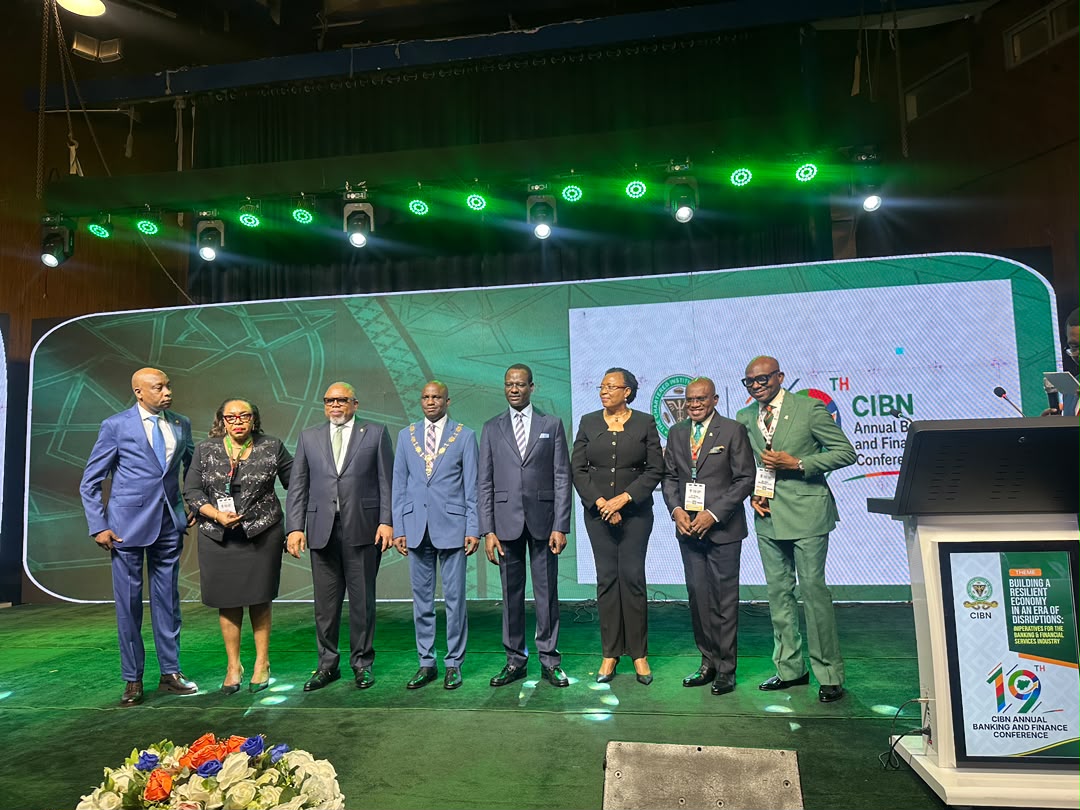
This was the main point in the keynote speech by Bertine Kamphuis, Lead private-sector development specialist at the World Bank. She spoke at the Chartered Institute of Bankers of Nigeria’s (CIBN) 19th annual conference in Abuja on Tuesday.
The conference, themed “Building a Resilient Economy in an Era of Disruptions: Imperatives for the Banking and Financial Services Industry,” took place from 8 to 9 September at the Transcorp Hilton in Abuja.
Kamphuis mentioned that Nigeria's problem is not really a lack of money, but how the available funds are being distributed.
She said domestic credit to the private sector is around 13 percent of Nigeria’s Gross Domestic Product (GDP). This is one of the lowest rates compared to similar countries.
“Credit is thinnest where job intensity is highest,” the World Bank representative noted. She pointed out that micro, small and medium enterprises (MSMEs) receive only about one percent of credit, while agriculture gets around six percent.
“This is where the jobs are. The main observation, for me and for the World Bank, is that credit is bypassing the job creators,” she said.
The World Bank emphasized that this issue is crucial because between three million and four million young Nigerians enter the job market every year. This makes it tough for the government to provide enough jobs on its own.
Kamphuis argued that the private sector must become the main driver of job creation. This needs a financial system that can provide businesses with the capital to invest, grow, and hire more workers.
She dismissed worries that Nigeria’s main problem is a lack of capital. She highlighted the size of both domestic and global funds available for investment.
According to her, Nigeria’s banking system has about $160 billion in assets. A recent recapitalization exercise brought in about $3.4 billion in new capital.
The pension industry holds about $23 billion in assets, while the insurance sector has about $35 billion.
Beyond Nigeria, the global pool of pension, insurance, and sovereign wealth funds is estimated at about $110 trillion. This creates significant investment opportunities in emerging markets.
“The balance sheets are strong, and the question is not about the availability of capital. The question is the allocation,” she said.
The World Bank pointed out the need to ensure that available funds reach businesses and assets capable of creating lasting economic activity and jobs.
They highlighted a significant financing gap for MSMEs, calling this group a “missing middle.” Many businesses are too big for microfinance but too small to meet the lending criteria of commercial banks.
“Fewer than one in 20 MSMEs can access bank credit, and about nine in 10 operate informally,” the official said.
This is worrying because the businesses in the missing middle include fast-growing firms that could create many jobs.
The World Bank also pointed out that infrastructure is another area with high demand for funding.
According to their analysis, Nigeria needs about $100 billion each year to close its infrastructure gap. Energy and transport alone account for almost 60 percent of this need.
They said improving access to finance for infrastructure, agriculture, manufacturing, and trade is essential for private-sector growth and job creation.
The World Bank called for more use of development finance tools to encourage commercial banks and investors to finance businesses and projects that seem too risky at first.
They suggested blended finance, guarantees, credit enhancements, and risk-sharing facilities to lower risks and attract pension and insurance funds.
“Every public dollar should be structured to bring in multiple commercial and institutional capital,” she said.
The World Bank urged Nigeria’s development finance institutions and sovereign wealth funds to take on risks that the market is not ready to handle. They believe these actions should encourage private investment rather than replace it.
They also warned Nigerian banks not to depend too much on government securities for profits. A drop in interest rates could hurt banks' earnings and affect financial services.
Kamphuis said banks should start directing more funds to businesses that create jobs as the economic situation changes.
“Banks can no longer depend solely on government securities for yield. You have to start redirecting that capital towards job-creating growth,” she added.
The World Bank noted that Nigeria’s recent economic reforms have set a stronger base for growth. But the next step should focus on turning economic stability into jobs and inclusive growth.
“Stability was the platform we had to aim for. But in the end, jobs are the destination,” she said.
The World Bank’s focus will continue to be on working with Nigeria to move capital towards sectors and businesses that can create sustainable jobs and drive private-sector growth.


Drop your comment
No comments yet — be the first to drop the gist 👇