Atiku's policy ideas seem to connect well with many Nigerians this time. His determination and boldness have stirred up debates about our presidential system. Whether he's just trying to gain popularity remains unclear. But one thing is sure: the future of 240 million Nigerians should not depend on one harmful policy.
Bayo Onanuga, the presidential spokesman, called Atiku Abubakar a "perennial candidate for the presidency of Nigeria." This was his first official criticism of Atiku's promise to bring back fuel subsidy. Atiku is the presidential candidate of the African Democratic Congress (ADC).
President Bola Ahmed Tinubu also said Atiku is "ignorant of governance" or how subsidies work. Atiku might be all that and more. But shouldn't we discuss the real issue: Tinubu’s removal of subsidies, and the problems and benefits that come with it?
Since Atiku made his first statement, the ruling All Progressives Congress (APC) has gone into panic mode. They are reacting, responding, and attacking almost everything Atiku and his aides say, even his body language.
Critics say the government's response is a "knee-jerk reaction." Atiku’s claims seem to resonate with Nigerians who have struggled since President Tinubu's poorly timed fuel subsidy removal.
I do agree that Atiku’s ambitions are endless and his policy promises lack consistency. Since 2007, when he first aimed for Aso Rock, he has been relentless. He has shaken things up for every sitting president. Each election has been Atiku's moment: 2007, 2011, 2015, 2019, 2023, and now 2027. He claims this is all for "the service of the country and to deepen democracy."
During his time with former President Olusegun Obasanjo, Atiku faced challenges. He took the legal route and fought to the Supreme Court, winning cases against corruption allegations. This experience boosted his reputation as a fighter and helped strengthen our judiciary.
Over the years, many saw Atiku's campaign messages as mere talk. But as Nigeria changes, so do its problems. In 2007, insecurity wasn't as serious as it is now, and poverty was less widespread. Today, 133 million Nigerians, or 63 percent of the population, are considered multidimensionally poor, according to the National Bureau of Statistics.
Atiku's political messages may change with the times, but there isn't a clear, consistent ideology to hold him to. The big question is: what does he really stand for? Is it populism? Or is he just full of contradictions?
It is essential that all public policies, no matter how good, are regularly reviewed and adjusted. Yet, the president seems unwilling to reconsider the fuel subsidy.
Atiku changes his campaign message with each election. In 2007, he framed the election as a choice between keeping Nigeria’s ongoing problems or seeking real change. He pointed out that despite Nigeria's resources, many remain in poverty due to poor infrastructure and unreliable services.
He continues to challenge the current government with his policy ideas, especially regarding the fuel subsidy. His sudden change on this issue has energized the campaigns, showing that playing it safe is no longer an option.
His "people first" philosophy focuses on citizens' welfare, promising job creation, growth in the private sector, security, anti-corruption, education, and community development in the Niger Delta.
In 2011, Atiku aimed to reduce Nigeria’s reliance on oil. He argued that oil money is unstable and should be invested in infrastructure and human development instead of just consumption. He wanted states to develop other revenue sources.
His broader vision was for a prosperous and secure Nigeria, supported by private investment and better use of public funds. Even after a disappointing primary, Atiku insisted he was "not a quitter" and stayed focused on his political goals.
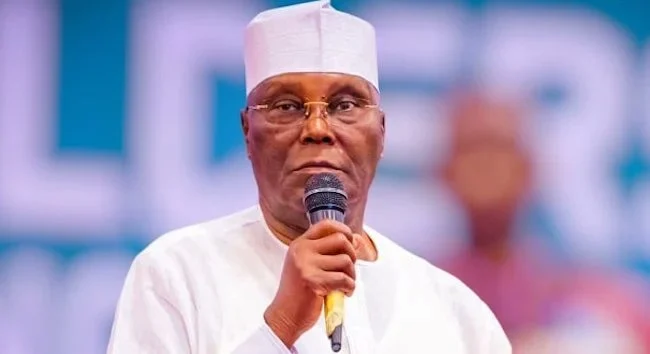
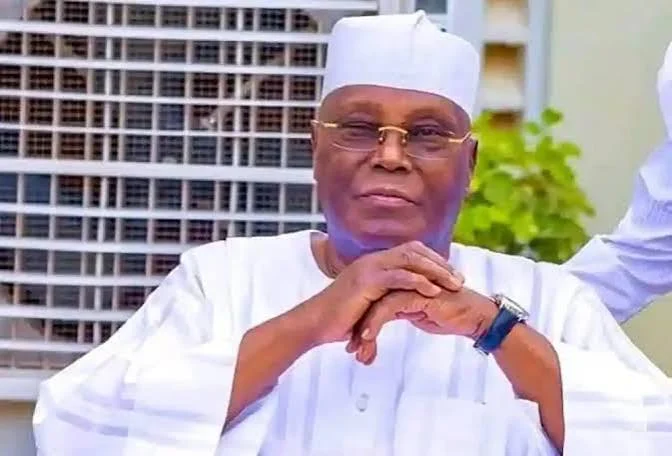
In 2015, Atiku's message shifted to a "Nigeria for All" vision. He believed Nigeria could do better but was hindered by insecurity, poverty, and corruption. He saw the election as a chance for change, promising accountable leadership focused on job creation, education, and security.
He often referenced his experience as Vice President to show that good leadership can transform the country. He criticized the PDP-led government for poor governance and pledged to create a united, prosperous Nigeria by investing in people and fighting corruption.
After losing to Muhammadu Buhari in 2015, Atiku returned in 2019 under the PDP. He campaigned strongly but failed to unseat President Buhari.
There is much contradiction. Atiku has faced mockery as a serial candidate, yet his determination inspires others. But trust in him is still low.
He is still challenging the government with his policy ideas. His unexpected change on subsidies has added excitement to the campaigns, showing that being neutral is no longer a choice.
Atiku may not be consistent, but where has our blind faith in Tinubu taken us? When has governance ever been set in stone? Recently, I overheard an economics professor arguing that the CBN had stabilized the economy due to the fuel subsidy removal. Yet, this same government has failed to stabilize the economy at the grassroots level. Who is responsible for these failures?
Onanuga claimed Atiku acts "like a man from an archaic past who least comprehends the present economic dynamics" and implied he would restore the "wasteful" subsidy.
Really?
Why should honest citizens suffer for the actions of oil thieves? Besides, are there no Nigerians who wish for some aspects of the past? Like when late President Umaru Musa Yar’Adua lowered fuel prices or when former President Goodluck Jonathan halted a planned fuel price hike after protests?
Reactions on social media to Atiku’s subsidy comments have not been good for the government. While social media does not determine popularity, it doesn't win elections either, as the APC would say. Meanwhile, the government is scrambling to improve its CNG transport system, which is still at a low 12 percent after more than three years.
Atiku may not be consistent, but where has our blind trust in Tinubu taken us? When is governance ever fixed? The other day, I heard an economics professor arguing that the CBN had stabilized the overall economy due to the subsidy removal. Yet, the same government hasn't stabilized the economic situation for the average citizen. Who is responsible for that?
The economics expert admitted that any policy, including subsidy removal, that fails to improve citizens' lives needs review. So, what if Atiku changed his mind about subsidies? What if Tinubu admits his mistake on fuel subsidies? Onanuga is right about Atiku’s mixed messages. But why is that? Only time will tell if it's desperation or something else.
For now, Atiku’s policies seem to resonate with the people. His determination and confidence have sparked important discussions about our political system. But we must ensure that the future of all Nigerians is not tied to one harmful policy.

Drop your comment
No comments yet — be the first to drop the gist 👇