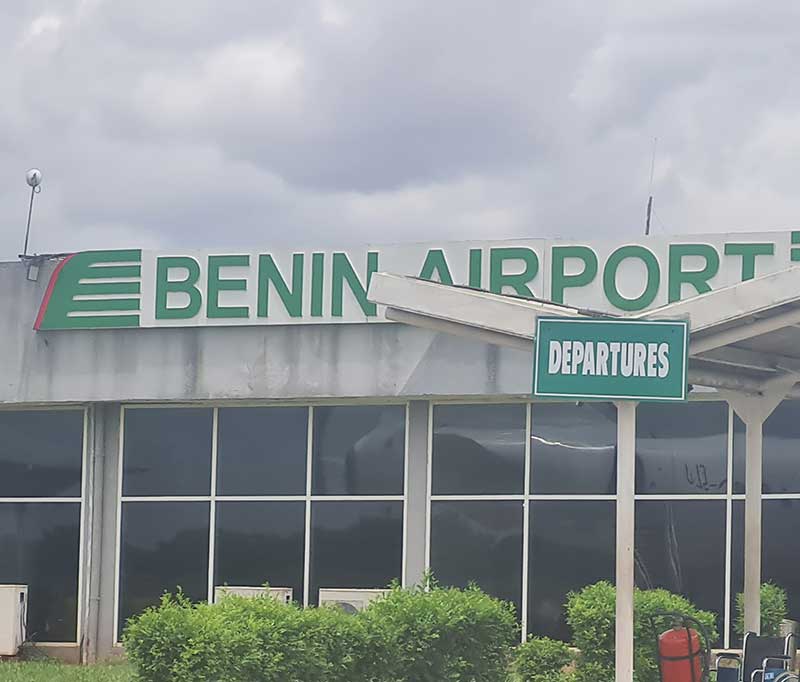
The Nigerian Safety Investigation Bureau (NSIB) has found safety problems related to the runway area, control tower visibility, and weather information following a runway incident involving an Enugu Air plane at Benin Airport in Edo State.
As a result, the bureau has given four urgent safety recommendations to the Nigerian Civil Aviation Authority (NCAA), the Federal Airports Authority of Nigeria (FAAN), and the Nigerian Meteorological Agency (NiMet). This is part of their ongoing investigation into the incident that happened on July 23.
The recommendations, labeled A-2026-039 to A-2026-042, were included in a preliminary report shared by NSIB in a statement from its Director of Public Affairs and Family Assistance, Funke Arowojobe.
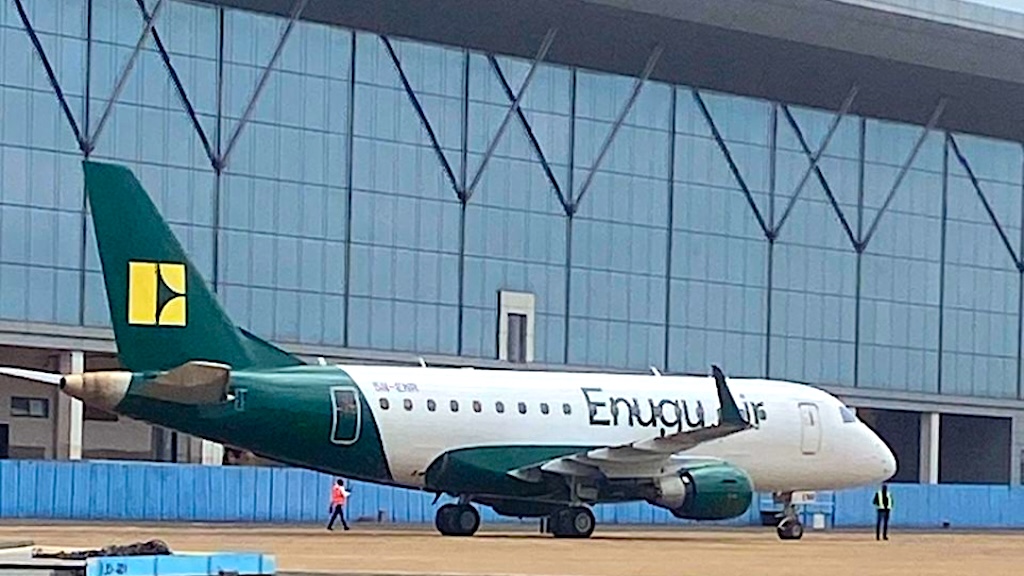
The report focuses on an Embraer ERJ 170-100LR plane, registration number 5N-ENR, operated by Enugu Air Limited. This aircraft was on a scheduled flight ENU4264 from Murtala Muhammed International Airport, Lagos, to Oba Akenzua II Airport, Benin.
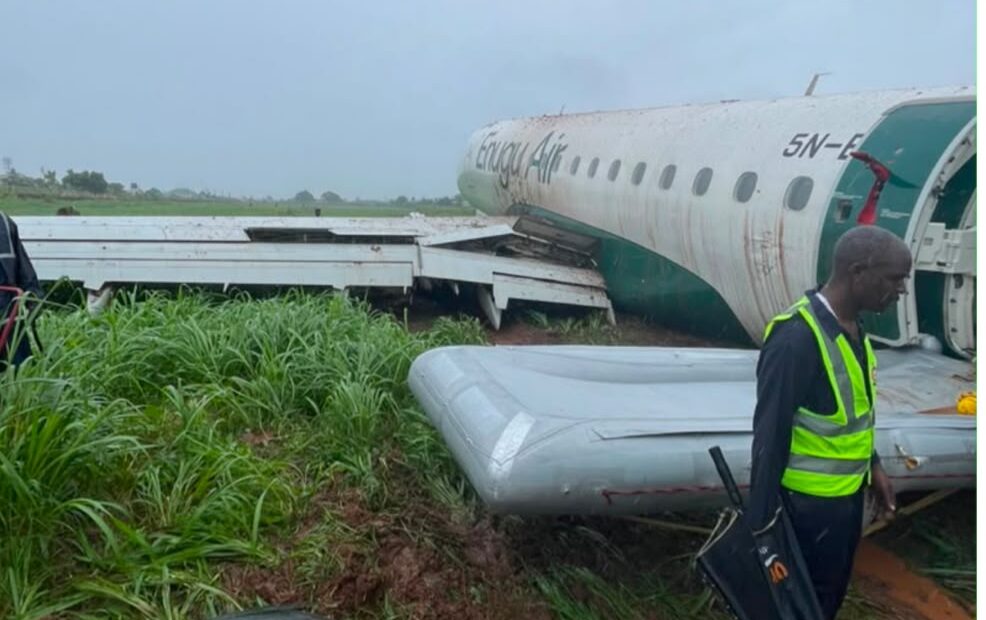
The aircraft had 63 passengers and five crew members on board when it landed on Runway 05 at around 2:55 p.m. However, it continued past the runway end and entered an unpaved area, hitting approach-lighting installations and two concrete structures related to a decommissioned localiser.
All 68 people on board were evacuated safely using the emergency escape slides, and there were no injuries reported.
This report gives the first detailed look at the investigation since the incident led to a temporary closure of the Benin Airport runway, which disrupted flights.
According to the preliminary report, the plane left Lagos at around 2:19 p.m. for Benin and went through its take-off, climb, cruise, and descent without issues.
The crew was initially cleared to make an Instrument Landing System (ILS) approach to Runway 23 but later asked for and received permission for an RNAV approach to Runway 05.
While approaching, the crew raised concerns about rain in the area. The control tower then advised that the approach to Runway 23 seemed to have better weather.
Still, the crew went ahead with the RNAV approach to Runway 05.
At about 2:48 p.m., the tower informed the crew that visibility was around 1,500 metres in moderate rain. The aircraft was cleared to land on Runway 05, but the crew was warned that the runway surface was wet.
The NSIB’s preliminary report does not confirm if any of these factors caused the runway overrun. The bureau stated that the investigation is ongoing and that more technical analysis is needed.
The report was created using various sources, including witness accounts, flight recorder data, air traffic control communications, and a preliminary inspection of the aircraft.
The four recommendations focus on the runway conditions and systems instead of blaming anyone for the incident.
The NSIB pointed out that the runway-end environment, control tower visibility, and weather information need attention from the appropriate aviation agencies.
These recommendations aim to fix safety concerns found during the investigation and help prevent similar incidents.
The bureau also released a preliminary recreation of the aircraft’s flight path based on the information available at this stage of the investigation.
They said the video is part of their effort to be transparent and share important safety information with the public while the investigation is ongoing.
The NSIB warned against treating these preliminary findings as final, saying that this information might change as more evidence is reviewed and analyzed.
The final report will include the bureau's conclusions and any additional safety recommendations from the completed investigation.
The incident affected more than just the aircraft and its passengers.
After the occurrence, FAAN temporarily closed the Benin Airport runway to recover the aircraft and let authorities conduct safety checks.
This closure disrupted flights, forcing airlines to cancel or change their schedules.
PREMIUM TIMES reported that the runway reopened after 12 days, with ValueJet saying its flights to and from Benin would restart on August 5, as confirmed by FAAN.
Though the runway is back in use, it does not mean the NSIB's investigation is finished.
In aviation, an airport can resume operations after safety checks while a separate accident investigation continues. The reopening shows that the facility is safe to use, while the investigation looks into what happened and how to avoid it in the future.
The bureau emphasized that the preliminary report should not be seen as blaming the airline, flight crew, airport authorities, or anyone else.
The investigation follows Annex 13 to the Convention on International Civil Aviation, which aims to prevent future accidents and incidents.
The NSIB urged the public and stakeholders to refrain from making conclusions about the cause of the incident until the investigation is done.
The bureau plans to conduct further technical work before reaching final conclusions.
For Benin Airport, the recommendations come 16 days after the runway reopened following nearly two weeks of disruption. They also give aviation authorities specific areas to examine as they work to improve safety at the airport.
While no passenger or crew member was hurt in the Enugu Air incident, the NSIB’s preliminary findings show that the incident highlighted issues beyond the aircraft, especially regarding conditions, visibility, and information during the approach and at the runway's end.
Drop your comment
No comments yet — be the first to drop the gist 👇