The history of Opobo is quite similar to that of the Benin Empire. Both had leaders who fought against British rule many years ago.
Ovonramwen, the Oba of Benin, was the independent ruler of the Edo Kingdom of Benin. He is known for his courageous fight against the colonization of his Kingdom by the British. Ovonramwen is often seen as the last great king of Southern Nigeria in the nineteenth century who tried to stop British occupation.
During his nine-year reign from 1888 to 1897, he worked to protect the sovereignty of the Edo empire and its economic interests. This effort eventually led to the British armed invasion of Benin in 1897. The Oba lost the battle, was dethroned, and sent into exile for life. His Kingdom was merged into a larger political unit under British control. By 1912, that unit, the Protectorate of Southern Nigeria, combined with the Protectorate of Northern Nigeria to form Nigeria.
“Ovonramwen fell for the same reasons as other great African rulers of the late nineteenth century who represented an age that was fast fading away under the determined thrust of the white man resolved to take over the political and economic control of the African coast and the interior, Pepple of Bonny in 1854, Jaja of Opobo in 1887, Nana the Itsekiri in 1894, King Prempeh of Ashanti in January 1896,” writes Professor Philip A. Igbafe in his book, Benin Under British Administration.
By the late 1880s during the reign of Ovonramwen’s father, Adolo, Britain had already marked Benin as its area of influence. This was shown by the visit of Captain H.L. Gallway, the British Commissioner and Vice-Consul of the Benin District of the Oil Rivers Protectorate, to Benin in 1892, four years after Ovonramwen became Oba.
During this visit, the British officer signed a treaty with Ovonramwen to establish commercial relations between Benin and Britain. Among other things, the 1892 treaty asked the Oba to work with Britain for “order, good government and the general progress of civilization.”
The full implications of this treaty were not clearly explained to the Oba of Benin. For several years after the treaty, Oba Ovonramwen continued to rule his state like his ancestors, refusing to give up his independence for the needs of British officials and traders. Igbafe notes that “the relationship between Benin and the traders on the coast, as well as with the British officials during those last two decades of the nineteenth century, was particularly productive of friction from the British standpoint.” This situation set the stage for the overthrow of Benin.
Against this background, Vice-Consul James R. Philips, despite warnings about the provocation such a visit would cause, set out to assess the strength of the Benin Army. He visited Oba Ovonramwen on 18 January 1897. Philips and many of his men were ambushed outside the city. This led to the British punitive expedition in February 1897. Benin fell in that battle, and the Oba was dethroned and sent to Calabar, where he died seventeen years later in 1914.
Oba Ovonramwen reigned during a difficult time in Benin's history. He took over an empire that was in decline, “probably because of attacks by other indigenous powers on the peripheral peoples of his Empire, which led invariably to a shrinkage of his dominions and possibly too of his throne.” As Idugbowa, Oba Ovonramwen faced opposition to his rule from the start. Even after he became king in 1888, he had to secure his position through purges and executions.
Still, Oba Ovonramwen was determined to make his reign meaningful. He maintained traditions of his ancestors, which he hoped to preserve. The human sacrifices that the British protested were part of that tradition, which he could not abandon. He lost his throne and power in his effort to protect that tradition against foreign aggression. One consequence of this aggression was the looting of many of Benin’s excellent works of art, which are now scattered worldwide.
In 1914, the monarchy returned under Oba Ovonramwen’s eldest son, Eweka II, who was then succeeded in 1933 by Akenzua II.
Next, let us consider Jaja, King of Opobo. He is well-known for resisting colonial rule. Jaja was a slave sold into the house of Anna Pepple of Bonny and later rose to lead his master’s “house.” He became a major figure in Delta politics when he created the Kingdom of Opobo. Succession to the headship of an Ijaw trading “house” was not based on heredity but on one’s ability to care for the members of the house. Jaja’s rise to the headship around 1869 caused anger among other members of the Anna Pepple house, leading to a civil war that Jaja won.
After the civil war in Bonny, Jaja led his house to the Opobo river and founded the Kingdom of Opobo. Here, he showed his business skills and soon set up plantations and built a port. He placed trading settlements on the creeks, allowing him to control the palm oil supply to European merchants and making Opobo one of the wealthiest Delta states.
With wealth came political power. Jaja’s army was so strong that during the Ashanti war, he sent soldiers to support the British, for which Queen Victoria awarded him a sword of honour in 1875.
In 1870, after securing his settlement, he declared Opobo an independent state made up of 14 of the 18 houses of Bonny. Three years later, Britain recognized the new state and in 1884 signed a “treaty” with Opobo, placing it under British protection. But the announcement of a British Protectorate over the Oil Rivers in 1885 threatened the independence of coast city-states and led to a conflict between Jaja and the British.
Jaja was the only ruler in the Delta who questioned the new political order by asking the British to clarify the term “protectorate.” The British vaguely responded that Her Majesty’s Government would extend its “gracious favour and protection” to his kingdom. He accepted this, thinking that Opobo’s new relationship with Britain would not hurt its independence. So, he kept controlling the oil trade, not allowing anyone to deal directly with European merchants while continuing his direct exports to Britain. This made Jaja view the British call for “free” trade as interference and a violation of the 1884 treaty.
Harry Johnston, the British Consul in Oil Rivers, opposed Jaja's independence. In 1887, Johnston took away his power to impose customs duties on oil exports from the state. Jaja sent a team to London to protest to the Secretary of State for the Colonies. Meanwhile, Johnston had written to the British Government seeking permission to remove Jaja, who had resisted British demands. The King was “invited” aboard a British gunboat, HMS Goshawk, to meet Johnston. Jaja was reassured by Johnston before their meeting that “I hereby assure you that whatever you accept or reject my proposals tomorrow, no restraint whatever will be put on you, you will be free to go as soon as you have heard the message of the government.”
But once on board, Jaja was forced to choose between being tried for breaking the treaty or seeing Opobo attacked by the British Navy. Jaja chose trial, which took place in Accra, Ghana. He was found guilty and exiled in 1887 to the West Indies with a pension of 800 pounds per year. This opened the way for effective colonial authority in the region, which quickly generated nearly 90,000 pounds from import duties alone in the first year.
King Jaja’s banishment caused unrest in the Oil Rivers states. After many appeals to the British Government, the Colonial Secretary set up a commission to look into the situation. In 1891, the commission, led by Major Claude MacDonald, recommended that King Jaja be returned to Opobo due to popular demand. That same year, he was allowed to come back, but he died on 7 July 1891 while returning. His body was taken back to Opobo for burial.
Some countries fought wars to gain independence. Examples include the Mahdist war in Sudan between the British and Egypt, the Xhosa wars between the Xhosa kingdom and the British Empire, and the Algerian war between France and Algeria. The Mau Mau rebellion, also known as the Kenya Emergency, was a brutal guerrilla war between the Kenya Land and Freedom Army and British colonial forces. The Rhodesian Bush War was a civil war involving the Zimbabwe African National Liberation Army, the Zimbabwe People’s Revolutionary Army, and the Rhodesian Security Forces.
The Anglo-Zulu War was fought between the Zulu Kingdom and Britain. Britain wanted to control the region and use African labour in sugar plantations and mines. In December 1878, Sir Bartle Frere sent an ultimatum to Zulu King Cetshwayo. The king refused, leading to Britain invading the Zulu Kingdom. The war lasted from January to July 1879 in the northeastern part of modern-day South Africa.
The Maji Maji Rebellion occurred between various groups in Tanzania against German rule. The Germans forced Tanzanians to work for them, building roads and growing cash crops like cotton. The Maji Maji Rebellion lasted from 1905 to 1907 and resulted in great suffering, including a famine known as Ukame.
The Rif War was fought between the Rif Republic and Spain, later joined by France. The War of the Golden Stool was between the Ashanti Kingdom and Britain over the sacred Golden Stool, a symbol of power. The Portuguese Colonial War involved African independence movements against Portugal.
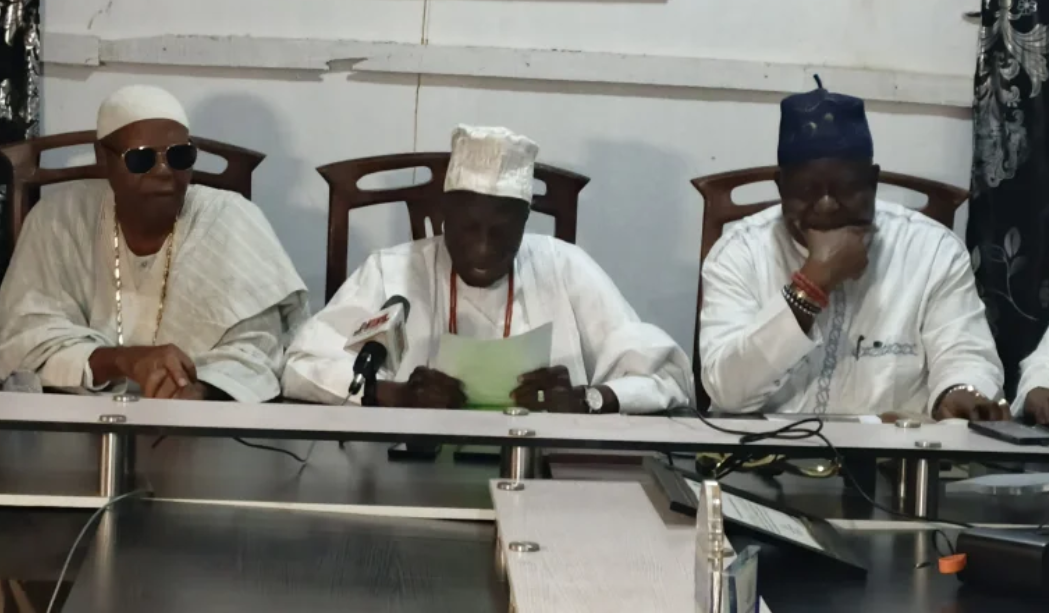
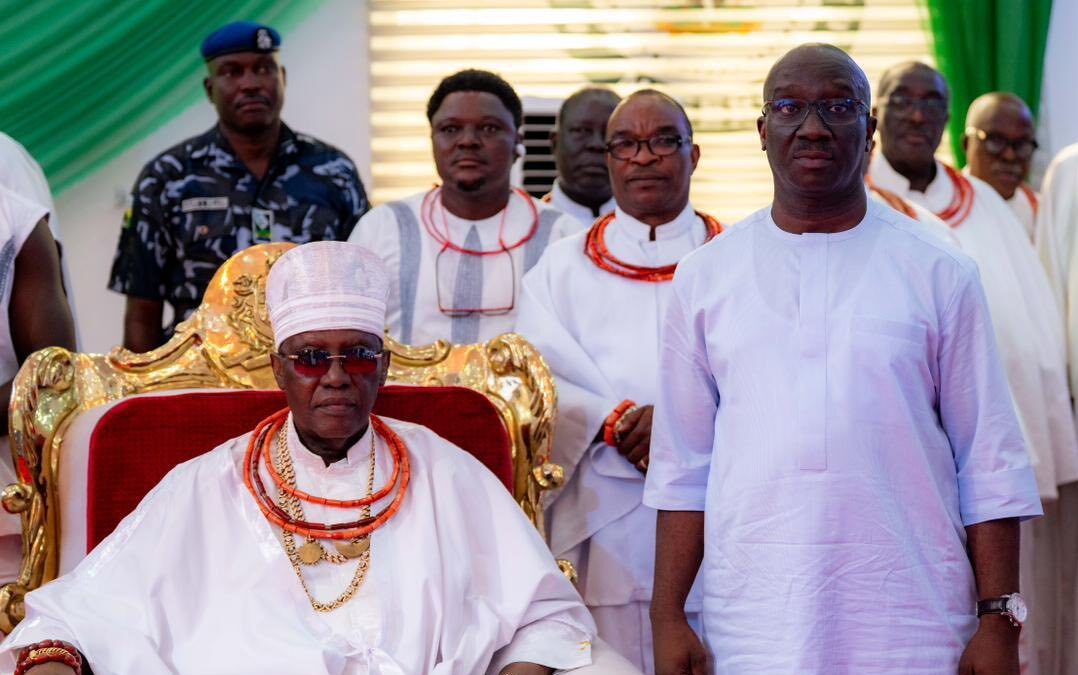
Nigeria is fortunate. We did not fight any wars before gaining independence. Our independence was achieved through negotiation. But areas like Benin, Bonny, and Opobo experienced harsh British colonization. The current Oba of Benin, Oba Eheneden Erediauwa, Ewuare II, was crowned on 20 October 2016. King Charles Douglas MacPepple Jaja, Jeki VI of Opobo, has just started his reign. May their time be peaceful and progressive.
Drop your comment
No comments yet — be the first to drop the gist 👇