Caring Africa has called on both federal and state governments to start putting Nigeria’s new National Care Policy and Implementation Plan for 2026 to 2030 into action.
The group, which worked with the Federal Ministry of Women Affairs and Social Development to create the policy, said its approval is just the first step in building a national system for childcare, elderly care, and other forms of paid and unpaid care.
President Bola Tinubu led the Federal Executive Council in approving the policy on Wednesday. They also approved the National Action Plan on Ending Violence Against Children and the National Policy on Menstrual Health and Hygiene Management for 2026-2030.
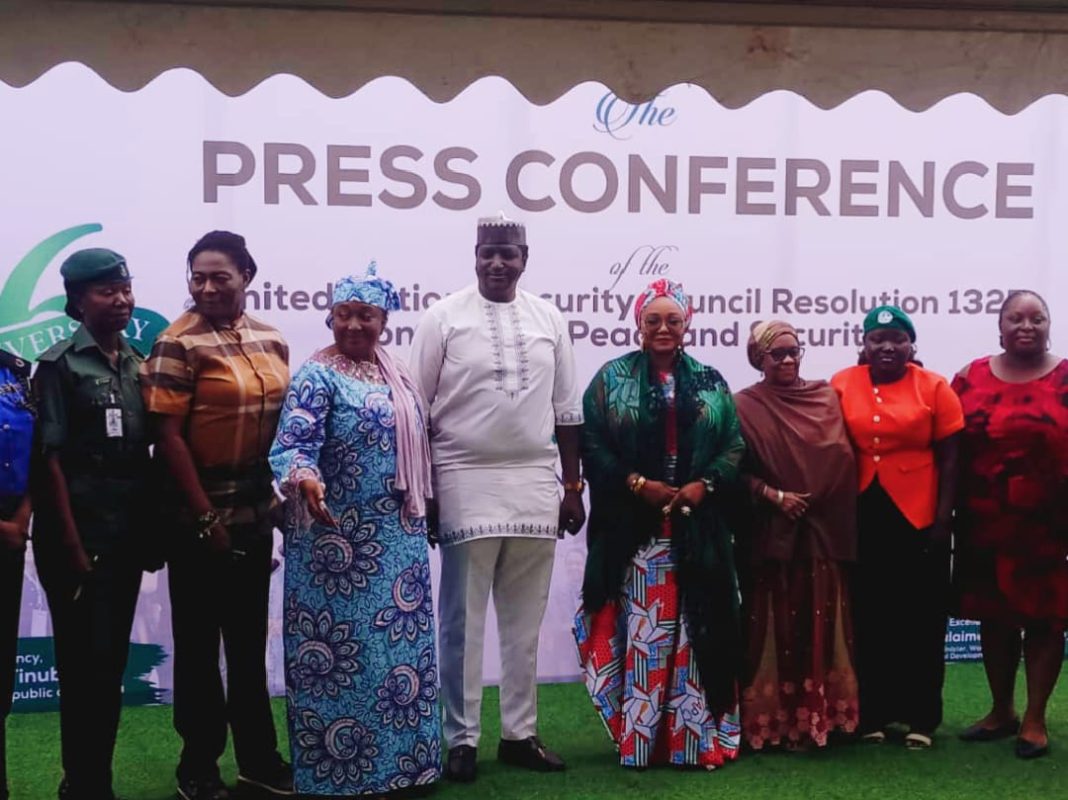
Imaan Sulaiman-Ibrahim, the Minister of Women Affairs and Social Development, announced the approvals during a press conference in Abuja on Thursday. This marked the 26th anniversary of the United Nations Security Council Resolution 1325 on Women, Peace, and Security.
The ministry explained that the National Care Policy recognizes unpaid care work, encourages regulated childcare and elderly care services, sets minimum standards for care centers, and establishes a National Care Fund.
Blessing Adesiyan, who is the founder and Chief Care Officer of Caring Africa, stated that the next step should be to implement the policy throughout Nigeria.
Adesiyan mentioned that care services like health, education, and social welfare are mainly delivered at the state level. Thus, it is crucial for all 36 states to adopt the policy for it to work effectively.
“A federal policy that stays in Abuja will not change anything for a woman looking for childcare in Oshodi or caring for her mother in Sokoto,” she said.
Adesiyan urged that the policy should be spread across all six geopolitical zones and adopted by the states.
Nigeria is now among countries that have national care policies. Brazil launched its National Care Policy in 2024, followed by a funded plan. Chile enacted its Chile Cuida care system into law in 2026.
Kenya has also introduced a national care policy and is working on its implementation at the county level. Meanwhile, UN Women is helping over 50 countries to develop their own national care systems.
The policy is based on 11 pillars, which include unpaid care work, care infrastructure, maternal and newborn care, childcare, elderly care, disability care, the care workforce, regulation of the care economy, care financing, and employer-supported care.



Under the childcare section, the framework includes a tiered licensing system for childcare facilities. It sets minimum standards for space, staff ratios, safety, hygiene, and nutrition, along with a national register for childcare workers.
The framework also suggests a way for informal crèches to comply with regulations instead of being excluded from the system.
For care workers, the policy recommends that care work be defined as a formal job under Nigerian labor law. It includes training and certification pathways and a national caregiver database. It also suggests a minimum wage for care workers, access to health insurance, and pension benefits.
The framework also aims for a dedicated care line in the federal budget and a National Care Fund to gather public, corporate, and development financing for care services.
Caring Africa highlighted that women and girls do about 80 percent of unpaid care work in Nigeria. This includes childcare, cooking, cleaning, and caring for sick or elderly family members.
The organization also shared that Nigerian women spend around 4.3 hours a day on unpaid care work, compared to just 1.12 hours for men.
Currently, only about five percent of Nigerian children aged zero to two are in licensed childcare.
The National Bureau of Statistics estimates that making the care economy formal could create 17 million jobs. Research by Economist Impact shows that better access to quality childcare could allow 1.7 million more Nigerian mothers to join the workforce by 2030.
Adesiyan added that the policy would give a structure for employers to support workers with caregiving duties through measures like paid leave and employer-supported care.
She pointed out that the policy’s focus on maternal and newborn care would extend support during the postpartum period. Its broader framework also includes support for aging, disability, and care within families.
“The stress of ongoing caregiving carries a real physical health cost, which we often overlook. This policy is the first tool we have that addresses it,” she stated.




Drop your comment
No comments yet — be the first to drop the gist 👇