
“Customer, come now, it has been a while. I have fresh yam ooo,” Fatimah Abu shouted in pidgin English as she saw a car about to park near her roadside stand.
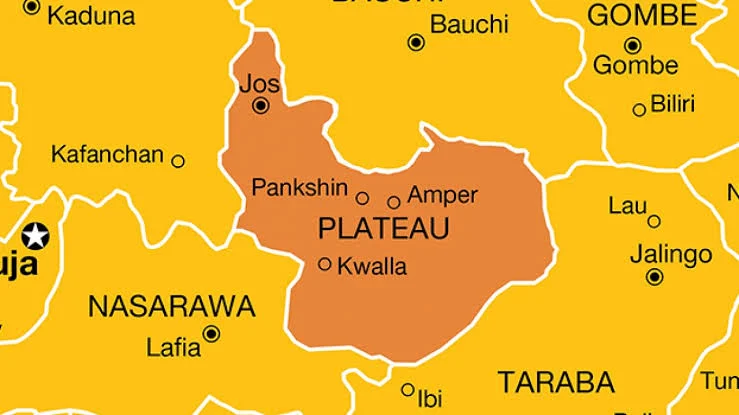
Fatimah sells farm produce like yams, okra, tomatoes, onions, chilli, and potatoes. She is one of about a dozen Fulani women selling farm produce along the roadside at Fruit Market in Lugbe, about 12 kilometres from Abuja city centre.
As soon as a customer began to bargain with her, a young woman with a Point-of-Sale (POS) machine and a black pouch around her neck appeared.
“You wan withdraw money?” she asked the customer in pidgin English.
In this market, it is no surprise that Fatimah and many other women do not accept bank transfers or use POS machines. For them, cash is still the main way to do business.
Fatimah and the other women run a makeshift farm-produce market for residents and workers in Lugbe who want to avoid the hassle of the main market.
The routine is simple. Motorists park by the roadside, buy what they need, and leave.
Even though digital payments are becoming more common around them, many women have not embraced this way of paying.
“I don’t take transfers. I don’t have a bank account. Let me call you the POS girl,” Fatimah told her customer.
The POS operator charges between ₦100 and ₦200 for every ₦5,000 withdrawal. This is a common practice in Nigeria.
A quick look at the market showed that most sellers accept digital payments. This highlights the gap between traders who have accepted Nigeria’s growing digital payment system and those who still rely heavily on cash.
Nigeria’s Digital Payment Growth
Nigeria has made big strides in digital payments over the last ten years.
According to the Nigeria Inter-Bank Settlement System (NIBSS), electronic payment transactions in Nigeria hit about ₦1.07 quadrillion in 2024, up from around ₦600 trillion in 2023. This number rose to ₦1.7 quadrillion in 2025.
The rise of fintech companies and the cash shortage after the 2023 naira redesign helped speed up the use of digital payments in Nigeria.
Fintech companies have also made it easier to open bank accounts. Some allow customers to use their phone numbers as account numbers. Many fintech companies also give POS services to merchants, making it easier for them to accept electronic payments.
But even with the rapid growth of digital payments, some Nigerians still do not use the system.
Interviews with traders in Abuja showed that fears about fraud, poor mobile network coverage, limited banking access, and the nature of cross-border trade still make many prefer cash.
Concerns About Fraudulent Transfers
For Fatimah, worrying about fake transfers is one reason she sticks to cash.
“Sometimes we hear about fake transfers and others from people, and that scares me. Aside from that, we need money every day in my village. Sometimes I go to farms to buy tomatoes; they don’t want transfers, they want cash,” she said in Fulfulde, translated into English.
Concerns Are Valid
The National Bureau of Statistics (NBS) said Nigerians lost ₦52.26 billion to fraud in 2024, but that number fell to ₦25.85 billion in 2025.
Mercy Ihon, a bread seller at Lugbe market, noted that some traders without bank accounts have started using fintech platforms.
“Even people who do not have bank accounts have opened OPay,” she said.
But she mentioned that some Fulani women are still outside the digital payment system, partly due to poor mobile networks.


“Those Fulani women who do not take transfers do not have bank accounts. Unfortunately, because they live in remote areas without mobile networks, they seem to be avoiding digital payments,” she said.
Haruna Akilu, who sells garden eggs, pointed out that cash is becoming rare in the market as more customers prefer transfers or card payments.
“Most people do not take cash around anymore,” he said, pulling out a worn-out ₦500 note from his pocket. “This is the only cash I’ve made today,” he added.
Women and Financial Exclusion
Experts say the low use of digital payments among some women shows a bigger issue of gender inequality in financial access in sub-Saharan Africa.
The World Bank reported the gender gap in formal account ownership in sub-Saharan Africa was 12 percentage points in 2024. Only 37 per cent of women have an account, compared to 48 per cent of men.
For many women in rural areas, accessing banking services can be tough.
A lack of nearby places to resolve banking issues means customers might have to travel far to visit a bank. This is especially hard in rural areas, including parts of northern Nigeria.
Know Your Customer (KYC) rules, like needing ID documents and photos, can also stop people without official paperwork from opening accounts.
PREMIUM TIMES visited other markets in Abuja like Gosa, Dei Dei, and Soka to check how traders are adopting digital payments.
While many traders accept transfers and POS payments, some say their business type makes cash easier.
Sabine Mensah, deputy CEO of the AfricaNenda Foundation, believes governments should create a better environment by offering incentives. She pointed to India as an example where the government removed transaction fees and provided access to credit to motivate merchants to adopt digital payments.
“India comes to mind. They have been able to onboard millions and millions of people into UPI. One of the things the government did was to take out the cost of transactions. Government covers [it]. They also created an all-inclusive strategy. Merchants would have access to credit if they use digital payments. We know this in our part of the world,” she said.
Discussing fraud prevention, Mensah noted that there have been big improvements in payment systems to tackle fraud. She pointed out the use of Bank Verification Number (BVN) and live-tracking systems by NIBSS to fight fraud.
“NIBSS has been able to automate fraud tracking. They have a dashboard. This automated detection [system] identifies unfamiliar transactions and flags them. In some systems, they have a 60-second delay to correct mistakes,” she said.
Cross-Border Trade Keeps Cash Alive
At Dei Dei Market, about 30 kilometres from Abuja city centre, Muhammed Awwal, a wholesale tomato seller, said cross-border trade is one reason some traders still prefer cash.
He explained that some traders get their products from nearby countries like Niger, Cameroon, and Benin Republic, making cash easier for transactions and currency exchange.
“We buy directly from farmers. They don’t want to hear about bank transfers or anything. Sometimes, some of the farmers we deal with are outside Nigeria in places like Cameroon or Niger. It is easier to change cash to CFA than making a transfer,” he said.
He added that cash also helps traders who need foreign currency for transactions outside Nigeria.
“Sometimes we use the money to buy other items when going back to Niger, so cash is easy to deal with,” he said.
Abubakar Suleiman, a cattle seller at Dei Dei Market, shared a similar opinion.
He noted that the CFA franc is more convenient for some of his deals, especially when working with traders and suppliers across the border.
The preference for cash among some traders shows a larger issue facing digital financial inclusion in sub-Saharan Africa. While fast payment systems have grown quickly, businesses that work across borders still struggle to make easy digital payments.
For traders like Fatimah, Nigeria’s cashless revolution has not fully reached the roadside markets where cash remains the most trusted way to pay.

Drop your comment
No comments yet — be the first to drop the gist 👇