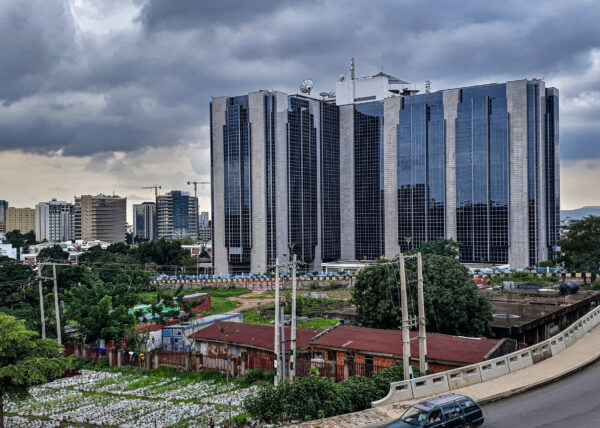
The Governor of the Central Bank of Nigeria, Olayemi Cardoso, has revealed that Nigeria’s multiple foreign exchange (FX) windows have led to losses of about three percent of the country’s gross domestic product (GDP).
Mr Cardoso shared this information after the 307th meeting of the Monetary Policy Committee (MPC) on Tuesday in Abuja.
In earlier reports, PREMIUM TIMES mentioned that the CBN decided to change the Monetary Policy Rate (MPR) and adjust the policy corridor, reducing the benchmark interest rate from 26.5 percent to 23 percent.
The governor explained that this decision is a step towards improving how monetary policy works in Nigeria.
CBN mentioned that its reforms have made Nigeria’s economic conditions better, and the new policy reset aims to enhance how monetary policy functions while still keeping an eye on inflation.
Mr Cardoso expressed his confidence in the results of the apex bank’s monetary policies over the past three years. He noted improvements in Nigerian banks returning to their main roles after recapitalization and the stability of the foreign exchange markets.
Before the CBN’s FX reforms in 2023 aimed at unifying exchange rates, Nigeria had several ways to buy and sell dollars, each with different rates for different users.
“We are coming from a bad place. We were able to take the bank back to its core mandate. We had a dysfunctional foreign exchange market where there were multiplicities of rates, depending on who you knew. We have succeeded in closing those gaps, unifying exchange rates,” he said.
He added that the losses from the different exchange rates were more significant than those from the fuel subsidy, which he estimated at about 2.2 percent of GDP.
“The losses from fuel subsidy were in the region of 2.2 percent, that is a staggering amount of money. The losses we were making from these multiple exchange rate windows were more. It was 3 percent of GDP. So between those, you had 5.2 percent of GDP lost,” he said.
The governor stated that CBN’s choice to unify the foreign exchange market and use a willing-buyer, willing-seller system has removed a major distortion in the economy.
He noted that the previous system created various exchange rates allowing access to foreign exchange at different rates depending on the market window available.
According to CBN, unifying the FX market is part of its larger reforms aimed at letting market forces set exchange rates and improving transparency in foreign exchange dealings.
Mr Cardoso emphasized that this reform was essential because the losses from the different exchange-rate windows were not sustainable.
The governor pointed out that the current willing-buyer, willing-seller system has increased transparency and allowed the market to set the exchange rate.
“Obviously, from our perspective, we are happy, very pleased that we’ve been able to literally eliminate that distortion, and that a system of willing buyer, willing seller, which allowed transparency and allowed the market to find its own level, is where we are today,” he said.
Mr Cardoso also mentioned that the reforms have removed a distortion that has affected the Nigerian economy for many years.



Drop your comment
No comments yet — be the first to drop the gist 👇