
As the 2027 general election approaches, a youth group called Brain Builders Youth Development Initiative (BBYDI) has expressed worries about the ethical use of Artificial Intelligence (AI) in Nigeria's elections.
The group is also urging for protections for women in politics against online threats and for transparency in AI usage during elections.
BBYDI's founder, Abideen Olasupo, made these points on Thursday while sharing findings from the organisation's Pre-Election Digital Threat Assessment in Lagos.
The event, titled "From Silence to Safeguard: Faith, Tradition and Women's Place in Nigeria's Democracy," was done in partnership with FactCheck Africa.
The guidelines focus on protecting the integrity of elections, helping vulnerable groups, especially women in politics, from online threats, and ensuring fairness and transparency as shown in the pre-election digital threat assessments.
Mr Olasupo's presentation looked at the 2023 general elections. He noted that while women made up 47.5 percent of registered voters, they hold less than five percent of seats in the National Assembly, State Assembly, and executive positions.
He pointed out that despite their active participation at the polls, women face many challenges in achieving political leadership.
His presentation included several important policy briefs. These briefs highlighted the need for indigenous languages in policy discussions and a digital safety toolkit aimed at protecting women in politics for the 2027 election cycle.
"The key part of the policy brief that came out of the conversation is about indigenous languages. Most of the time, we say we do policy and advocacy, but the pepper sellers in the markets are not involved," Mr Olasupo said.
"They are not included in the conversation and engagement. As a civil society organisation, we should go beyond just talking about inclusion in business in proposals."
Mr Olasupo mentioned that technology is being turned against female candidates. He explained that generative AI tools, like Grok, are used for online gender-based violence and creating deepfakes.
He raised concerns that political teams are now using special units to deploy AI for spreading misinformation and manipulating visuals to undermine women.
This situation puts female candidates at a serious disadvantage, especially those who cannot afford to hire influencers or pay for advanced digital tools to fight back.
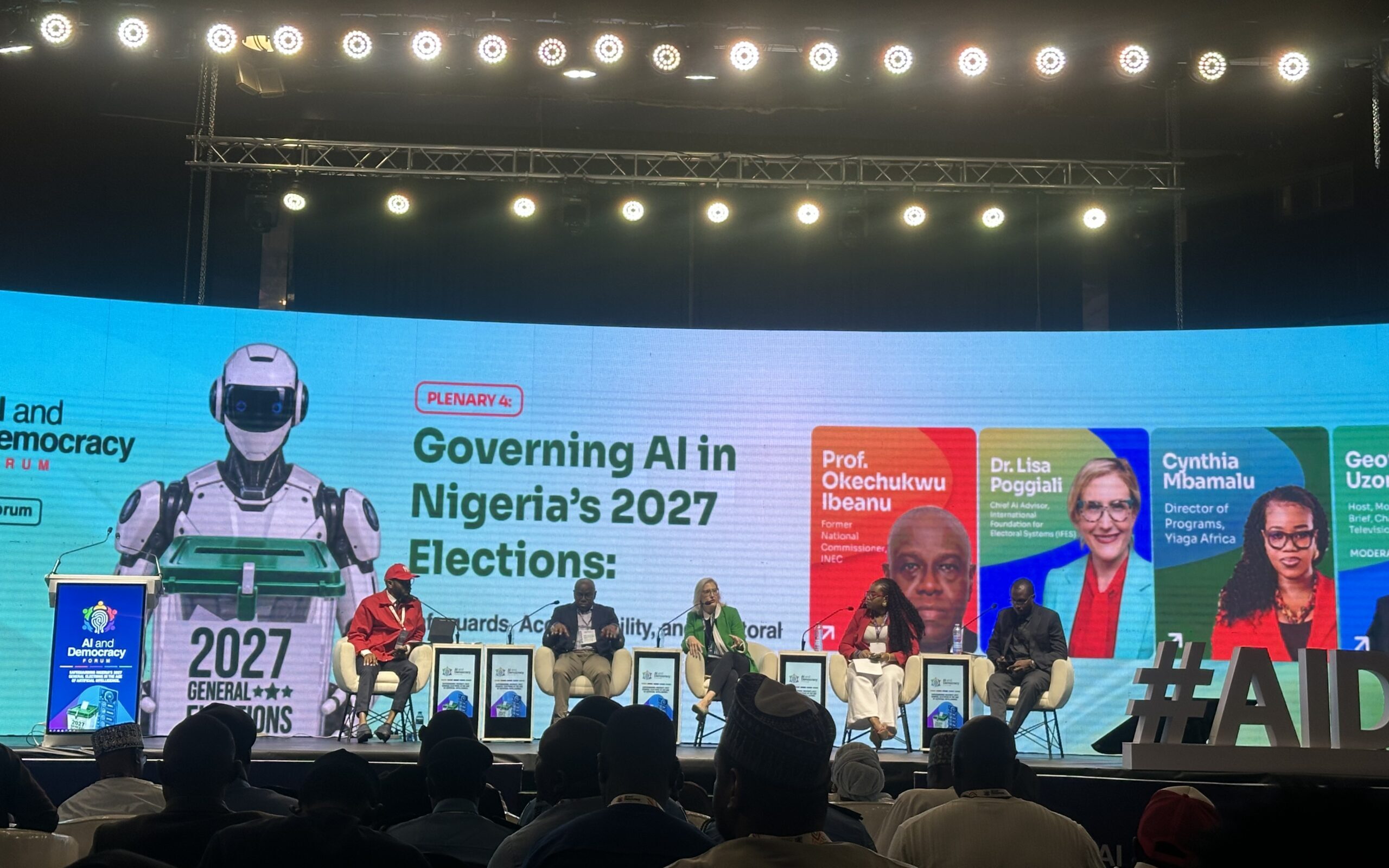

During one of the three panel discussions, faith leaders discussed religion, tradition, and women's roles in public life.
Amudat Olanipekun, the leader of the Federation of Muslim Women’s Association in Nigeria (FOMWAN) in Lagos, addressed myths about women's roles in Islam.
Ms Olanipekun explained that even though men may have some leadership roles, women have the right to take part fully in politics and decision-making because good governance needs both men and women.
She pointed out that practices like wearing a niqab do not take away women's civic rights or their ability to vote and run for office.
She stressed that empowering women is key for building the nation, saying that training a woman effectively trains a nation.
On the topic of religious ethics and accountability, Richard Oyeyemi, a pastor in the Redeemed Christian Church of God (RCCG), argued that Christian teachings are against online bullying and misinformation.
He noted that actions in the digital world are as important as those in the physical world. Mr Oyeyemi highlighted that true service to God must respect human dignity and mental health, suggesting that a Christian's online behavior must match their real-life values.
He mentioned that modern churches now bring in professionals like lawyers, counselors, and doctors to properly deal with complex social issues beyond just spiritual advice.
He encouraged pastors to learn about digital literacy to better tackle online harassment that affects their members.
Women's presence in Nigeria’s public offices is very low. In the House of Representatives, only 17 out of 360 members are women. In the Senate, there are just four women out of 109.
Efforts to boost women's participation in elective positions have been ongoing for years, but progress has been slow.
As the elections come up, political parties, civil society groups, and lawmakers continue to suggest reforms to improve women's representation. But many of these efforts have run into legislative roadblocks or failed to get the necessary political backing for success.


Drop your comment
No comments yet — be the first to drop the gist 👇