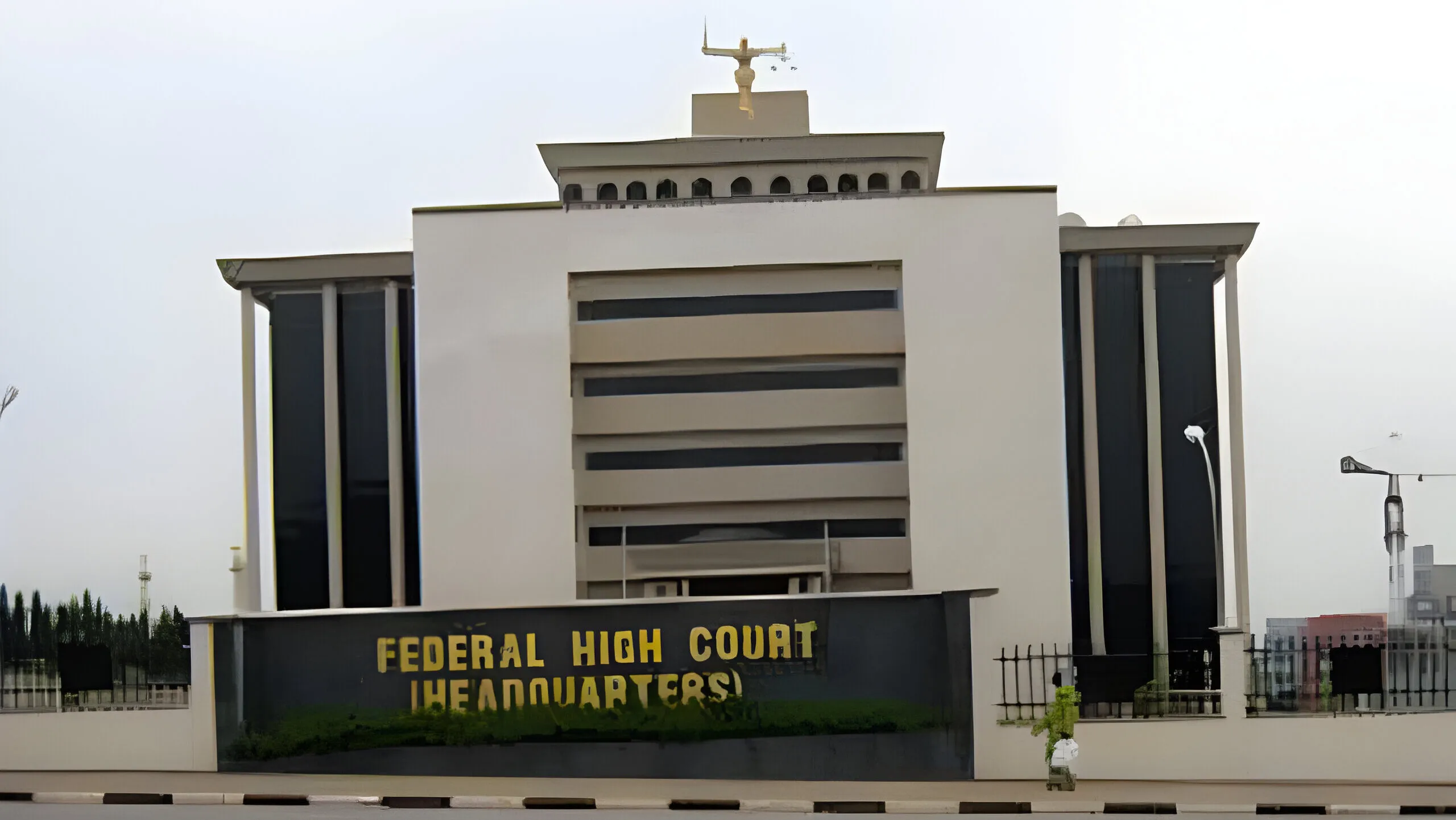
The Federal High Court in Abuja has cleared Malabu Oil and Gas Limited, Aliyu Abubakar, chairman of AA Oil Limited, and six others of money laundering charges linked to the OPL 245 deal.
Judge Inyang Ekwo gave the ruling on Thursday. He stated that the Economic and Financial Crimes Commission (EFCC) did not prove the case against the defendants beyond reasonable doubt, as the law requires.
The EFCC charged Malabu Oil and Gas Limited, A-Group Construction Company Limited, Rocky Top Resources Limited, Mega Tech Engineering Limited, Novel Properties and Development Company Limited, Imperial Union Limited, Carlin International Nigeria Limited, and Mr Abubakar as the first to the eighth defendants in this case.
The charges were about alleged fraud in connection with the OPL 245 oil block, which has been a controversial issue.
In his judgement, Judge Ekwo criticized the EFCC’s investigation. He found that the investigative officer had not finished the investigation before filing the charges.
The judge mentioned that the court has a responsibility to look at how an investigation was done to see if it was satisfactory. He said an investigative officer should provide evidence of actual work done, not just rely on assumptions.
He added that if the investigative officer “fails to tender a document or findings made during the course of proceedings, there is something wrong with the investigation.”
Judge Ekwo emphasized that the law states that an investigation must be finished before any charges are filed. He noted that this requirement was not met in the case before him.
The judge also criticized the EFCC for continuing with the prosecution. This was despite a 2018 directive from the then Attorney-General of the Federation, Abubakar Malami, which advised against prosecuting the defendants due to lack of evidence.
He stated that the prosecution should not have filed the charges after the AGF's warning. The AGF would have considered the evidence before giving that advice.
“No prosecuting agency is higher in law than the AGF,” he said. He added that a prosecuting agency should not act as if it could ignore the AGF's advice and still expect the court to support its actions.
Judge Ekwo ruled that the court would not back a situation where different parts of the prosecution were acting against each other.
He concluded that the prosecution could not prove the claims in counts one to 43 against the defendants beyond reasonable doubt.
“I hereby make an order discharging and acquitting the first, second, third, fourth, fifth, sixth, seventh and eighth defendants of the respective allegations against each of them in this case,” he declared.
The allegations against Malabu Oil
Among the accusations, the EFCC claimed that Malabu Oil and Gas Limited took control of funds sent by the Federal Government into the company’s bank accounts. This was allegedly done in collaboration with three individuals who are currently on the run.
In count two, the commission alleged that Malabu Oil, along with Seidougha Munamuna, Amaran Joseph, and Dauzia Loya Etete, who was the petroleum minister during Sani Abacha's time, took control of $401.54 million transferred by the federal government into Malabu's account with First Bank of Nigeria Limited.
In count three, the EFCC claimed that these same defendants took control of another $400 million transferred by the Federal Government into Malabu Oil’s account with Keystone Bank Limited.


The EFCC said this money was part of proceeds from illegal activity, which goes against the Money Laundering (Prohibition) Act 2011, and is punishable under Section 15(4) of the Act.
The defendants pleaded not guilty when the charges were read to them.
Abubakar also acquitted in separate N300 million case
In another judgement, Judge Ekwo also cleared Mr Abubakar of five counts in a money laundering case about an alleged N300 million payment.
The judge found that the EFCC did not meet the burden of proof needed, stating there was no evidence to show that Mr Abubakar committed the crimes he was charged with.
“The allegations in counts five, six, seven, eight and nine cannot be proved beyond reasonable doubt,” the judge stated.
He then ordered the defendant’s release.
This separate case came from charges filed by the EFCC in 2017 against former Attorney-General of the Federation, Mohammed Bello Adoke, and Mr Abubakar, who were listed as the first and second defendants.
The commission accused them of money laundering involving an alleged N300 million payment.
On 19 April 2024, Judge Ekwo cleared Mr Adoke after agreeing with his no-case submission, finding that the prosecution did not provide enough evidence to make him defend himself against the charges.
However, the judge ruled at that time that the prosecution had established a case against Mr Abubakar in counts five to nine, which needed him to defend himself.
This judgement ended those remaining counts against Mr Abubakar, with the judge finding that the prosecution failed to prove the case beyond reasonable doubt.
Background to the Malabu case
The Malabu case is tied to the OPL 245 oil block, awarded to Malabu in 1998. This block became controversial after a settlement in 2011 involving the Federal Government, Malabu, Shell, and Eni, valued at about $1.3 billion.
Investigators looked into the transactions around this settlement, including how the money was shared and if any was misused.
The EFCC’s case against Mr Abubakar, Malabu Oil, and the other companies was about money laundering related to dealings tied to the oil block. The separate case with Mr Adoke and Mr Abubakar involved the alleged N300 million payment.
Both cases went on separately, and the judgements resolved the charges against the defendants in both cases.


Drop your comment
No comments yet — be the first to drop the gist 👇