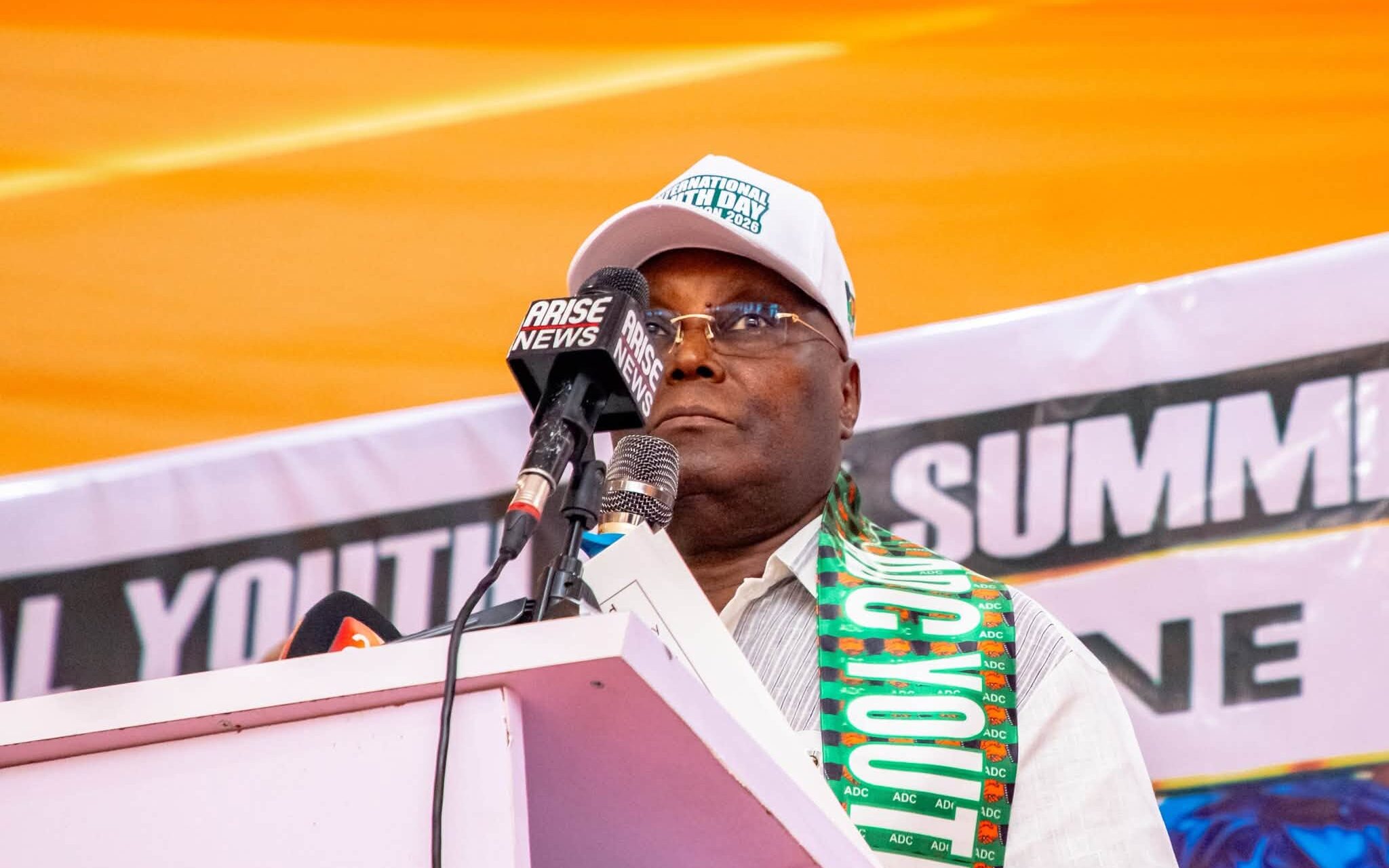
The Federal High Court in Abuja has thrown out an application by former Vice-President Atiku Abubakar and the African Democratic Congress (ADC). They wanted to change their case against President Bola Tinubu’s eligibility for the 2027 presidential election.
Judge Inyang Ekwo ruled on Friday that the changes they sought would add new facts after the 14-day period set by the Constitution for filing pre-election cases had passed.
He stated that adding new facts through an amendment would significantly change the original case. Mr Ekwo said, “I see no merit in this application, and it is hereby dismissed.” The judge then told the parties to continue with the main case.
Atiku and ADC filed the suit on 14 August, questioning Mr Tinubu’s eligibility for the 2027 presidential race. They sued Mr Tinubu, the All Progressives Congress (APC), and the Independent National Electoral Commission (INEC). They claimed that the APC submitted a fake National Youth Service Corps (NYSC) discharge certificate to INEC to support the president’s nomination. The certificate allegedly had the name “Tinubu Bola Adekunle” instead of Bola Ahmed Tinubu.
During the hearing on 13 October, Atiku’s lawyer, Joseph Silas, presented an application filed on 10 September. He sought permission to modify the original summons. The plaintiffs explained they noticed mistakes in their original court documents. They pointed out that they wrongly described INEC Form EC9A as Form CF001.
They also wanted to submit clearer copies of some evidence, detail the alleged fraud, and add a written statement by Atiku. They insisted that the proposed changes would not introduce new issues or requests but were needed to present their case clearly.
But Mr Tinubu’s lawyer, Wole Olanipekun, a Senior Advocate of Nigeria (SAN), opposed the request. He argued that the changes would create a new case instead of fixing errors, and that the main suit was already too late to be filed.
The APC's lawyer, Akin Olujinmi, SAN, also asked the court to reject the request. Likewise, INEC’s lawyer, Alex Izinyon, SAN, argued that the proposed changes would create a new cause of action and try to fix problems after the deadline for pre-election cases had passed.
After hearing from everyone, Judge Ekwo set 20 November for a ruling on the application. In his ruling, the judge agreed with Mr Tinubu, INEC, and APC that the amendments would add new facts.



Mr Ekwo called pre-election cases “sui generis,” meaning they are a unique type of case with special rules. He noted that such cases require parties to present all relevant facts, documents, and materials when starting their actions.
Referring to Section 285 of the 1999 Constitution, the judge pointed out that the events leading to the case happened at the start of August, while the plaintiffs filed the case on 14 August. He recognized that the suit was filed within the 14-day period, but the plaintiffs could not use an amendment to add new facts after that time.
“It is not the law that incomplete facts, documents or materials can form a suit in a pre-election action,” the judge stated. He also acknowledged the amendment rules in the Federal High Court’s Pre-Election Practice Directions 2026 but clarified that these rules were not meant to allow parties to make significant changes or reframe their cases after the deadline.
Mr Ekwo challenged the plaintiffs’ claim in their affidavit that the amendments did not introduce new facts or issues and did not seek extra reliefs. He pointed out that paragraphs 8, 9, and 10 of the proposed new affidavit contained facts that were not in the original affidavit. He also mentioned changes to paragraph 14 and other parts of the affidavit.
He concluded that the plaintiffs had misled the court about the nature of the proposed amendments, making the application lacking in credible evidence. Atiku and ADC had asked the court to declare Mr Tinubu unfit to run in the election and to order INEC to remove his name and that of the APC from the list of candidates for the 2027 presidential election. But the main case has not yet gone to a full hearing since it was filed.
The case first came up before Judge Ekwo on 1 September. The plaintiffs’ lawyer, Joseph Onu, informed the court that they had not been able to serve Mr Tinubu with the originating summons and other court documents. When Mr Tinubu’s lawyer, Omosanya Popoola, offered to accept the documents on his behalf, Mr Onu refused without a written agreement confirming that he was authorized to accept them.
This disagreement over service delayed the proceedings, forcing the judge to adjourn the case until 28 September. The court later allowed the plaintiffs to serve Mr Tinubu through the APC, the second defendant in the case, within seven days.
Meanwhile, Mr Tinubu and the APC submitted a joint counter-affidavit around 9 September, asking the court to dismiss the case as incompetent and claiming the plaintiffs did not have the legal right to file it. They denied submitting any fake certificate to INEC for the 2023 or 2027 presidential elections. They also said the NYSC had never denied issuing the discharge certificate to Mr Tinubu.

Drop your comment
No comments yet — be the first to drop the gist 👇