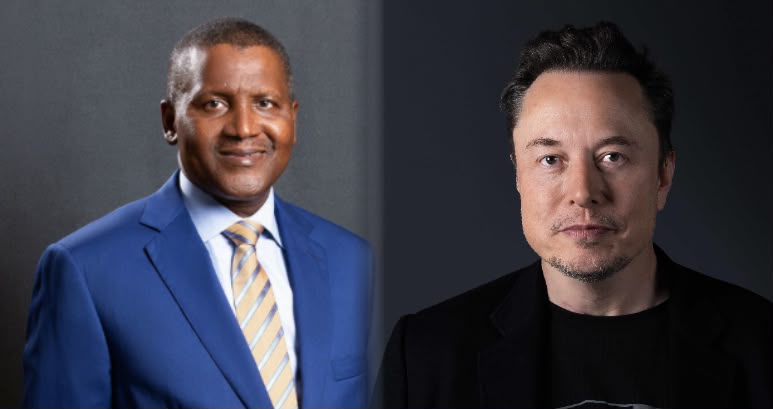
Africa's growth talks often see a clash between old-school industrial work like factories and refineries and jumping straight into a tech-driven future. But the careers of two very different businessmen show that this choice is not necessary. Aliko Dangote and Elon Musk represent different types of entrepreneurship. Africa needs both kinds to truly transform.
For years, Nigeria faced a tough problem. As Africa's biggest oil producer, it exported crude oil but still imported most of the refined fuel it used. This caused problems like foreign-exchange issues, supply interruptions, and huge subsidy costs. Dangote wanted to change that.
Building a refinery that could handle 700,000 barrels of oil each day took a lot of money, years of hard work, and the determination to push through many delays and doubts. This year, the refinery reached its full capacity, and the changes are already clear. Nigeria has now become a net exporter of petrol. In a good month, the refinery supplies up to 80 percent of what Nigerians need while also selling to Europe and nearby West African countries. This should cut Nigeria's need for fuel imports by around 40 percent, which will help the naira.
When fully operational, the refinery is expected to provide at least 100,000 jobs, both directly and indirectly. The offshore terminal is also gearing up for nearly 1,000 tanker visits each year.
Dangote is not resting on his laurels. In late July, he secured $2.5 billion to double the refinery’s capacity. On 14 September, he kicked off what is said to be Africa’s largest initial public offering (IPO), aiming to raise about $1.6 billion. People can buy shares in small amounts, starting from 10, and the goal is to attract up to 10 million investors from across Africa.
Dangote's plans remind some of Amazon, where early investors saw massive returns. Whether this happens or not, the IPO is a big test to see if regular Africans can own a part of the continent’s industrial scene.
His ambitions also stretch to the east. The race to set up another large refinery in East Africa is now focused on Lamu Island, off Kenya’s northern coast. Tanzania, which missed out on that, is now looking into Dangote’s ideas for a coal-fired power plant, a urea fertiliser plant, and investments in ports and roads.
Dangote built his business mainly in Nigeria and for African markets. His approach has always been to replace imports with local production in crucial industries: cement, fertiliser, sugar, salt, and petrochemicals, using strong import protection. He has shown that Africans can create and run large-scale industrial operations.
On the other hand, Elon Musk, who was born in South Africa, represents a different kind of business leadership. While Dangote focuses on heavy industry, Musk is all about tech that shakes things up. Through SpaceX, Tesla, Starlink, and xAI, he has backed technologies that seemed unrealistic at first: reusable rockets, mass-market electric cars, satellite internet, and advanced AI. Musk has challenged old industries by mixing tech innovation with big dreams.
The key lesson from Musk is not just one technology but his willingness to accept failure. His companies faced many challenges before they became successful. For African leaders and entrepreneurs, the message is clear: innovation means embracing risk and learning from mistakes instead of avoiding them.
Musk's most visible impact in Africa comes from Starlink, which is now approved or operating in 30 countries on the continent. Better internet access boosts digital entrepreneurship, remote learning, telemedicine, financial inclusion, and participation in the global digital economy.

For many rural areas, satellite internet can leap over years of poor fixed-line investment. But there need to be protections to make sure that insurgents do not use Starlink registered offshore to dodge local telecoms rules, as future research from the Institute for Security Studies will show.
The only country where Starlink has faced issues is South Africa. Musk has hesitated to meet the 30 percent local ownership rule set by the country’s empowerment laws.
Even if he invested heavily in South Africa, his wealth alone wouldn't change its economy overnight. Musk’s businesses need a lot of money and technology. Things like a satellite network, a battery plant, or an AI data centre could improve productivity and attract suppliers. But none would create millions of jobs for the many semi-skilled workers in South Africa.
The bigger job gains would likely come indirectly through improved productivity: better internet, cheaper energy, new supplier networks, digital services, construction work, entrepreneurship, and more confidence among investors.
Even a multi-billion-rand investment would be small compared to an economy struggling with high unemployment. Like most big investments, it might increase inequality at first before gradual growth eases the situation. Still, it could send a strong message to other wealthy investors. Musk could spark change in South Africa, but he is not its economic saviour.
Both Musk and Dangote remind us that big businesses must take their corporate responsibilities seriously to avoid backlash from local communities. This is especially true in Africa, where poverty is widespread.
Dangote’s success is significant beyond Nigeria. It shows that Africa can move past just exporting raw materials and start making higher-value products. Similar ideas could change copper processing in Zambia, cobalt in the Democratic Republic of the Congo, lithium refining in Zimbabwe, battery production in Morocco, fertiliser in Ethiopia, and pharmaceuticals in Kenya, Egypt, and South Africa.
Smart investments can shift countries from just extracting resources to adding industrial value, but this requires active government support. Big entrepreneurship like Dangote’s and Musk’s only thrives in an environment that supports a country’s strengths. In Dangote’s case, this also includes protection from competition. On top of that, stable economic policies, reliable electricity, working financial systems, efficient logistics, secure property rights, and predictable regulations are all crucial.
Governments can't create a Dangote or a Musk. But they can set up the right conditions for ambitious builders and innovators to emerge, invest, and stay.
Africa needs both: industrialists willing to invest in refining, processing, and manufacturing and tech leaders ready to take risks on bold ideas. The future of Africa will depend on how well its governments support both.
Drop your comment
No comments yet — be the first to drop the gist 👇