The Joint National Association of Persons with Disabilities (JONAPWD) has called on President Bola Tinubu to set aside at least ₦1 trillion each year to support the welfare and growth of persons with disabilities in Nigeria.
The National President of JONAPWD, Abdullah Usman, made this plea on Monday in Abuja during a meeting focused on the rights and inclusion of persons with intellectual, psychological, and hearing disabilities.
Mr Usman pointed out that the number of persons with disabilities in Nigeria is significant enough to deserve more government funding. He noted that their population is larger than that of some Nigerian states.
"My demand is ₦1 trillion to be at least the budget for persons with disabilities. I think ₦500 billion is small for the community of persons with disabilities. Can’t you see that the budget of some states will reach close to that, and then the population of persons with disabilities is more than in many states in this country," he said.
Call for equal rights
Mr Usman urged the government to ensure that all persons with disabilities enjoy the same fundamental human rights as those without disabilities, regardless of their conditions.
He said that if the government provided proper support for the community, the growing number of persons with disabilities could help change Nigeria's political and social landscape.
"The general idea that we want to lay with the agency is for the President of Nigeria and other members of the Executive Council to know that all categories of persons with disabilities need to have equal fundamental human rights with our colleagues, persons without disabilities in this country.
"We really also want to inform the President, or I would say the Presidency, that the persons with disabilities in Nigeria, our population, can change the narrative of the leadership of Nigeria, and the persons with disabilities in Nigeria are speaking in one voice. Our party is disabled. We like, and we love anybody who loves us," he added.
Mr Usman explained that persons with disabilities include those who are deaf, blind, and those with psychosocial disabilities, among others.
"That is why at times, when you hear the population of persons with disabilities, 35, 25 million, some people who don’t know about disability will say, ‘Is this true?’ because they don’t know that we have deaf, blind, psychosocial, and many more among the classes of persons with disabilities."
Government responds
The Senior Special Assistant to the President on Special Needs and Equal Opportunities, Mohammed Isa, stated that the government is working to provide adequate funding and support for persons with disabilities.
"It’s not about the money, but what we are supposed to be advocating is inclusive budgeting. If you look at all these MDAs here, they have a clear mandate to implement disability budgeting.
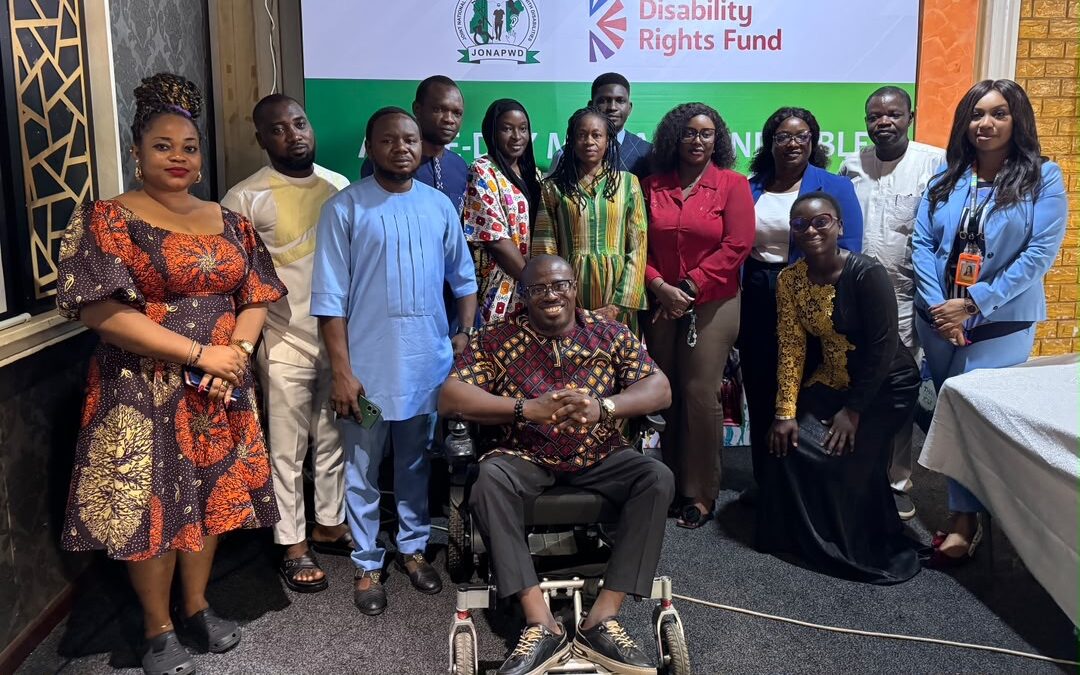
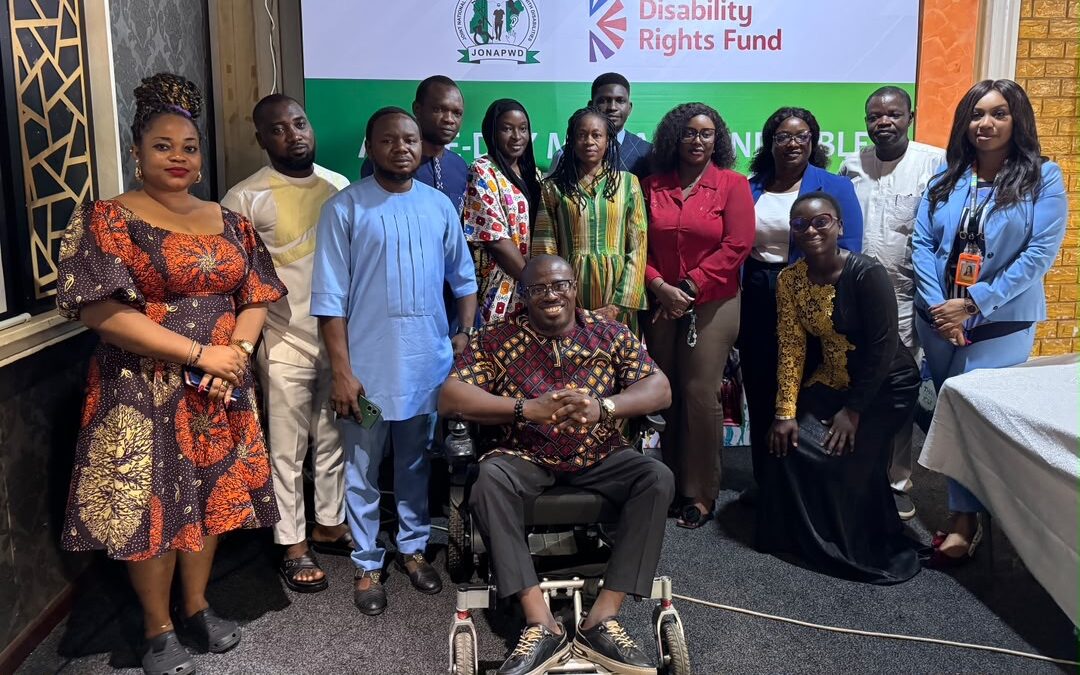
"What we are looking at is proper funding for the commission. We have a national commission for persons with disabilities that has a sole mandate and responsibility to implement this act by liaising with all agencies and offices. The role of the watchdog is to analyze and assess the scorecard for all these MDAs in line with the global standard and to report it to the President. But this government is fully committed to advancing disability inclusion," he said.
Isa noted that the Tinubu administration has included persons with disabilities in its programs through different initiatives to enhance their welfare.
"There are many agencies that are advancing the issue of persons with disabilities. We have a federal minister of humanitarian affairs. There are many social intervention programs underway in line with the Renewed Hope Agenda of President Bola Ahmed Tinubu.
‘The government is now building a rehabilitation center. Some of the rehabilitation centers for persons with disabilities in the regional political zone are now taking shape," he said.
The National Commission for Persons with Disabilities (NCPWD) mainly works to promote, protect, and enforce the rights of Nigerians with disabilities. They aim to ensure full inclusion and equal participation in society.
The budget for the commission in 2026 has not been independently verified. Still, it has frequently called for a significant increase in funding.
The Discrimination Against Persons with Disabilities (Prohibition) Act, 2018, stops discrimination against persons with disabilities. It requires that public structures, facilities, and services be made accessible to them. It also sets accessibility standards in buildings and public facilities, covering roads, transportation, and other services used by the public.
READ ALSO: Disability advocates seek stronger enforcement of rights commitments in Nigeria
The law demands that the government and relevant authorities take steps to ensure that persons with disabilities can access public facilities and services equally with other citizens.
But even years after the law was enacted, many persons with disabilities still struggle to access public buildings and essential services. This includes facilities that lack ramps, lifts, accessible toilets, proper signage, and other features needed for people with different disabilities.
Government offices, schools, hospitals, transport facilities, and other public spaces in many parts of the country remain hard to access for persons with disabilities. This is especially difficult for people who use wheelchairs, those with visual impairments, and those with other mobility or sensory disabilities.
The Act allows a five-year transition period for existing public structures to become accessible to persons with disabilities. New buildings and facilities must follow accessibility rules. Despite this legal framework, advocates say it is hard to implement nationwide.
Drop your comment
No comments yet — be the first to drop the gist 👇